Tuning Box vs ECU Remap: What’s the Real Difference?
A tuning box promises easy, removable performance gains for £100–300. An ECU remap sounds more complex and costs a little more.
So what’s actually different — and does it matter? This guide explains exactly how each option works, what the performance
difference looks like in practice, and which one makes more sense for most UK drivers.
Leicester & Midlands
Diesel & petrol
Mobile remapping available
Jump to a section
What is a tuning box?
A tuning box is a plug-in device that intercepts signals between your vehicle’s sensors and its engine control unit (ECU).
Most connect via the OBD-II diagnostic port or by tapping into wiring near the fuel rail pressure sensor, boost pressure sensor,
or air mass sensor.
The box reads the signal coming from the sensor and sends a modified version to the ECU. The ECU then adjusts fuelling,
injection timing, or boost based on that adjusted input — thinking the engine conditions are slightly different to reality.
The result is that the engine runs with more fuel or more boost than the factory settings originally allowed.
Tuning boxes are widely sold online, fitted without specialist tools, and removed just as quickly. That convenience is
their main selling point.
What is an ECU remap?
An ECU remap is a process where a specialist reads the existing software calibration from inside your engine control unit
and modifies it directly. The ECU contains detailed maps that define how your engine behaves across every combination of
load, temperature, speed, and throttle input. A remap adjusts those maps to unlock better performance, improve economy,
or achieve a combination of both.
The result is software calibrated specifically for your vehicle and your goals. The ECU then runs those updated instructions
on its own — no additional device is needed, and no sensor signals are being manipulated.
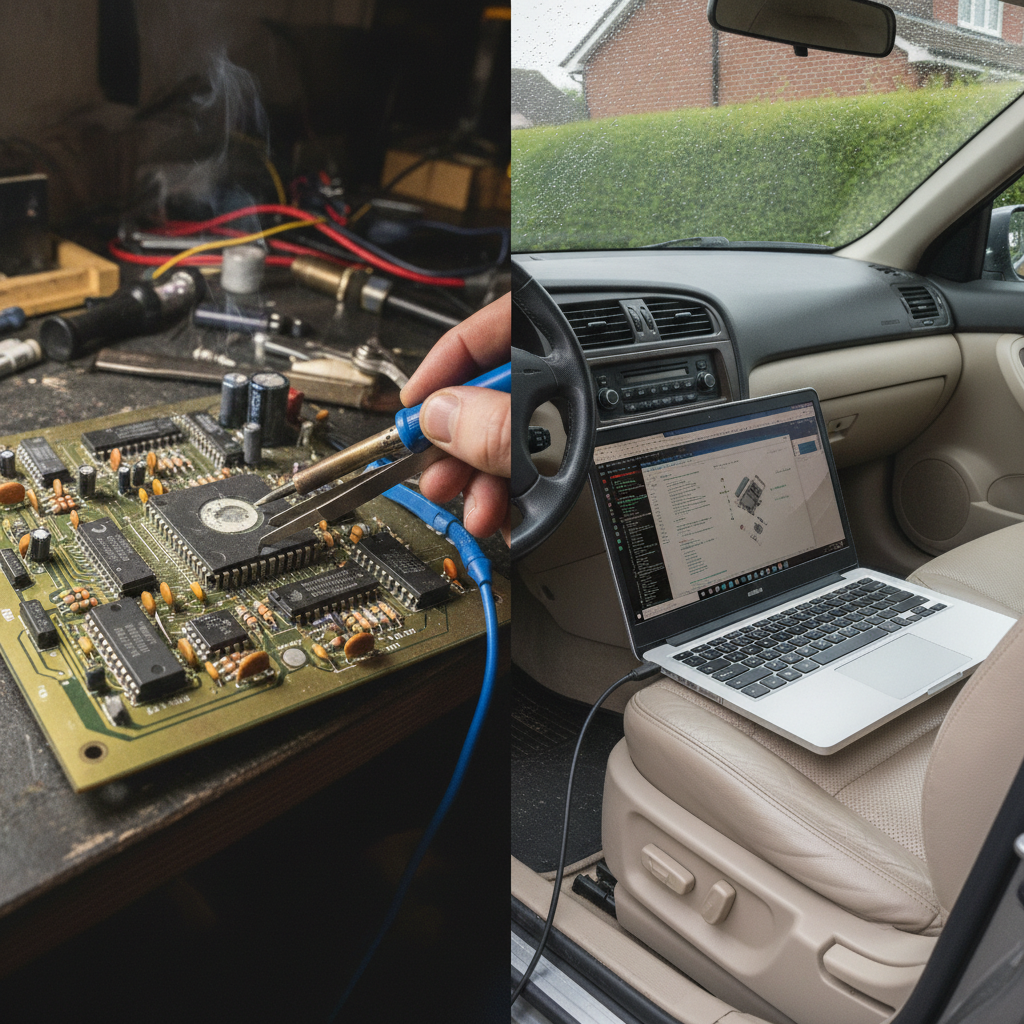
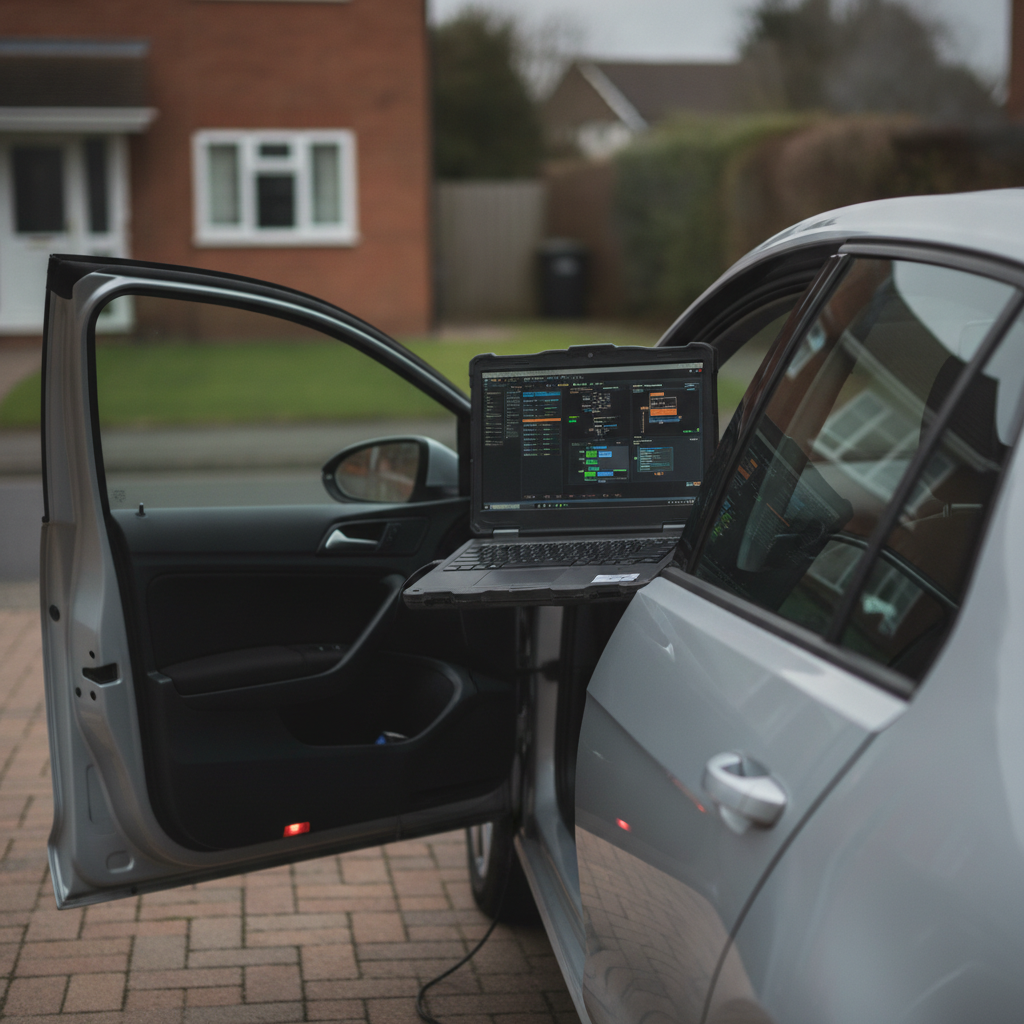
A professional mobile remapping service can carry out the process at your home or workplace, reading and writing
to the ECU through the OBD port using specialist equipment.
How do they actually work?
This is the most important distinction to understand when comparing a tuning box vs a remap.
The tuning box approach: manipulated sensor data
A tuning box does not change anything inside the ECU. It sits between a sensor and the ECU and tells the ECU that
conditions are slightly different to what the sensor is actually reading. The ECU receives this modified signal and
responds accordingly — injecting more fuel, raising boost pressure, or adjusting timing.
The ECU is still running factory software. It’s just making decisions based on data that doesn’t fully reflect reality.
This is a fundamental limitation that affects both the quality of the result and the long-term implications.
The remap approach: modified software
A remap changes the ECU’s own instructions. The calibration tables are read, modified to match the performance target,
and written back. The ECU then runs accurate, real sensor data through its new maps and produces the intended output.
There’s no manipulation happening during normal driving — just a well-calibrated engine management system doing its job.
Tuning box vs remap in one line
A tuning box tricks the ECU. A remap tells the ECU what to do correctly.
Performance gains: what to expect
Both options can deliver measurable performance improvements on turbocharged diesel and petrol engines. But the quality
and consistency of those gains differ significantly.
Tuning box performance
A quality tuning box on a turbodiesel may produce gains of 20–40bhp and a noticeable increase in torque.
The improvement often feels most obvious in mid-range throttle response and when pulling away under load.
However, the gains tend to be concentrated at certain points in the rev range rather than spread evenly.
Because the ECU is working from manipulated signals, it can’t always optimise every aspect of engine operation at once.
Remap performance
A professional Stage 1 remap on a typical 2.0-litre turbodiesel might deliver 30–60bhp and a significant torque increase —
often 50–100Nm depending on the engine. More importantly, the torque curve is intentionally shaped. The gains feel usable
and linear across the rev range, not just in one zone.
A remap also allows the tuner to adjust throttle response, remove flat spots, raise rev limiters where appropriate,
and tailor the delivery to your driving style. None of this is possible with a tuning box.
| Factor | Tuning Box | ECU Remap |
|---|---|---|
| Power gain (typical diesel) | 20–40bhp | 30–60bhp |
| Torque curve shaping | Limited | Full control |
| Throttle response tuning | No | Yes |
| Vehicle-specific calibration | Generic | Specific to your car |
| Consistency across conditions | Varies | Consistent |
Reliability and long-term effects
This is where the tuning box vs remap debate becomes clearer for most drivers.
Tuning box concerns
Because a tuning box manipulates sensor signals, the ECU is operating with inaccurate input data. Modern engine management
systems are sophisticated — they monitor sensor patterns, log adaptive fuel trims, and cross-reference multiple data points.
When one sensor is consistently reporting values that don’t correlate with others, fault codes can be generated.
Over time, some vehicles adapt around the tuning box’s intervention, reducing its effect. Others may trigger warning lights
or enter limp mode if the manipulated sensor values fall outside acceptable ranges. The engine protection systems
that should prevent over-fuelling or overboosting are making decisions based on data that isn’t accurate — which
means those protections may not always fire at the right time.
Diagnostic complications
When a vehicle with a tuning box is connected to a diagnostic scanner, the sensor values seen by the scanner won’t
match the values the ECU is acting on. This can make fault diagnosis genuinely difficult for any garage working on the car.
Remap reliability
A professional remap works within the engine’s actual safe operating limits. A good tuner reviews the stock calibration,
understands where headroom exists, and modifies only what the hardware can support. Sensor readings remain accurate.
The ECU makes decisions based on real data running through improved maps. There’s no hidden layer of signal manipulation
to cause confusion during servicing or diagnostics.
Many vehicles run remaps for hundreds of thousands of miles without issue when the calibration is done correctly
and the engine is in good mechanical condition beforehand.
Insurance implications
Both a tuning box and an ECU remap are modifications that should be declared to your insurer. Failing to declare either
is a risk — an undisclosed modification can give an insurer grounds to reject a claim.
Some drivers assume a removable tuning box can simply be taken out before reporting a claim. This is not a reliable strategy.
Insurers may ask whether any modifications have ever been fitted, not just whether they are currently installed.
With an ECU remap, you can ask the remapper to restore the ECU to stock settings if genuinely needed. But the practical
advice is the same for both: declare the modification, get written confirmation of your cover, and don’t rely on removal
as a workaround.
Can you reverse them?
Yes — both can be reversed, though in different ways.
A tuning box is physically removed. The sensor wiring returns to its factory routing and the ECU reverts to its standard
behaviour. This takes a few minutes and leaves no trace.
An ECU remap can be reversed by the remapper, who restores the original calibration file to the ECU. A reputable
remapper will retain your stock file specifically for this purpose. The vehicle returns to factory settings and any
standard diagnostics will show a stock calibration.
Reversibility is often presented as a unique advantage of tuning boxes. In practice, it applies to both options — so
it shouldn’t be the deciding factor in your choice.
Effect on fuel economy
A properly calibrated ECU remap can improve real-world fuel economy on diesel engines, particularly for motorway and
mixed driving. By improving torque at lower revs and reducing the need to drop down a gear on inclines or overtaking,
a remap means the engine works less hard to maintain speed. Many drivers report 5–15% economy improvements on diesel
vehicles after a Stage 1 remap — though this depends heavily on driving style.
Tuning boxes that increase fuelling can also improve economy in some cases, but this depends on the device and how
it’s been configured. Economy-focused modes exist on some boxes, but they don’t offer the level of control a remap
does across all operating conditions.
If economy is your primary goal, a remap calibrated for fuel efficiency is the more reliable route.
Which is right for you?
For most drivers who want genuine, lasting performance improvements on a turbocharged diesel or petrol vehicle,
a professional ECU remap is the better investment. The gains are better calibrated, the long-term implications are
cleaner, and the engine management system continues to operate with accurate data.
A tuning box makes sense in a narrow set of circumstances — for example, a fleet vehicle where frequent installation
and removal across multiple vehicles is required, or where a driver genuinely cannot source a reliable remap for
their specific ECU variant.
On cost: a decent tuning box typically costs £150–400. A professional Stage 1 remap from a mobile specialist
starts at a similar level and often costs only a little more for a significantly better outcome. When you compare
total value, the remap is rarely the more expensive option in the long run.
What to ask before choosing
Before committing to either option, ask: is my vehicle in good mechanical condition? A remap or tuning box won’t
fix an underlying engine issue — and pushing a worn engine harder can accelerate problems. Start with a diagnostic
check if you have any doubts.
Ready for a proper ECU remap in Leicester or Leicestershire?
Leicester Remaps provides mobile ECU remapping across Leicester, Loughborough, Hinckley, Coalville, Market Harborough,
and the wider Midlands. We come to your home or workplace — no need to visit a garage.
Every remap is calibrated to your specific vehicle and engine. We retain your stock file so you can always return to
factory settings if needed.
View our mobile ECU remapping service or
contact Leicester Remaps to discuss your vehicle.