Stage 1 Remap Cost UK: What You Can Expect to Pay
You’ve done the research. You know a Stage 1 remap can improve your car’s performance and efficiency.
Now you want to know what it actually costs — and whether you’re getting a fair deal.
This guide breaks down typical UK prices, what drives the cost up or down, and how to tell a professional service from a cheap one.
UK price guide
Mobile remapping
Leicester & Midlands
Jump to a section
What is a Stage 1 remap?
A Stage 1 remap is an ECU software modification applied to your car in its standard, unmodified state.
No hardware changes are needed. The tuner accesses your engine’s ECU via the OBD port, reads the factory map,
and writes a recalibrated version that adjusts parameters like boost pressure, fuel delivery, ignition timing, and torque limiters.
Stage 1 is the starting point for most drivers considering remapping. It’s the least invasive, most affordable option,
and suits daily-driven cars that haven’t had bolt-on modifications. The gains are real — typically 15–25% on a turbocharged
diesel and 10–20% on a turbocharged petrol — but they work within the engine’s existing hardware limits.
Because no hardware changes are required, Stage 1 is also the quickest form of remapping. Most sessions take between 30 minutes and 2 hours depending on the vehicle and tuner.
Typical Stage 1 remap prices in the UK
Stage 1 remap costs in the UK typically fall between £200 and £400 for most standard passenger cars and vans.
Where your quote lands within that range depends on several factors covered below — but here’s a rough breakdown by vehicle type:
- Small diesel hatchbacks and city cars: £200–£280
- Mid-range diesel saloons and estates: £250–£350
- Performance petrols (turbocharged): £280–£380
- Diesel vans and light commercial vehicles: £250–£350
- Premium and luxury marques (BMW, Mercedes, Audi, Range Rover): £300–£450
- Specialist or rare ECUs: £400+
These ranges reflect a professional mobile remapping service. Rolling road (dyno) sessions at a fixed premises may cost
more depending on the facility’s overheads, though for Stage 1 specifically the additional cost of a dyno isn’t always justified.
The “too cheap to be real” zone
If you’re being quoted under £150 for a Stage 1 remap, treat that as a red flag.
Professional tuning takes time, skill, and access to reputable software.
Very cheap remaps are often generic maps applied without proper diagnosis, which can cause more problems than they solve.
What affects the Stage 1 remap cost?
1. Your vehicle make, model, and ECU type
Vehicles from mainstream manufacturers (Ford, Vauxhall, VW Group, BMW, Mercedes) are generally well-supported by remapping software.
Mapping files are widely available and the process is faster. Rarer vehicles or unusual ECU configurations take longer to work with
and may require bespoke file development, which increases the cost.
2. Petrol vs diesel
Diesel engines — particularly turbocharged ones — typically respond more dramatically to remapping and are the most commonly tuned.
The process is well-established, and pricing is competitive. Turbocharged petrol cars are also well-supported,
though the process can take longer when dealing with ignition timing optimisation.
Naturally aspirated petrol engines have the most limited gains and are less commonly remapped.
3. Mobile vs fixed premises
A mobile remapper comes to you — your driveway, workplace, or home. This removes the need for transport to a garage
and often keeps overheads (and prices) lower than fixed-premises operations.
For Stage 1 remapping, a mobile service is entirely sufficient. You don’t need a rolling road for Stage 1.
4. Software platform used by the tuner
Professional tuning software licences (EVC, MPPS, KESS, etc.) cost remappers thousands of pounds to run.
A tuner using properly licenced, up-to-date tools will typically charge appropriately.
Bargain-basement pricing is often a sign of unlicenced or outdated tools.
5. Pre-remap diagnostics
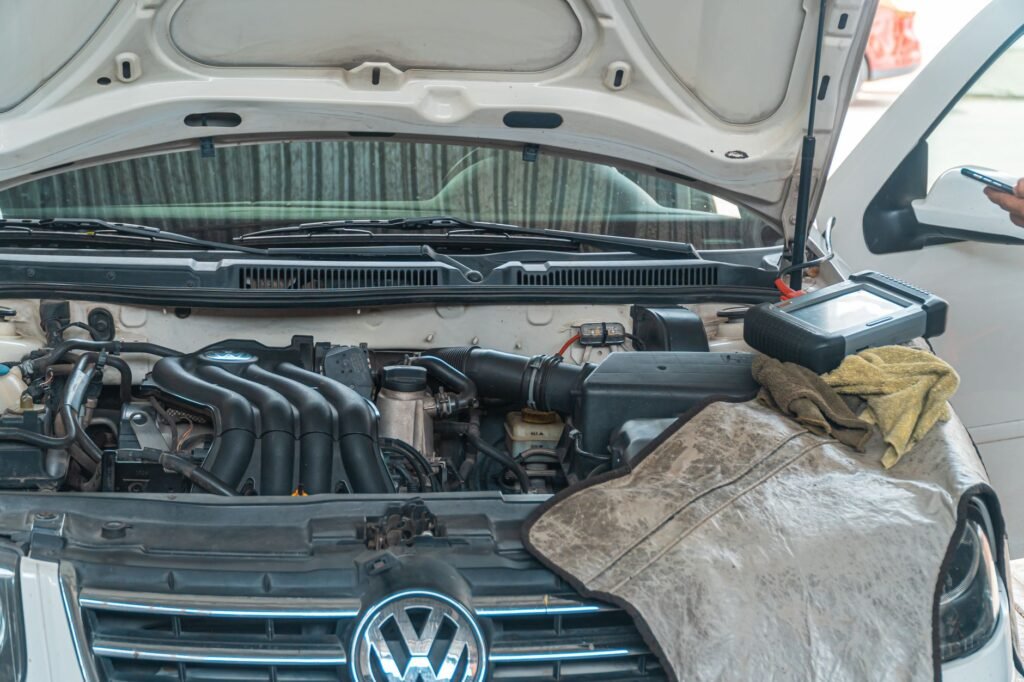
A good tuner will run a diagnostic scan before remapping to check for existing fault codes.
This step protects you — remapping an engine that already has active faults can cause problems.
Some tuners include this in the price; others charge separately. It’s worth asking when you get your quote.
6. Location
As with most services, prices in London and the South East tend to run slightly higher than in the Midlands and North.
Mobile remappers operating across Leicester, Leicestershire, and the wider Midlands generally offer competitive rates
with lower travel overhead compared to inner-city operations.
What should be included in the price?
A professional Stage 1 remap should include the following as standard:
- Pre-remap diagnostic check: Scan for existing fault codes before touching the ECU.
- Original ECU file backup: Your factory file should be read and saved before any changes are made.
- Calibrated tune written to the ECU: Not a generic map — a file calibrated for your specific vehicle.
- Post-remap check: A test drive or idle check to confirm the remap has applied correctly and no new faults have appeared.
- Follow-up support: If you experience any issues after the remap, a professional tuner should be reachable to help.
What’s not typically included: rolling road time (not needed for Stage 1), hardware modification, or any fault repairs identified during the pre-scan.
If the pre-scan reveals engine issues, those need addressing before the remap proceeds.
Always ask about the original file backup
Before any remap, your original ECU file should be saved. This allows the car to be returned to factory settings if needed —
whether that’s for a warranty claim, a future car sale, or troubleshooting. A tuner who doesn’t do this isn’t doing the job properly.
Why cheap remaps cost more in the long run
A Stage 1 remap from an unknown provider at a suspiciously low price carries real risks that can far outweigh the initial saving.
Generic maps applied without calibration
The cheapest remaps often involve applying a generic map from a library — a file written for a vehicle like yours, but not calibrated
to the exact spec of your car, your fuel type, or your mileage. This can result in poor performance, rough running, or worse, damage to
engine components operating outside their safe limits.
No backup file
If no original file is saved and the remap causes problems, you could be left with a car that can’t be returned to factory settings.
Correcting this through a main dealer is expensive and sometimes not straightforward.
No pre-scan, hidden faults overlooked
An engine already carrying a fault code — even a non-critical one — can behave unpredictably after remapping.
A pre-remap diagnostic step costs the tuner a few minutes. Skipping it is a sign of cutting corners.
No accountability
Low-cost providers operating without proper business registration, insurance, or an established track record
have little incentive to help if something goes wrong after the remap. A professional, established mobile remapper
has a reputation to protect and will stand behind their work.
If it sounds too good to be true, it usually is
A £100 remap from a social media advert or a classified listing is almost never what it appears to be.
The money you save upfront can easily be dwarfed by the cost of putting things right afterwards.
Mobile remap vs rolling road: does it matter for Stage 1?
For a Stage 1 remap on an otherwise standard vehicle, a mobile service is entirely appropriate.
Stage 1 calibration doesn’t require real-time load measurement on a dyno because the tuner is working within
known, tested parameters for your standard engine and hardware.
Rolling road sessions are more relevant for:
- Stage 2 and Stage 3 work, where hardware changes mean more variables to adjust.
- Custom live mapping sessions for track or competition vehicles.
- Verifying power output and checking for boost or fuelling issues on modified engines.
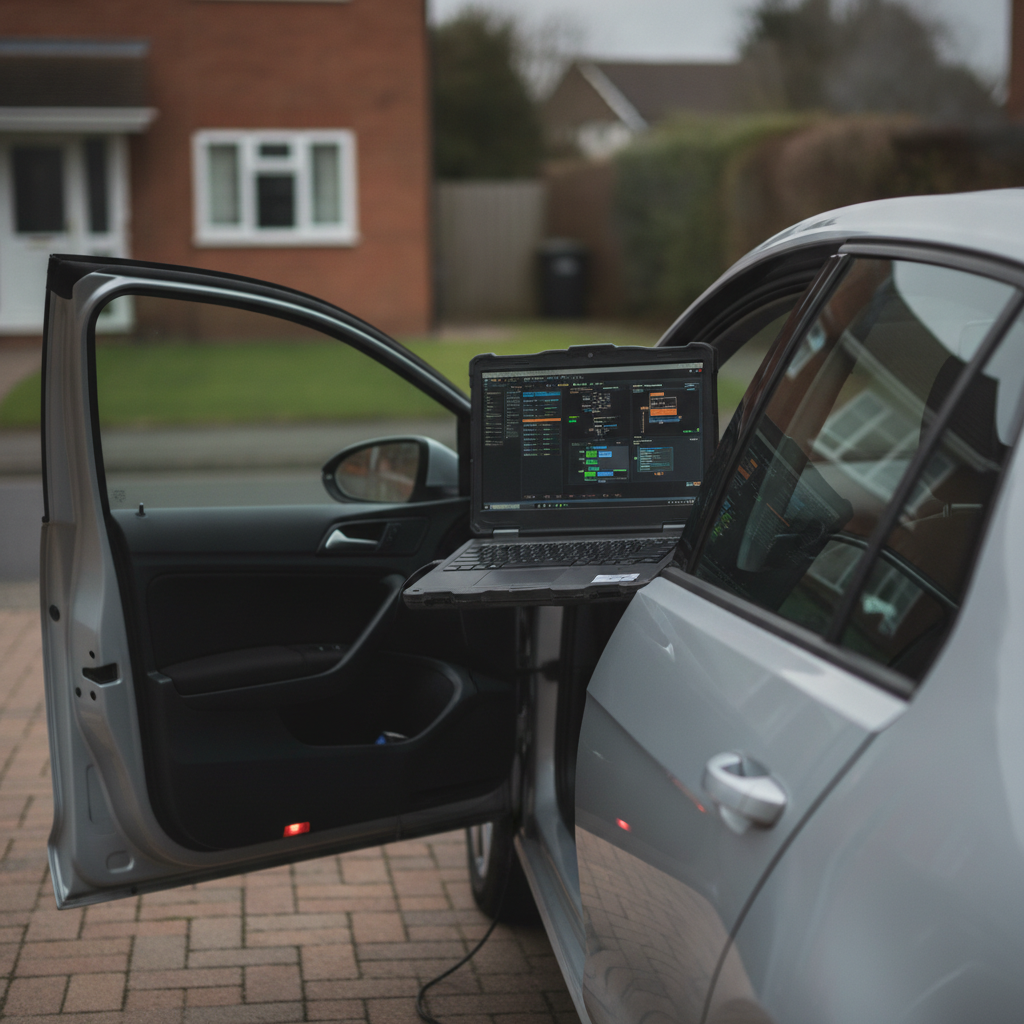
A mobile Stage 1 remap on your driveway, done by a properly equipped professional, is the standard approach across the UK.
Don’t let anyone persuade you that you need to pay for dyno time for a straightforward Stage 1.
What mobile remapping actually involves
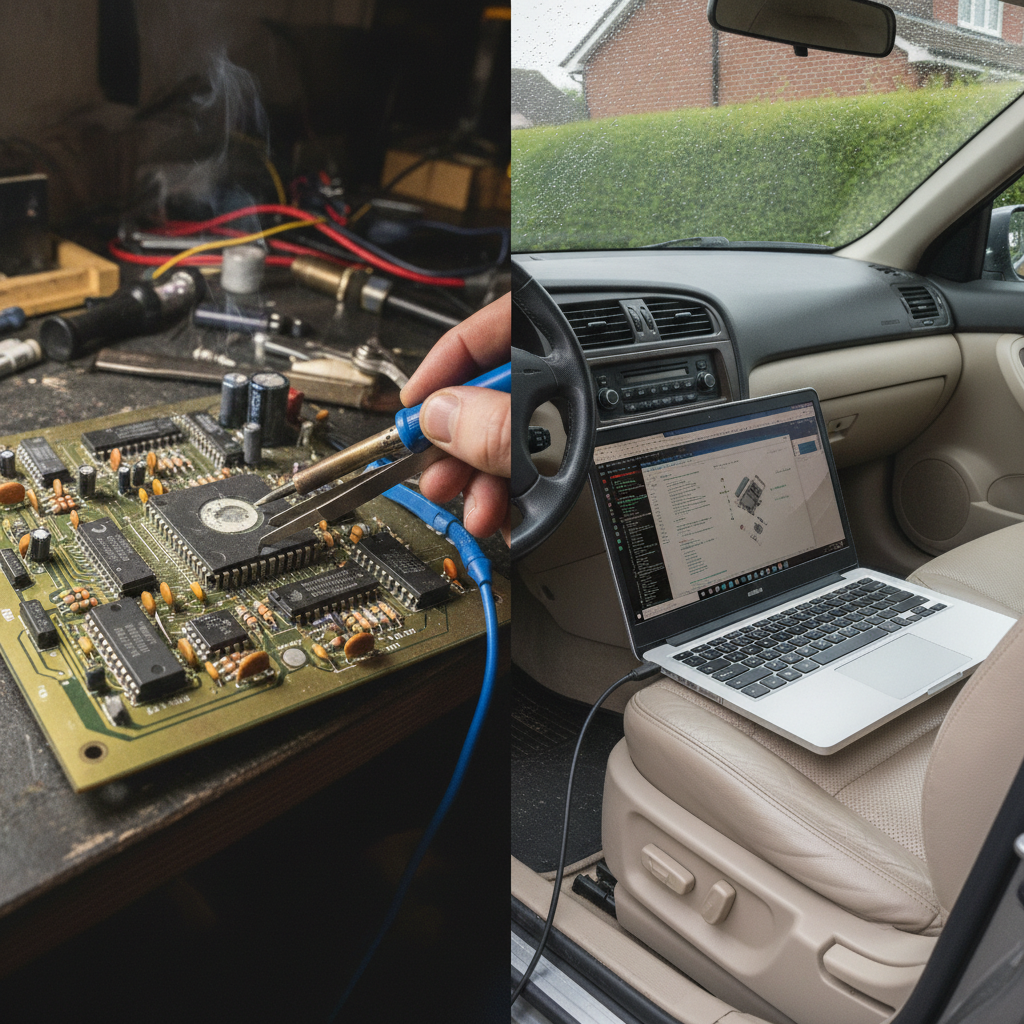
The tuner connects a laptop to your OBD port, reads the ECU, writes the calibrated file, verifies the result, and
test drives or checks for fault codes. It’s a professional process that doesn’t require any specialist facility.
Is a Stage 1 remap worth the cost?
For most drivers of turbocharged diesel or petrol vehicles, yes — a Stage 1 remap is one of the most cost-effective performance
upgrades available. You’re paying £250–£350 for a calibration that improves power, torque, and often fuel economy in one session.
The gains are most noticeable in mid-range torque — the kind of power you use when overtaking, merging onto a motorway,
or pulling a load. Drivers often comment that the car feels significantly more responsive and easier to drive economically after a remap.
Whether a remap makes financial sense depends on how long you plan to keep the car, how you use it, and what you’re looking for.
For vans used for work, a remap that improves fuel economy can pay for itself in a matter of months.
For drivers who simply want the car to feel more alive, the one-off cost is modest relative to most automotive upgrades.
The one caveat: make sure your engine is in good mechanical health before remapping. A remap isn’t a fix for underlying
engine issues — it should go on top of a well-maintained vehicle. If the car has pending service work, address that first.
Get a Stage 1 remap quote in Leicester or Leicestershire
Leicester Remaps offers professional mobile Stage 1 remapping across Leicester, Leicestershire, and the wider Midlands.
Every remap includes a pre-scan, original file backup, and post-remap check — no cutting corners.
View our Stage 1 remap service or
contact Leicester Remaps for a quote tailored to your vehicle.