How Long Can You Drive with the DPF Warning Light On?
The DPF warning light does not always mean stop immediately — but it does mean act soon. Here’s what the light is telling you, how much time you realistically have, and what to do before a manageable problem becomes an expensive one.
In this guide
What the DPF Warning Light Actually Means
The DPF warning light — typically an amber filter symbol or the engine management light — signals that the diesel particulate filter has accumulated more soot than it can remove through normal passive regeneration. It is not always an emergency, but it is the car’s way of telling you that the filter needs attention.
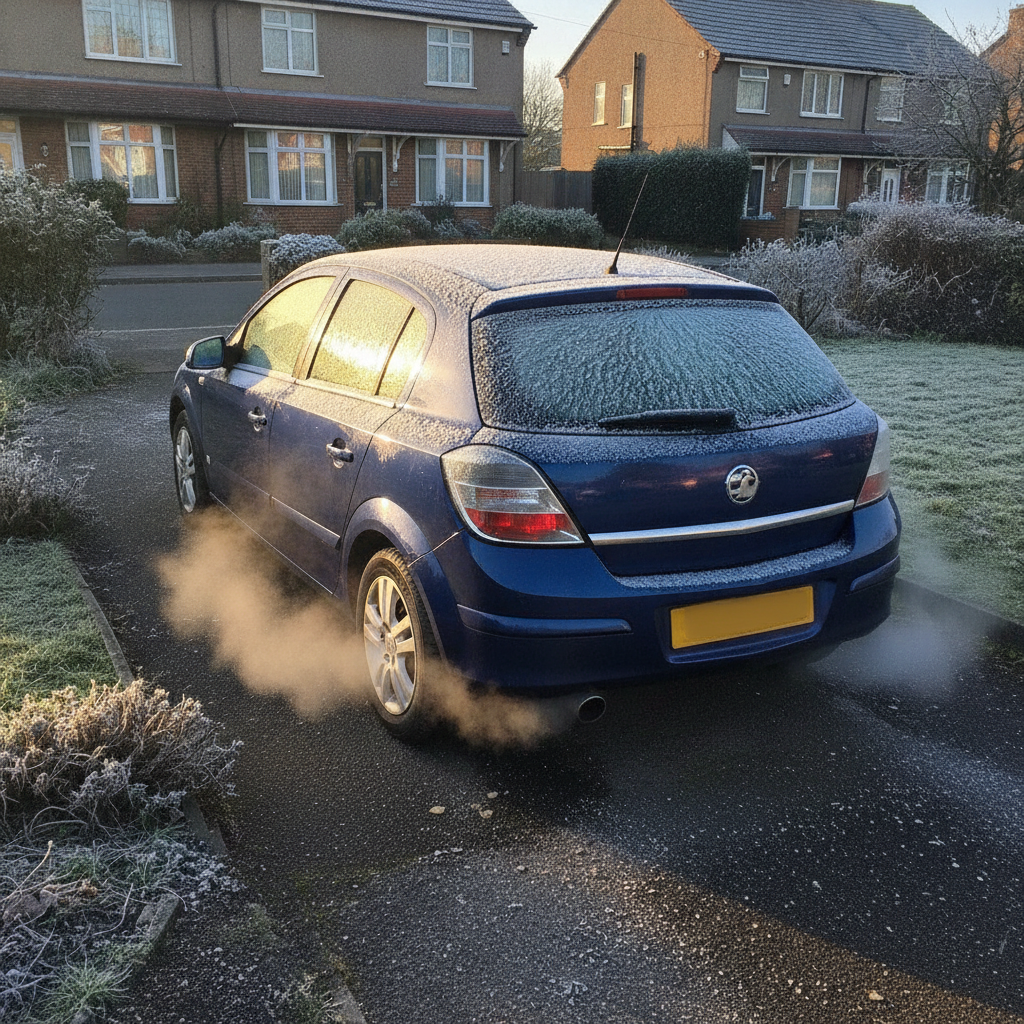
Under normal conditions, the DPF cleans itself. During long runs at motorway speeds, exhaust temperatures rise enough to burn off accumulated soot in a process called regeneration. Short stop-start journeys do not allow this to happen, so soot builds up over time until the warning appears.
Amber vs red DPF warning
An amber DPF light means the filter is blocked and needs a regeneration run — the car can still be driven, but action is needed. If the light turns red or is accompanied by other warnings, the situation is more serious and continued driving risks permanent damage.
How Long Can You Actually Drive with the DPF Light On?
There is no single exact answer — but a practical guide is that you should not leave an amber DPF warning unresolved for more than a few days, and you should take action within the same driving session if at all possible.
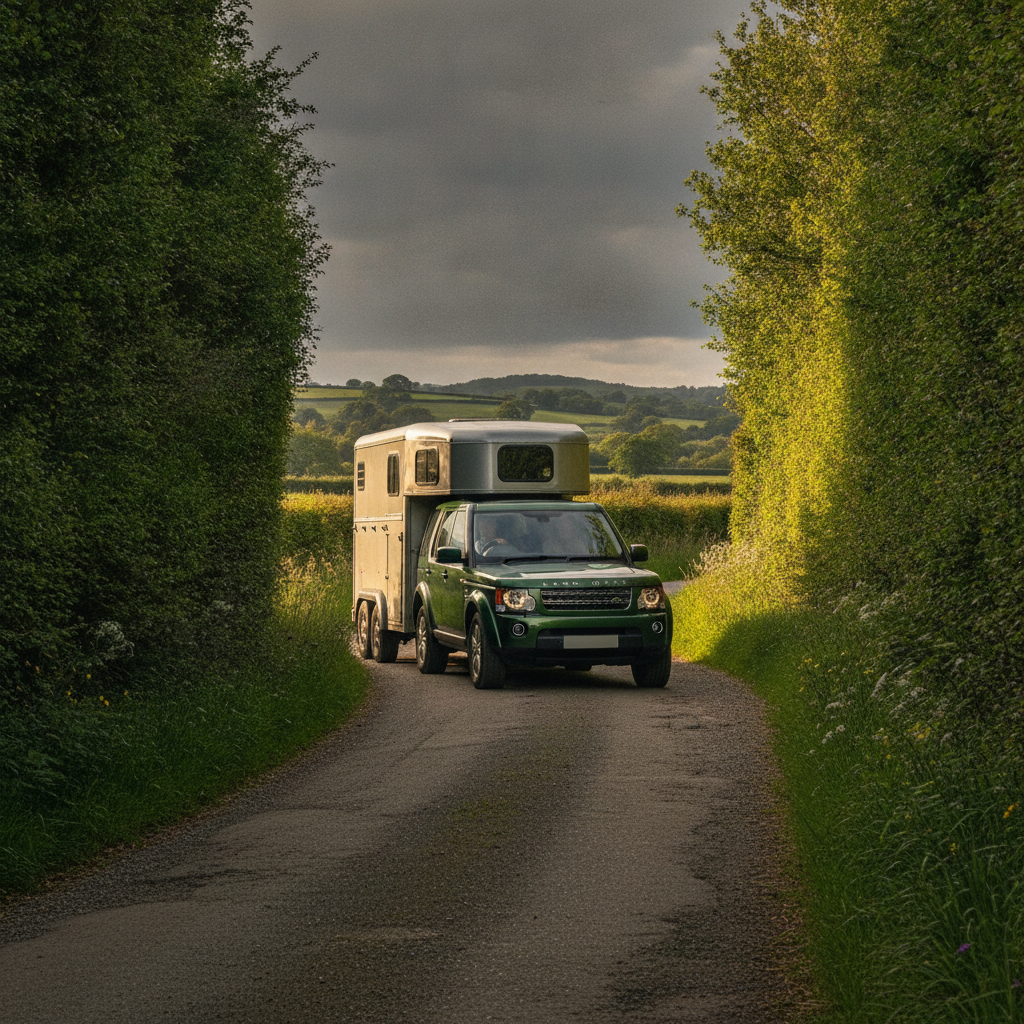
The light does not mean the car will break down immediately. Our full guide covers how long you can safely keep driving in more detail. In many cases, you can still drive normally. The risk is cumulative: every additional short journey adds more soot to an already overloaded filter, making a successful regeneration progressively less likely.
What the stages look like in practice
- Light first appears: DPF is loaded but regeneration is still possible. A 30-minute motorway drive at 60+ mph may resolve it.
- Light stays on after a motorway run: The filter is heavily loaded. A forced regeneration using diagnostic equipment is now the most reliable fix.
- Engine management light joins the DPF light: A fault code has been stored. The ECU has registered that the DPF problem is affecting other systems. This is more urgent.
- Car enters limp mode: The engine is restricting itself to prevent damage. Do not drive more than necessary at this point.
Do not ignore the light and keep driving short journeys
The most common mistake is ignoring the light and continuing the same routine that caused it — short commutes, school runs, and town driving. This accelerates the blockage and can take a recoverable situation to one that requires a professional clean or filter replacement.
The Motorway Fix: Does It Actually Work?
Yes — but only under the right conditions. Passive regeneration requires the engine to reach and sustain a high enough exhaust temperature to ignite the accumulated soot. That means a sustained run at motorway speeds (60 mph or above) for at least 20 to 30 minutes, with the engine at normal operating temperature throughout.
It will not work if the filter is already too loaded. If the DPF soot level is above approximately 70–80%, the ECU may prevent a regen cycle because it calculates the filter cannot safely burn off what has accumulated. At this point, a forced regeneration is the correct next step.
Conditions for a successful passive regeneration
- Sustained motorway driving at 60 mph or above — not dual carriageway stop-start
- Engine at full operating temperature before the run starts
- No other major fault codes stored in the ECU
- DPF soot load below the point where the ECU blocks the regen cycle
If the light goes out after a motorway run, that is a positive sign — but it also suggests your driving pattern is not allowing normal regeneration to happen. Recurring DPF warnings are worth investigating further.
When a Forced Regeneration Is the Right Step
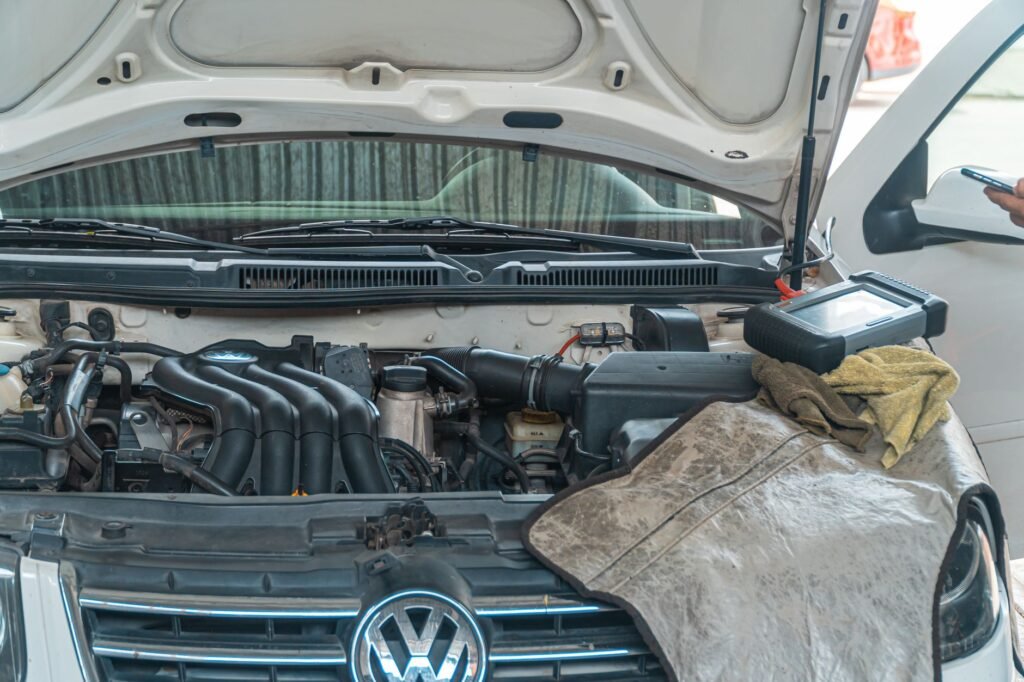
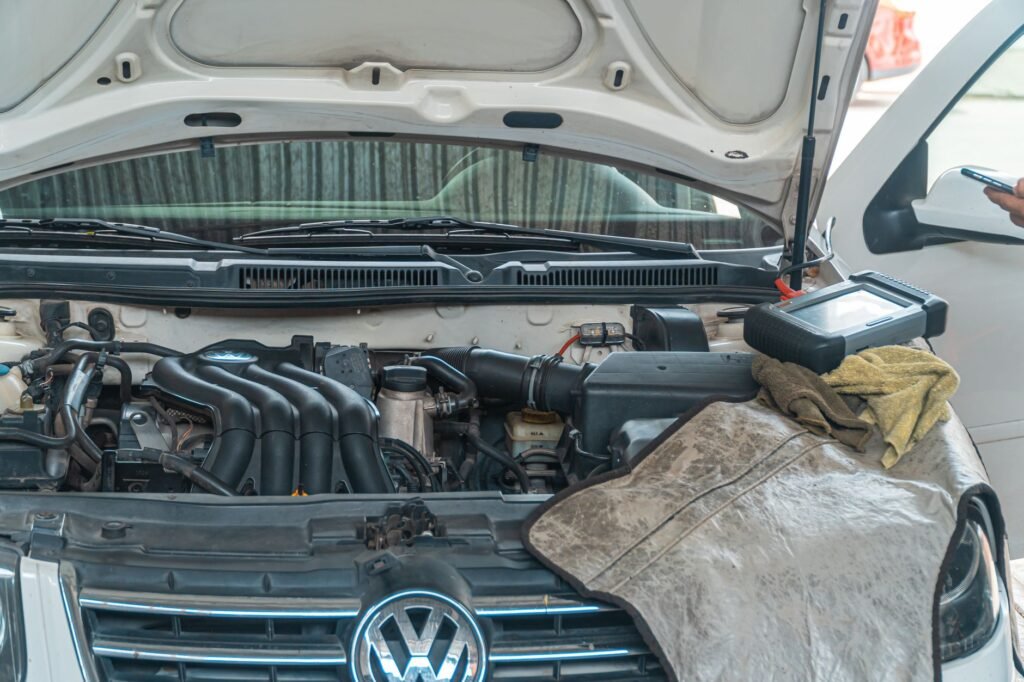
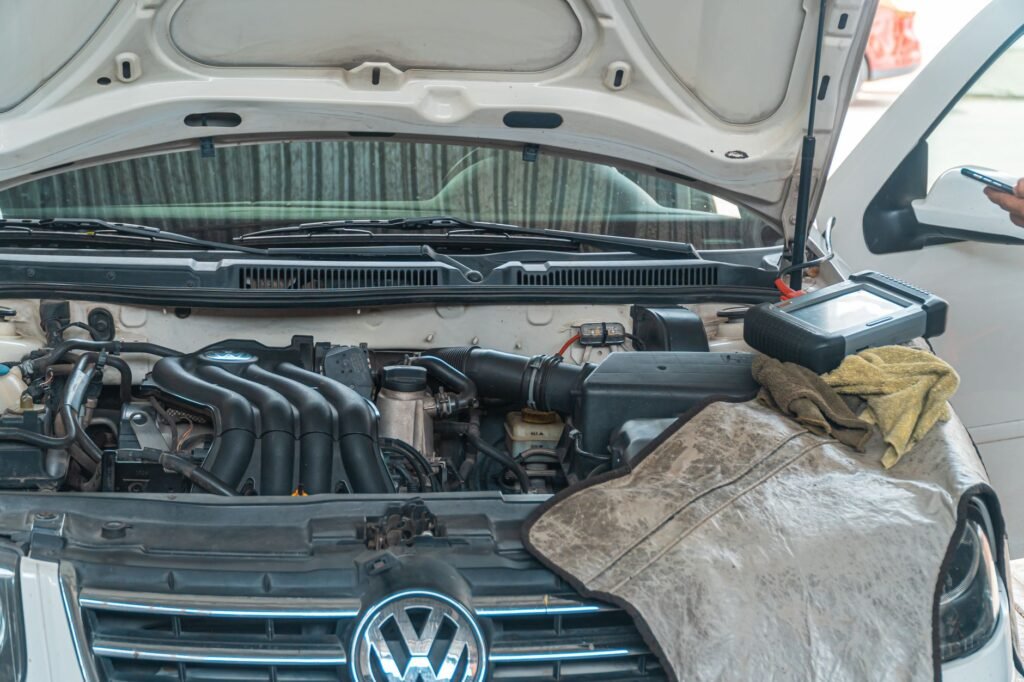
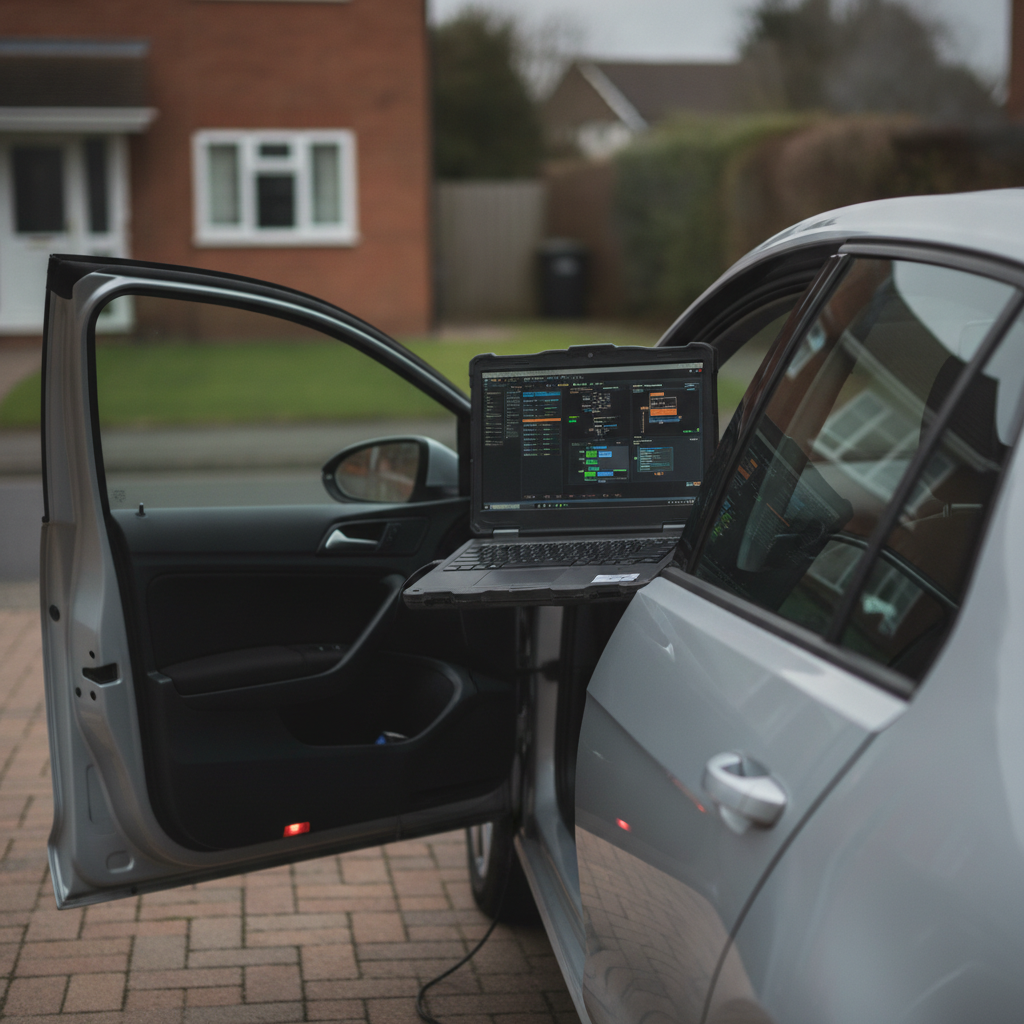
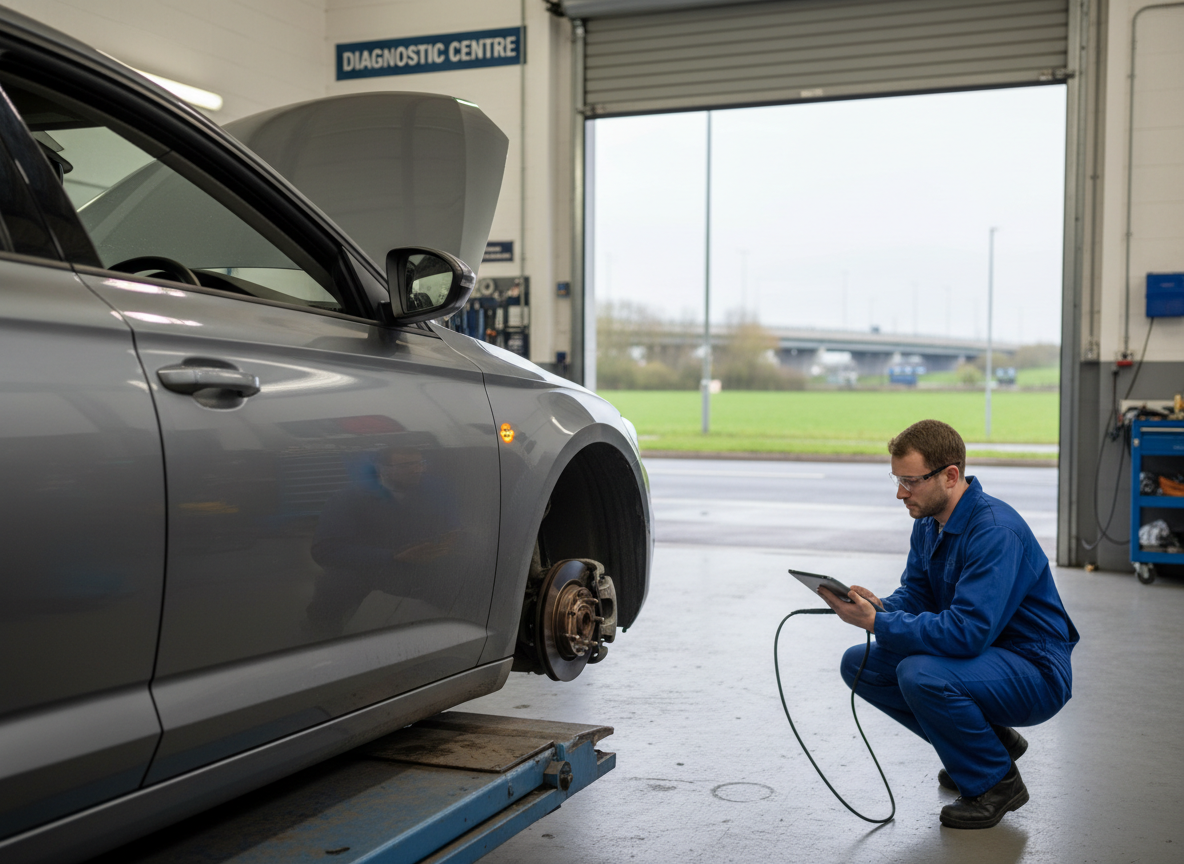
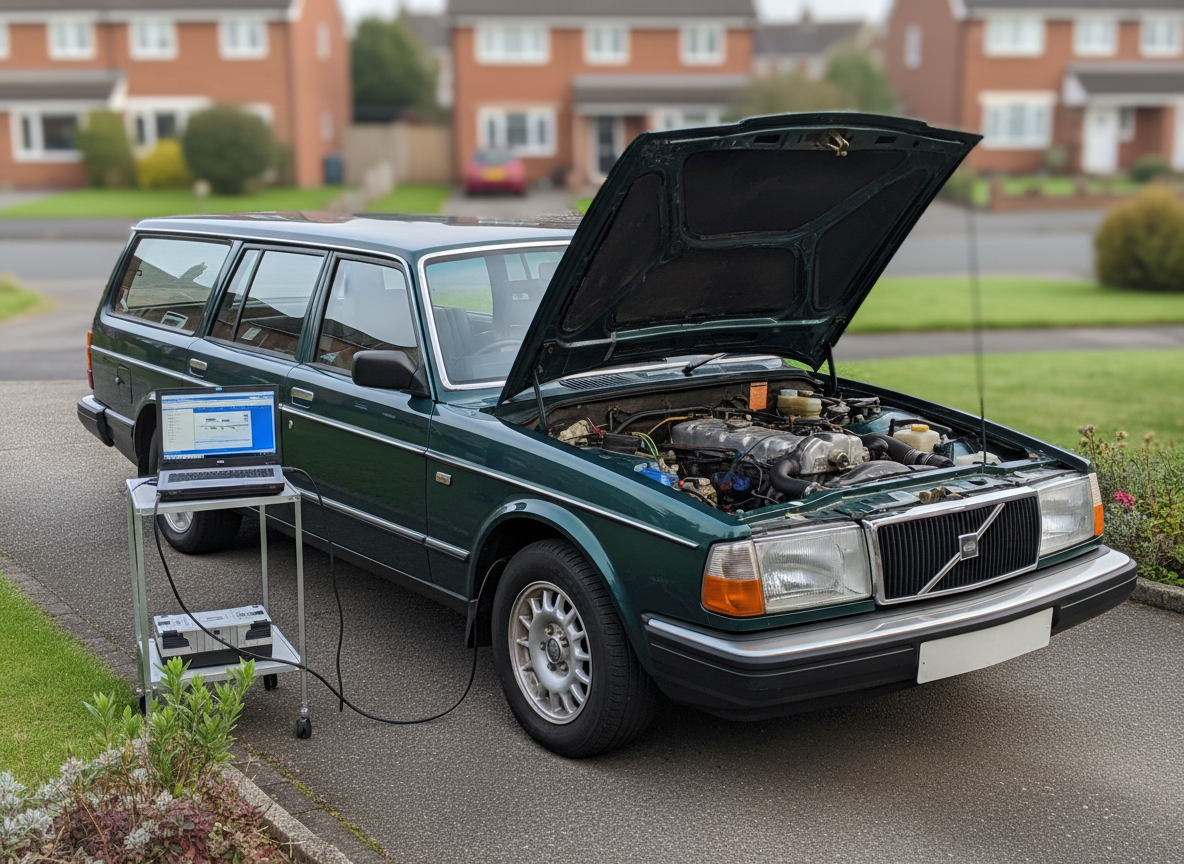
A forced regeneration is carried out using specialist diagnostic equipment connected to the vehicle’s OBD port. The technician commands the ECU to trigger a controlled burn of the accumulated soot while the engine runs at an elevated idle, raising exhaust temperatures enough to clear the filter without needing a road run.
This is the appropriate approach when the DPF soot load is too high for passive regen to work, when a motorway run has not cleared the light, or when the vehicle is in limp mode and sustained driving is not safe.
What happens during a forced regeneration
- Technician connects diagnostic software and reads the DPF load percentage
- Other fault codes checked — some will prevent a regen from running
- Regen cycle is triggered; engine runs at elevated idle for 20–40 minutes
- DPF load percentage is confirmed to have dropped before the session ends
- Any related fault codes are cleared and the warning light reset
Leicester Remaps carries out forced regenerations as part of our mobile DPF diagnostic service. We come to your home or workplace, assess the filter, and carry out the regen on-site — no need to take the car to a garage.
What to Do After the DPF Light Clears
Getting the light to go off is the first step. Keeping it off is the more important one. If your DPF warning has appeared once, the conditions that caused it are likely to appear again unless something changes.
Common causes worth addressing
- Short journey driving: Diesel engines need longer runs to regenerate. If your daily routine is mostly short trips, consider whether a petrol or hybrid suits you better long-term.
- EGR valve issues: A faulty EGR valve can push excessive soot into the DPF faster than normal. Getting this checked can reduce the frequency of DPF problems.
- Injector wear: Worn or leaking injectors cause incomplete combustion and push more particulates through the system. A diagnostic check will identify this.
- Wrong oil: Using the wrong specification engine oil is a surprisingly common cause of DPF issues. Always use the low-ash oil specified for your vehicle.
DPF solutions vs DPF removal
Software-based DPF solutions that address the root cause — helping the filter regenerate correctly — are legal and keep the filter in place. DPF removal is illegal for road use in the UK and will cause an MOT failure. Leicester Remaps works only with legal software solutions.
DPF Light On? We Come to You
Leicester Remaps offers mobile DPF diagnostics and forced regeneration across Leicester, Loughborough, Hinckley, Coventry, Nottingham, and the wider Midlands. We carry the same equipment as a dealership and come to wherever your car is.
- Same-day diagnostic reads and DPF load checks
- Forced regeneration on-site
- Software solutions to help prevent recurrence
- No need to drive to a garage — we come to you
See our DPF Solutions service or get in touch to book a visit.
Common Questions
Can I drive to work with the DPF light on?
For short distances and if the light is amber only (no engine management light or limp mode), yes — but plan a longer run the same day or as soon as possible. Continuing short journeys will worsen the blockage.
How long does a forced DPF regeneration take?
A full forced regen typically takes 30 to 45 minutes once the equipment is connected and any blocking fault codes have been cleared. The car should not be driven during the cycle.
Will the DPF light go off by itself?
Sometimes — if the blockage is light and the driver completes a suitable motorway run, the ECU may trigger passive regeneration and clear the light automatically. But this only works if soot load is not too high and driving conditions are right.
What if the DPF light keeps coming back?
Recurring DPF warnings usually point to an underlying cause that has not been addressed — a driving pattern issue, an EGR or injector problem, or a software issue affecting regeneration. A diagnostic check with a full read of the ECU data is the right starting point.
Leicester Remaps covers Leicester, Loughborough, Hinckley, Coalville, Coventry, Nottingham, and surrounding Midlands areas. Call 07849475153 or use the contact page to arrange a visit.