ECU Remap Before or After a Service: Which Order Is Right?
If you’re planning both a car service and an ECU remap, the order genuinely matters. Get it wrong and you
could skew the remap calibration, waste money on repeat diagnostics, or end up with a file that doesn’t
reflect your engine’s true baseline. This guide explains what remappers actually recommend — and why.
Leicester & Midlands
Mobile remapping
Diesel & petrol
Jump to a section
- Why the order matters for remapping
- The case for servicing first
- What counts as a full service before a remap?
- Faults and warning lights: fix these before anything else
- Timing the remap after a service
- Can you remap first? When it’s acceptable
- How mobile remapping fits around service schedules
- Common questions answered
Why the order matters for remapping
An ECU remap works by rewriting the parameters your engine management system uses to control fuel delivery, boost pressure,
ignition timing, and throttle response. The calibration process is built around how your engine is performing at the
time of the remap. If your engine is running with worn spark plugs, degraded oil, a partially blocked air filter,
or a marginal fuel injector, that compromised baseline gets baked into the tune.
A remapper using professional tools like Autotuner or KESS — and running diagnostics before they touch the ECU — will
spot if something is off. But even with good diagnostics, a mechanically tired engine won’t respond to remapping the
way a well-maintained one will. You’ll get less of the available gain, and in some cases the calibration will simply
feel rough or inconsistent until the underlying issue is resolved.
The short version: your remapper is calibrating to your engine’s current state. If that state is degraded, the
calibration reflects it.
The case for servicing first
The near-universal recommendation from remappers is to complete a full service before booking a remap. There are
several practical reasons for this, and they all come back to giving the calibration process the cleanest possible
starting point.
Fresh oil changes the baseline
Engine oil degrades over time. Old oil has higher viscosity, reduced lubrication properties, and can introduce
additional engine noise and friction. A fresh oil fill — with the correct specification for your engine — gives
your remapper a truer picture of how the engine responds under load. Oil condition can also affect how certain
sensor readings are interpreted during tuning.
New spark plugs matter on petrol engines
On petrol cars, spark plug condition directly affects combustion efficiency. Worn plugs produce inconsistent
ignition events, which can mask the engine’s true response to changes in ignition timing. A Stage 1 remap on
a petrol engine will typically push ignition timing closer to the knock threshold — you want plugs that can
reliably handle that without misfiring.
Air filter condition affects boost and fuelling
A clogged air filter restricts airflow. On a turbocharged diesel or petrol, restricted intake air directly affects
boost pressure, fuelling targets, and throttle response. Remapping a car with a dirty filter gives the ECU
artificially constrained readings to work from. Replace the filter first and the remap has a genuine starting point.
Remapper’s rule of thumb
If your car is due a service within the next three months, do the service first. The marginal cost of reordering
is far less than the potential cost of re-tuning because something has changed in the engine’s condition.
What counts as a full service before a remap?
You don’t necessarily need a full dealer service to get a car remap-ready. The key items that directly affect
how an engine responds to remapping are:
- Engine oil and filter: fresh oil to specification is the single most important item
- Air filter: replace if due or if visibly dirty
- Spark plugs (petrol): replace if at or near the recommended interval
- Fuel filter (diesel): replace if overdue — a restricted fuel filter affects fuelling targets at higher loads
- Coolant system: confirm no leaks, thermostat functioning correctly
Items like brake fluid, tyres, and wiper blades are important for general maintenance but don’t affect the remap
calibration process. Focus on the items that directly influence engine behaviour under load.
If you’ve recently had a full service — within the last three to six months and within service interval mileage —
there’s no need to service again just for the remap. The engine is already at a good baseline.
Faults and warning lights: fix these before anything else
This is non-negotiable. Any active fault codes should be investigated and resolved before a remap takes place.
This includes engine management lights, EGR faults, DPF issues, boost pressure faults, and injector-related codes.
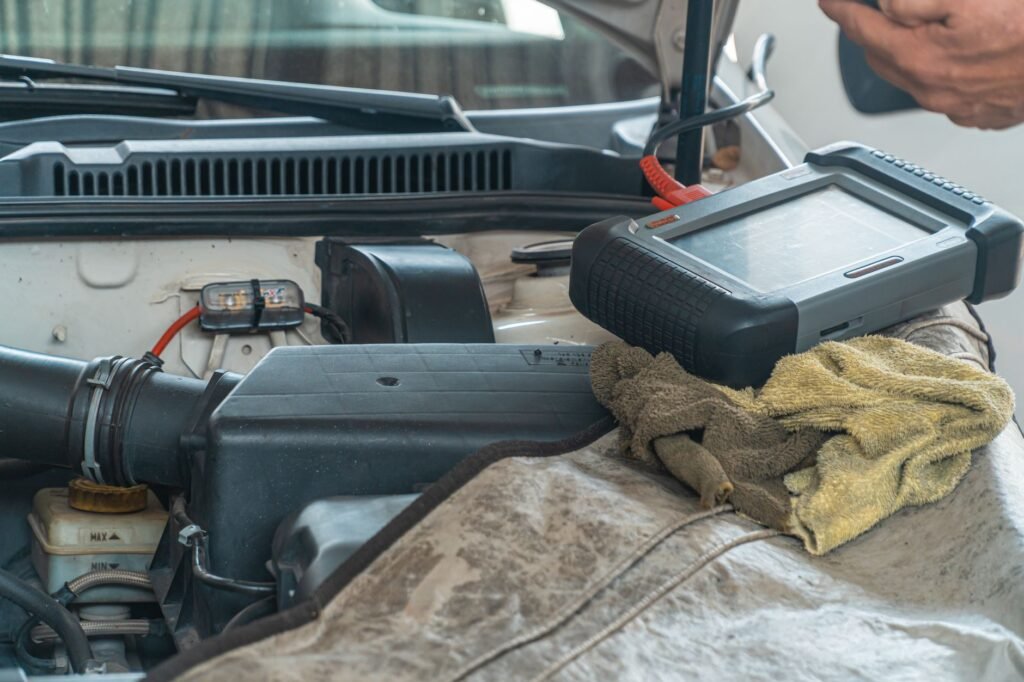
A reputable remapper will run a full diagnostic scan before starting work. If faults are found, they’ll
typically advise you to resolve them first rather than remap over the top of them. Remapping an engine with
active faults doesn’t fix the fault — it can mask symptoms temporarily while the underlying problem continues.
Don’t remap over an engine management light
If your engine management light is on, get a diagnostic scan and address whatever the code is pointing to before
booking a remap. This applies even if the car feels fine to drive. Faults that seem minor in everyday use can
become more significant once the ECU is operating closer to its performance thresholds.
Common faults that should be resolved first
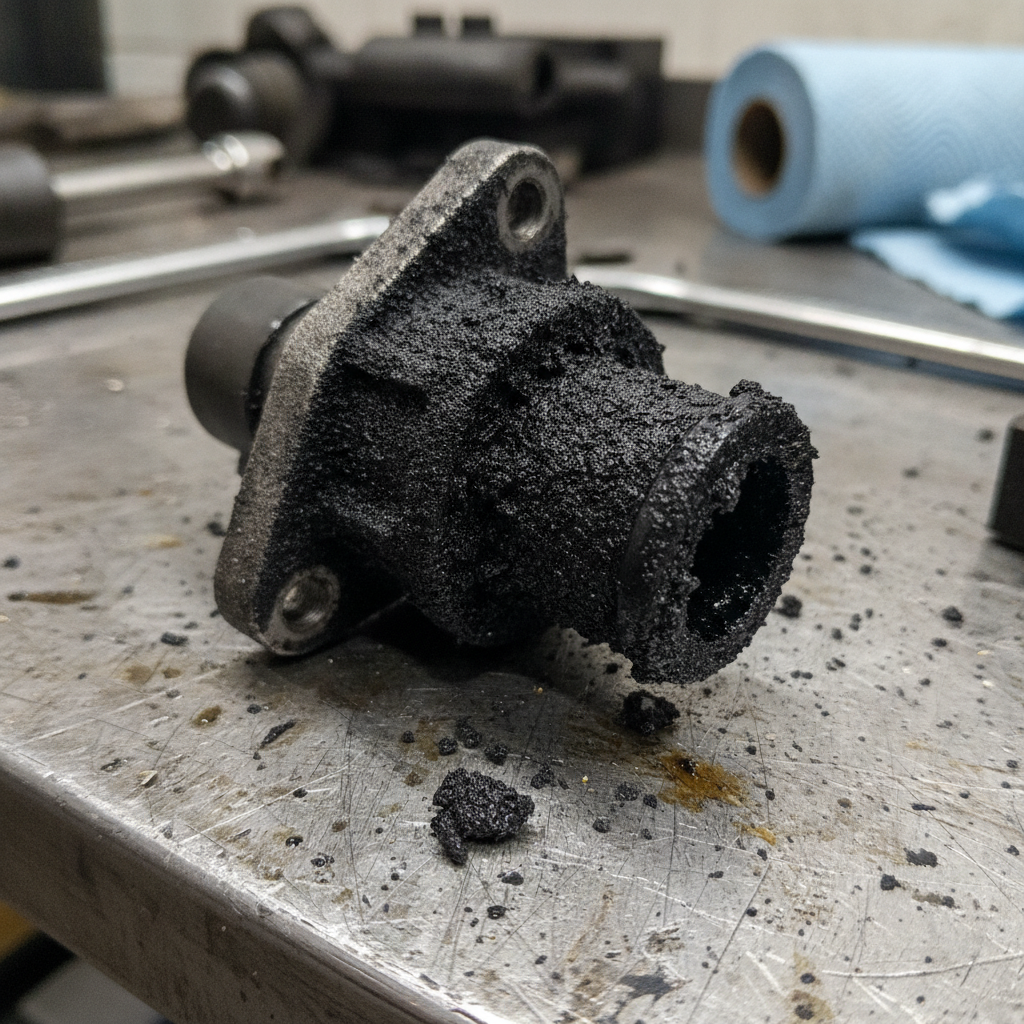
- EGR valve faults (P0400–P0409 range) — these affect fuelling and combustion directly
- DPF pressure sensor faults — the DPF system interacts with boost and fuelling targets
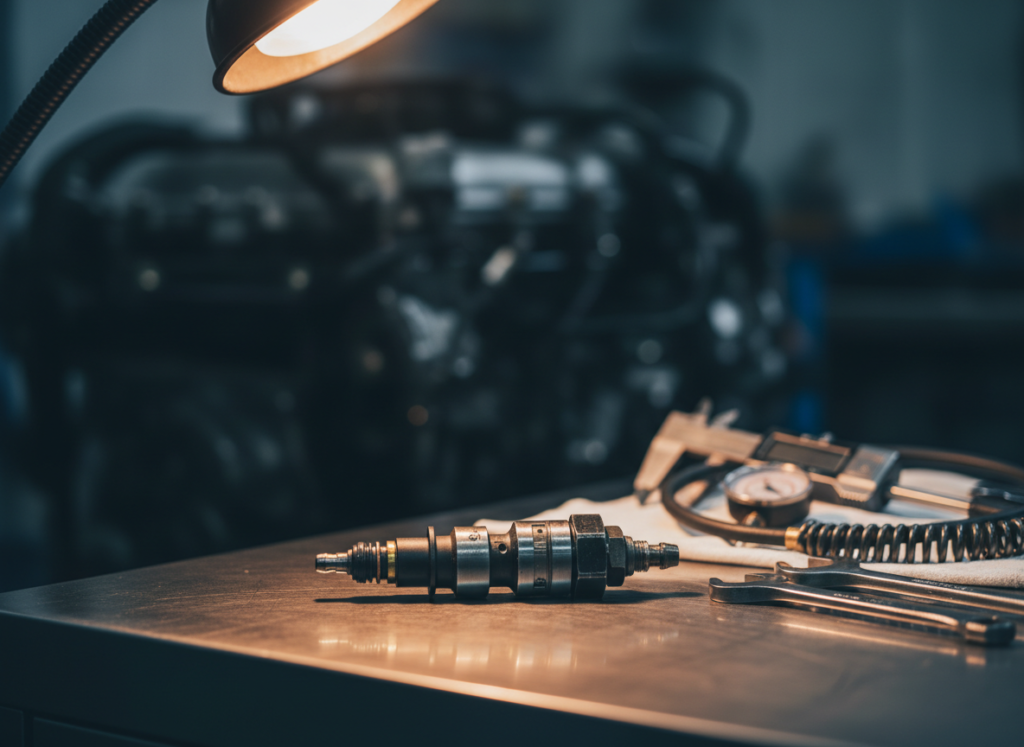
- Injector faults or misfires — a misfiring injector cannot be tuned around
- Boost control faults — a faulty wastegate or VGT actuator will limit what remapping can achieve
- Mass airflow sensor faults — the MAF is a core input for fuelling calculations
If you have an EGR or DPF fault that you’re planning to resolve through a software delete as part of the remap,
speak to your remapper beforehand. The delete and remap can often be carried out together in a single session,
but this needs to be planned — not discovered on the day.
Timing the remap after a service
Once the service is complete, how long should you wait before booking the remap? The honest answer is: not long.
There’s no specific run-in period required after a standard oil and filter service. You can book the remap for
the week after if that suits your schedule.
The one exception is if you’ve had engine or gearbox work carried out — things like a replacement turbo,
injector replacement, or a rebuild of any kind. In these cases, a short run-in period is sensible before
asking the engine to operate at remapped parameters. A few hundred miles of normal driving is typically enough.
New cars and lease returns
If you’ve recently bought a new car, many manufacturers recommend waiting until after the first service interval
before remapping. This typically sits at 1,000 miles or the first 12 months, depending on the manufacturer.
For most used car buyers, this isn’t a consideration — but it’s worth knowing if you’re remapping a nearly-new vehicle.
Can you remap first? When it’s acceptable
There are circumstances where remapping before a service is acceptable, or at least not harmful. If your car is
freshly serviced, in good mechanical health, has no active faults, and you’re more than halfway through a service
interval, remapping first is generally fine. The calibration will be accurate and you won’t need to revisit it.
The scenario where it causes problems is when the service is overdue, faults are present, or mechanical condition
is questionable. If you’re unsure, a professional remapper will carry out diagnostics before they start work
and give you an honest assessment of whether the car is remap-ready.
Leicester Remaps runs diagnostics first
Before any remap, a full diagnostic scan is carried out. If the car isn’t in the right condition, you’ll be told
honestly — not remapped anyway and sent on your way. The original ECU file is always backed up, and the service
is mobile, carried out at your home or workplace across Leicester, Loughborough, Hinckley, and across
Leicestershire and the wider Midlands.
How mobile remapping fits around service schedules
One of the practical advantages of mobile remapping is that it can be booked around your service appointment
with minimal disruption. If you’re getting the car serviced on a Monday, you can have the remap done on Thursday
without taking the car anywhere. Leicester Remaps comes to your home or workplace, so there’s no need to book
a second garage slot or take a day off.
For van and fleet operators across Leicestershire who need to manage downtime, this combination — service at a
workshop, followed by a mobile remap — is often the most practical route. Multiple vehicles can be serviced
in sequence, with the remap following shortly after without pulling the van off the road again.
The mobile service covers Leicester and the surrounding areas including Loughborough, Coalville, Melton Mowbray,
Market Harborough, Hinckley, Rugby, and Coventry, as well as Nottingham and parts of Birmingham.
Common questions answered
Will a remap make my service interval shorter?
A standard Stage 1 remap does not require you to shorten your service interval. The ECU is recalibrated within
parameters that the engine can safely handle. However, some owners with heavily modified or track-focused setups
choose to service more frequently as general good practice. For everyday road use, your standard service interval
is fine.
Does remapping affect what oil I should use?
No — the correct oil specification for your engine is set by the manufacturer and doesn’t change after remapping.
Use the grade specified in your owner’s manual or on the oil cap, as you would normally.
What if my car needs both a remap and EGR or DPF work?
If you’re looking at an EGR delete, DPF solution, or AdBlue delete alongside the remap, these are usually handled
in a single session. This is more efficient and means the calibration accounts for the software changes from the
outset. Discuss this with your remapper when booking so the session is planned correctly.
Can I remap an older high-mileage car?
Yes, but the car’s mechanical condition matters more as mileage increases. Diagnostics before remapping are
especially important on higher-mileage vehicles. A good remapper will assess the engine’s condition and advise
honestly on whether the car will respond well to a remap and what, if anything, should be addressed first.
Does the lifetime software warranty cover remapped cars that develop faults?
The lifetime software warranty offered by Leicester Remaps covers the remap file itself — it means the
software can be adjusted or updated without additional charge. It does not cover mechanical faults that develop
independently of the remap. As with any tuning work, maintaining the car in good mechanical health is important.
Ready to book your mobile ECU remap?
Leicester Remaps carries out diagnostics before every remap and will give you a straight answer on whether
your car is ready. Mobile service across Leicester, Loughborough, Hinckley, Coventry, Nottingham, and the wider Midlands.
Get in touch to book or
learn more about the mobile remapping service.