Pops and Bangs Remap Explained: How It Works, Is It Safe?
You’ve heard the crackle from a car pulling away at traffic lights — or seen videos of exhaust flames on overrun.
That’s a pops and bangs remap at work. This guide explains exactly how it’s achieved, whether it harms your engine, and what to expect from the result.
How it works technically
Safety & legality
Which cars are suitable
Jump to a section
What is a pops and bangs remap?
A pops and bangs remap is a software modification to the engine control unit (ECU) that causes unburned fuel to ignite in the exhaust on overrun.
Overrun is the period when you lift off the throttle while the engine is still turning quickly — the engine braking phase between acceleration and deceleration.
In a standard stock vehicle, the ECU cuts fuel cleanly on overrun to reduce emissions and protect the exhaust system.
A pops and bangs remap changes this behaviour, allowing small amounts of fuel to continue entering the cylinders during overrun.
When this unburned fuel reaches the hot exhaust, it ignites — producing the characteristic crackles, pops, and bangs.
This is a deliberate tuning choice. It’s not a fault, a misfire, or a sign of anything going wrong with the engine.
It’s a specifically mapped behaviour that replicates what high-performance motorsport vehicles do naturally.
How does the remap create the sound?
The tuner modifies several tables within the ECU map to achieve the effect. The key changes typically involve:
- Ignition timing retard on overrun: The spark is deliberately delayed so combustion is not fully complete inside the cylinder. Partially burned gases exit into the exhaust and finish combustion there.
- Fuel cut modification: Instead of cutting fuel delivery completely on overrun, the map allows small injector pulses to continue at specific throttle and RPM combinations.
- Throttle-blip response: Some maps adjust how the throttle responds to quick lifts, creating the conditions for louder, more dramatic overrun events.
- RPM and speed thresholds: Good tuners define specific windows where the behaviour is active — above a certain RPM, within a certain throttle position range — to prevent unwanted triggering at low speed or idle.
The result is a map that produces exhaust sound on overrun without fundamentally changing how the engine performs at normal driving conditions.
Crackle maps vs full pops and bangs
Not all pops and bangs remaps are the same. There’s a spectrum from subtle to dramatic:
Crackle or pop map (mild)
A mild crackle map produces light, subtle exhaust pops on gentle overrun. This is the most popular option for daily-driven vehicles where the owner wants some character without the full performance car soundtrack.
It’s barely audible from inside the cabin and sounds natural rather than forced.
Full pops and bangs map (aggressive)
A more aggressive map produces louder, more frequent bangs — including on hard throttle lifts and during downshifts.
Some versions produce near-constant crackle on overrun, regardless of speed. This is the style associated with aggressive track cars and is noticeably loud both inside and outside the vehicle.
Discuss your preference before booking
A good tuner will discuss the level of aggressiveness you want before mapping the car.
The intensity of the sound can be adjusted at the calibration stage — it’s not a binary on/off setting.
Does a pops and bangs remap damage the engine?
This is the question most drivers ask, and the honest answer is: it depends on how it’s mapped.
A poorly written, overly aggressive pops and bangs map can cause real issues.
Running excessive unburned fuel through the exhaust raises exhaust temperatures and can cause premature wear to:
- Exhaust valves and valve seats
- Lambda (oxygen) sensors
- Catalytic converters
- Turbochargers (on turbocharged vehicles)
However, a properly calibrated map from a qualified tuner is designed to stay within safe temperature and fuelling parameters.
The fuel pulses on overrun are small, the timing retard is controlled, and the active windows are carefully defined.
A mild crackle map written with these constraints carries minimal additional wear risk compared to the stock map.
Cheap or generic maps carry higher risk
An aggressive pops and bangs map bought cheaply online or applied without proper calibration for your specific vehicle is where damage risk increases significantly.
This is an area where quality of the tuner matters enormously.
One area worth noting: the exhaust system itself — particularly the cat and any particulate filter — will experience additional thermal stress under an aggressive map.
On vehicles with a diesel particulate filter (DPF), very aggressive pops and bangs settings are not recommended.
Is a pops and bangs remap legal in the UK?
On the engine modification side, a pops and bangs remap is legal for road use in the UK as long as it doesn’t remove or defeat emissions control equipment.
A map that retains the DPF, catalytic converter, and other emissions hardware intact is not illegal under the Road Vehicles (Construction and Use) Regulations.
The noise side of things is a more nuanced area.
UK law prohibits driving in a manner that causes unnecessary nuisance — and a vehicle producing extremely loud exhaust pops in residential areas late at night could attract attention from police.
This is less about the modification itself and more about how and where the car is driven.
For MOT purposes, a pops and bangs remap that doesn’t remove emissions hardware should not affect your ability to pass. The car will still be assessed on emissions output at idle and at raised RPM, and a well-calibrated map should not push these measurements outside acceptable limits.
Declare the modification to your insurer
Like any ECU modification, a pops and bangs remap should be declared to your insurer.
Failing to declare it is the main legal and financial risk — not the remap itself.
Which cars are suitable for a pops and bangs remap?
Most modern turbocharged petrol vehicles are good candidates. Naturally aspirated engines can also be mapped, though the effect is generally less pronounced due to lower exhaust temperatures.
Well-suited vehicle types include:
- Turbocharged hatchbacks (Golf GTI, Focus ST, Astra VXR, Fiesta ST)
- Performance saloons and estates with turbo petrols
- Sports cars and coupes with compatible ECU hardware
- Older naturally aspirated performance cars where the ECU supports map modification
Diesel engines are generally not mapped for pops and bangs — the combustion characteristics are different and the effect doesn’t translate in the same way.
Vehicles with an active DPF are also not ideal candidates for aggressive sound maps due to the thermal stress involved.
The best way to confirm suitability is a pre-remap conversation with your tuner. They’ll be able to tell you what’s achievable on your specific make, model, and engine before you book.
What does a pops and bangs remap actually sound like?
The sound varies considerably depending on the map intensity, the exhaust system fitted, and the engine itself.
On a mild crackle map with a standard exhaust, you’ll hear light, rapid pops on sharp throttle lifts and during active downshifts.
Inside the cabin it may be barely noticeable. Outside, it sounds characterful rather than intrusive.
On a more aggressive map with a performance exhaust or de-cat, the overrun becomes significantly louder — more dramatic bangs, visible flames at the exhaust tip under harder conditions, and a continuous crackle sound during sustained deceleration.
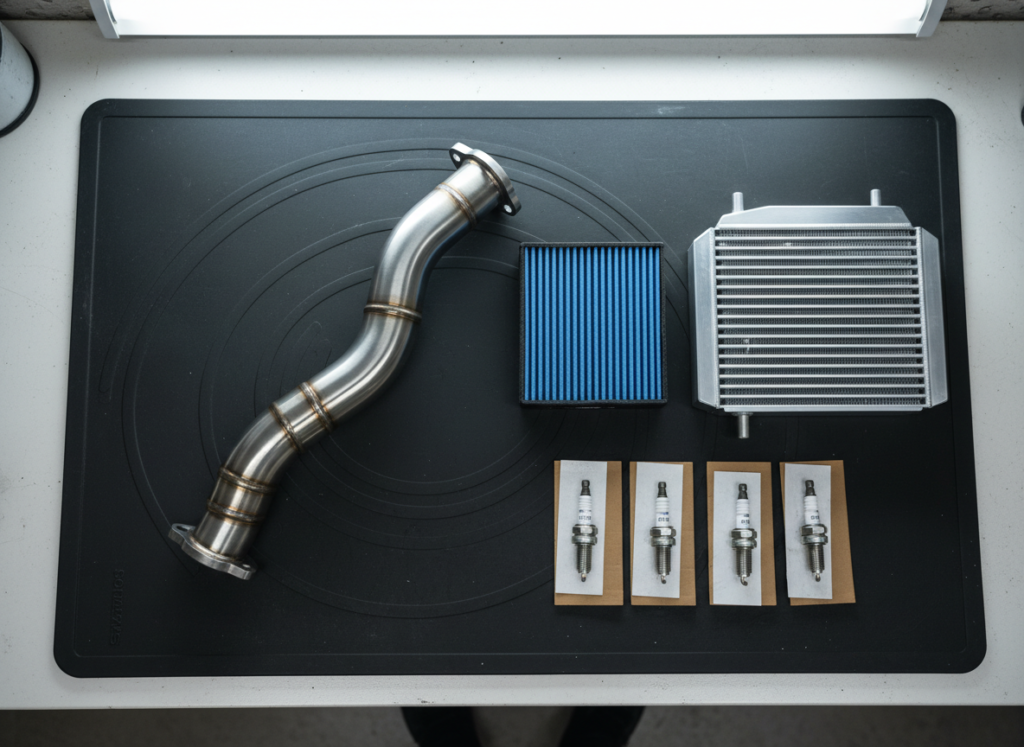
Pairing a pops and bangs tune with a louder exhaust amplifies the effect considerably.
If you’re planning to add an aftermarket exhaust in addition to the map, discuss the combination with your tuner so the calibration accounts for the changed exhaust flow characteristics.
Combining a pops and bangs map with a performance remap
A pops and bangs element is frequently added as part of a broader Stage 1 performance remap rather than as a standalone modification.
This is often the most sensible approach — the tuner is already working with your ECU file and can incorporate the sound calibration into the same session.
The performance side of the remap improves power, torque, and throttle response.
The pops and bangs element adds the soundtrack on overrun.
Together, they deliver a noticeably different driving experience without requiring any hardware changes.
Some drivers request the sound map only, without changes to power outputs.
This is also possible on most vehicles and allows the driver to enjoy the exhaust note without the additional power that might affect warranty or insurance at a more significant level.
Interested in a pops and bangs remap in Leicester?
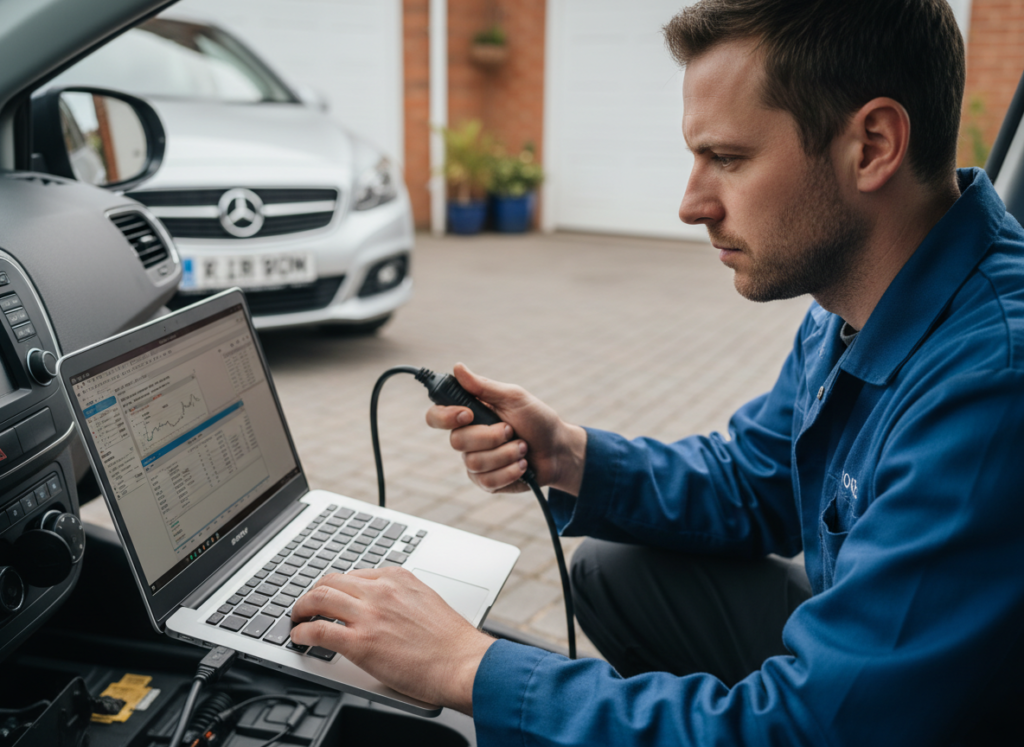
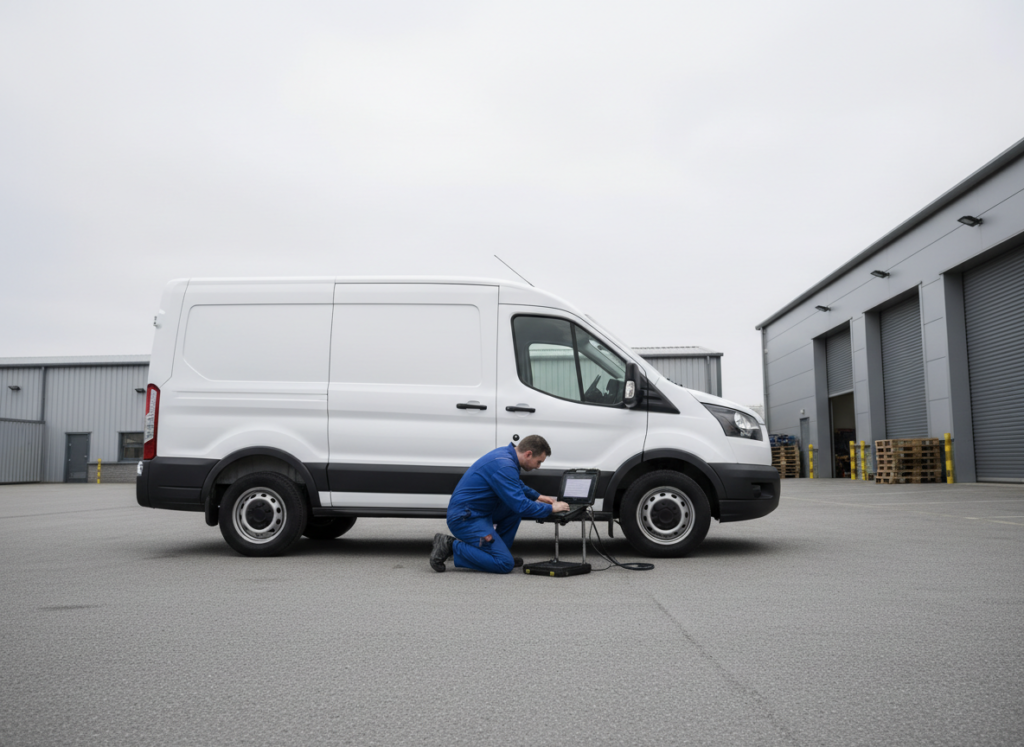
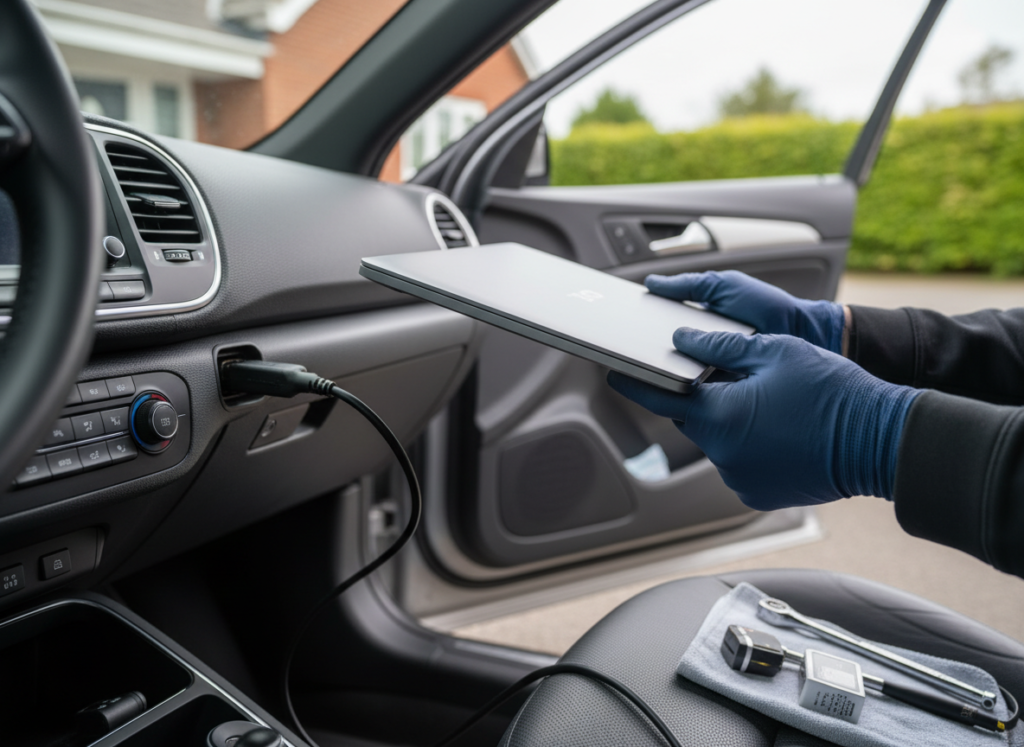
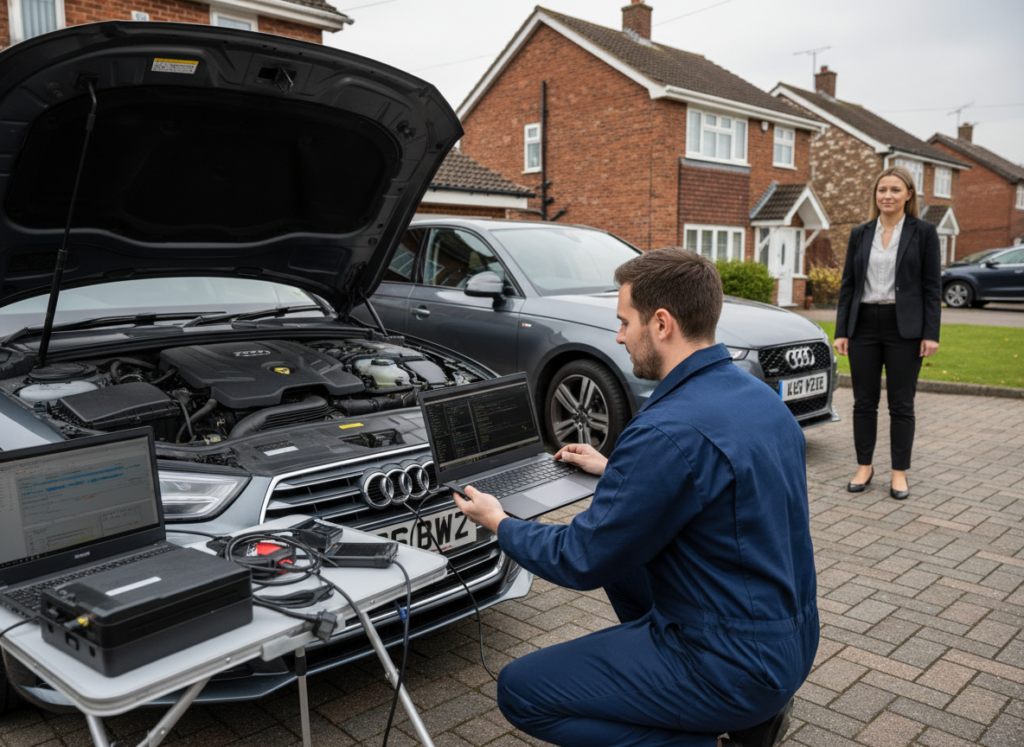
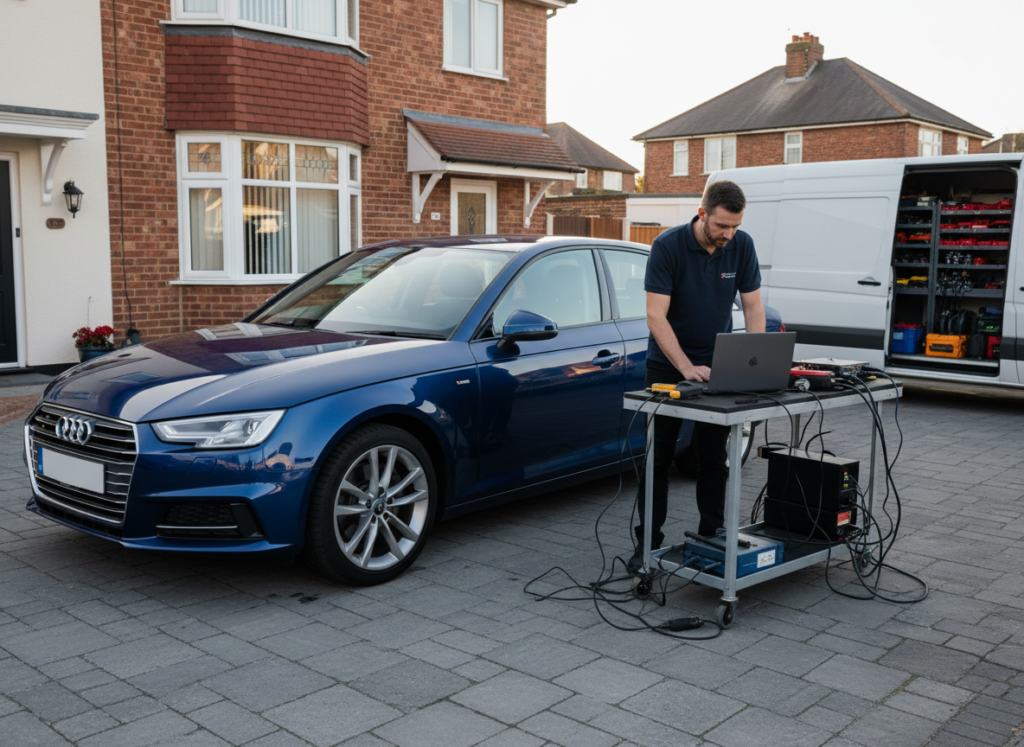
Leicester Remaps offers pops and bangs tuning and full Stage 1 performance remaps across Leicester, Leicestershire, and the wider Midlands — all carried out as a mobile service at your home or workplace.
View our pops and bangs service or
get in touch to discuss your car.