NOx Sensor Fault or AdBlue Fault? How to Tell
When a modern diesel starts showing SCR or emissions warnings, a lot of drivers end up asking the same question. Is it the NOx sensor, or is it the AdBlue system itself? The problem is that the dash rarely makes that clear. You might see an engine warning light, an emissions message, an AdBlue countdown, limp mode, or a fault code like P20EE or P229F.
Those signs can overlap, which is why people often replace the wrong part first. The better way to look at it is simple. A NOx sensor fault is one possible cause inside the wider AdBlue and SCR system. The job is to work out whether the sensor is the real trigger or whether the system has a bigger fault around dosing, pressure, tank, injector, or catalyst performance.
AdBlue fault
SCR warning
Euro 6 diesel
Quick answer
A NOx sensor fault is usually a more specific problem inside the emissions system. A wider AdBlue fault can involve the NOx sensor, but it can also come from the tank, pump, injector, pressure side, wiring, SCR catalyst efficiency, or the way the system is dosing fluid. Leicester Remaps’ NOx Sensor Delete page says failed NOx sensors can trigger warning lights, limp mode, and AdBlue-related errors, while its blog archive also shows broader AdBlue topics already live on the site. That is the clue. A NOx sensor issue can look like an AdBlue problem on the dash, but not every AdBlue problem is a NOx sensor failure.
If you want the simplest rule, use this one. When the system fault is narrow and sensor-led, the NOx sensor is often the likely trigger. When the fault pattern points to fluid dosing, pressure, tank issues, repeated countdowns, or broader SCR performance failure, the AdBlue system needs looking at as a whole.
What is the difference between a NOx sensor fault and an AdBlue fault?
The NOx sensor is one component. The AdBlue system is a bigger chain of parts and functions.
The sensor’s job is to monitor nitrogen oxide levels and feed that data back into the SCR system. The AdBlue side then uses reductant dosing to help the catalyst reduce emissions. If the sensor gives bad information, the system can make the wrong decisions or fail its own checks. If the dosing side has a problem, the system can still fail even if the NOx sensor itself is fine. Leicester Remaps’ NOx page says the service disables faulty sensor input and the SCR feedback loop that causes warning lights and limp mode, which tells you how closely the two are linked.
So when people say “AdBlue fault”, they are often using a broad label for several possible failures. That is why the same dash message can lead to very different repair paths.
Why drivers mix them up
Because the car mixes them up first. Dashboard warnings are written for the average driver, not for a technician. You may see “AdBlue malfunction”, “check emissions”, “engine light”, “start not possible in x miles”, or limp mode with no mention of the sensor that triggered it. Leicester Remaps’ NOx page even says failed NOx sensors often bring constant AdBlue-related errors, which shows how easily one looks like the other in real use.
The Leicester Remaps blog archive also already contains broader AdBlue guides, Transit AdBlue fault content, and AdBlue system comparisons, which supports the idea that many user searches start with the broader “AdBlue problem” wording rather than the more precise “NOx sensor” wording.
That is why the right comparison article matters. It helps the reader understand whether they are looking at a likely sensor-led issue or a wider SCR and AdBlue-system failure before they spend money on guesswork.
Signs it may be a NOx sensor fault
There is no single perfect sign, but some patterns do point more strongly towards the sensor side.
- Recurring warning lights with little obvious change in AdBlue fluid use
- Limp mode linked to emissions warnings
- Fault codes linked to NOx readings or sensor plausibility
- Repeated SCR warnings after sensor replacement history
- A van or diesel car that drives normally in other ways but keeps logging emissions faults
Leicester Remaps’ live NOx page specifically names warning lights, limp mode, and constant AdBlue-related errors as common signs when the NOx sensor has failed. It also lists common codes including P2200, P229F, and P20EE. That does not mean P20EE always equals a bad NOx sensor, but it does show the kind of pattern Leicester Remaps sees on sensor-led cases.
If the system is throwing sensor-led codes, keeps returning to limp mode, and the wider dosing side has not shown obvious faults, a NOx issue moves higher up the list.
Signs it may be a wider AdBlue fault
A broader AdBlue or SCR fault often comes with a messier pattern because more parts can be involved.
| Sign | Why it points wider than the NOx sensor alone |
|---|---|
| No-start countdown or start inhibitor | The system is failing compliance checks at a wider level |
| Incorrect fluid or AdBlue quality warnings | This points more towards dosing, tank, or fluid-side issues |
| Pressure-related faults | These often sit around the pump, lines, or injector side |
| AdBlue tank or level issues | These are outside the NOx sensor itself |
| Repeated SCR efficiency failure after clears | This can come from dosing, catalyst, or a wider system problem |
The Leicester Remaps NOx page mentions the sensor as one cause inside a broader SCR loop, but it also refers to AdBlue-linked issues, which supports the need to separate a pure sensor fault from a full system problem. The contact page and service structure also show that Leicester Remaps treats remapping, NOx, AdBlue, DPF, and EGR as separate service paths rather than one generic bucket.
So if the warning pattern includes tank faults, countdown messages, or dosing-related symptoms, do not narrow in on the NOx sensor too early.
What the common fault codes can tell you
Codes help, but only when they are read in context.
Leicester Remaps calls out P2200, P229F, and P20EE on the NOx page. P2200 and P229F often push suspicion more towards sensor input and NOx monitoring behaviour. P20EE is trickier because it can sit around SCR efficiency failure, which may be caused by the sensor, but can also be caused by wider AdBlue dosing or catalyst performance problems. That is exactly why one code read is not enough to decide which part is bad.
This is where many drivers lose money. They see a familiar code online, replace the part the internet shouts about first, and then find the warning returns because the original cause sat elsewhere. Leicester Remaps’ service wording leans heavily on confirming compatibility and using a diagnostic-led process rather than guessing, which is the right mindset here.
A code can point you in the right direction. It does not prove the first part you should replace.
Why no-start countdowns muddy the picture
No-start countdowns make people think “AdBlue problem” straight away, and that is understandable. The message usually talks about the AdBlue system or engine restart. The complication is that a failed NOx sensor can still be part of what pushed the SCR system into that countdown state. Leicester Remaps’ NOx page includes a Transit Custom case with P229F, P2200, limp mode, and an active AdBlue countdown. That is a useful real-world example because it shows the overlap clearly. A sensor-led failure can still present as an AdBlue and countdown problem to the driver.
That means the countdown itself does not settle the argument. It only tells you the system has reached a point where the fault now matters at restart level. You still need to prove whether the root cause is sensor input, dosing, pressure, tank logic, injector behaviour, or catalyst performance.
What to check first
Before you jump to a part, work through the simple checks in the right order.
- Check the exact message on the dash
“AdBlue low”, “incorrect fluid”, “engine start not possible”, and a plain engine warning light are not the same thing. - Read the stored codes properly
One emissions warning can hide several stored faults. The code family matters. - Look at the pattern, not one moment
Is the fault constant, intermittent, linked to limp mode, or always coming back after clearing? - Pay attention to countdown behaviour
If restart warnings are active, stop relying on guesswork and get the system checked properly. - Do not assume a refill or code clear has solved it
Many SCR faults return after the next self-check cycle if the real cause is still there.
This step-by-step, problem-first style matches the Leicester Remaps writing rules, which say technical topics should be explained in plain English, with clear next steps rather than vague hype.
What proper diagnostics should include
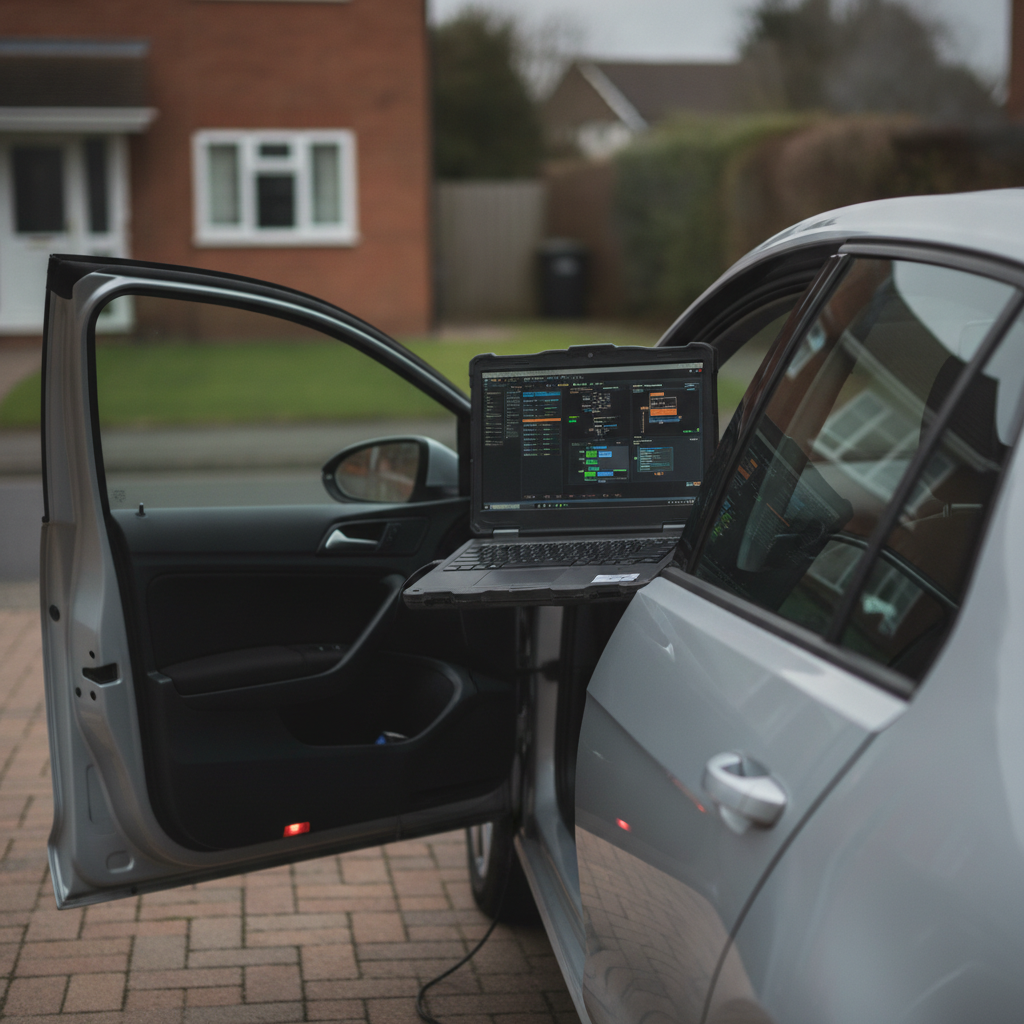
If you really want to tell the difference between a NOx sensor fault and a broader AdBlue fault, diagnostics need to move beyond one basic code read.
At minimum, that should usually mean a full scan, a look at the stored and pending codes, a review of live readings where possible, and a check of whether the system failure makes sense as a sensor-input problem or as a dosing and SCR problem. Leicester Remaps’ NOx page describes its process as diagnostic-led, with compatibility checks and before-and-after scans, which is exactly the approach this type of fault needs.
That also fits the approved Leicester Remaps proof notes and positioning documents, which say diagnostics before and after, original ECU file backup, and professional tools are part of the live business messaging.
Without that extra layer, you are only matching symptoms, not proving the cause. On a system this interlinked, that is where expensive mistakes happen.
When the NOx service page is the right next step
The Leicester Remaps NOx page is the better fit when the fault pattern points strongly towards repeated sensor-led errors, limp mode caused by NOx monitoring failure, or recurring codes like P2200 and P229F. The page also says these deletes are popular on Euro 6 diesel cars and vans, especially Transit Custom, Ranger, Sprinter, Boxer, Relay, Ducato, BMW diesel models, and VAG diesels with SCR systems.
That does not make it the right answer for every AdBlue warning. The wider AdBlue path still makes more sense when the symptoms are broader, more fluid-side, or clearly tied to tank, dosing, or countdown behaviour first. This split also matches the Leicester Remaps sister-company guidance, which says more fault-specific AdBlue, NOx, Urea, and SCR content can sometimes be a better fit for iFixAdBlue when the reader intent is very problem-specific.
For this article, the cleanest internal journey is to link first to Leicester Remaps’ NOx Sensor Delete page and then to the main contact page, because the reader is still working out which side of the fault pattern they are on.
The right next step
If you are stuck between “NOx sensor fault” and “AdBlue fault”, the right next step is not guessing which label sounds closest. It is narrowing down whether the system is failing because of sensor input or because the wider SCR and dosing setup has a bigger problem. Leicester Remaps already positions itself around mobile diagnostics-led software solutions, covers Leicester, Loughborough, Hinckley, Coalville, Melton Mowbray, and surrounding towns, and asks drivers to send vehicle details so compatibility can be checked before work starts.
Need help working out whether it is NOx or AdBlue?
If your diesel keeps showing SCR, AdBlue, or NOx-related warnings, get the fault pattern checked properly before replacing parts in hope. Leicester Remaps covers sensor-led and software-based emissions fault issues across Leicester and surrounding areas.
View the NOx Sensor Delete service or contact Leicester Remaps here.
Final thought
A NOx sensor fault and an AdBlue fault can look almost identical from the driver’s seat, which is why so many people end up chasing the wrong fix first. The useful distinction is this. The NOx sensor is one likely trigger inside a bigger SCR and AdBlue system. If the evidence points to sensor readings and limp mode, the NOx side moves higher up the list. If the fault pattern points to dosing, tank, pressure, injector, or countdown issues, the wider AdBlue system needs looking at as a whole. Once you separate those two ideas, the next step becomes much clearer.
FAQs
Can a NOx sensor fault cause AdBlue warnings?
Yes. Leicester Remaps says failed NOx sensors often trigger AdBlue-related errors, limp mode, and warning lights because they affect the SCR feedback loop.
Does a P20EE code always mean the NOx sensor is bad?
No. Leicester Remaps lists P20EE on its NOx page, but SCR efficiency faults can also come from wider AdBlue or catalyst-side issues, so the code needs context.
What codes point more strongly to a NOx sensor issue?
Codes like P2200 and P229F are more sensor-leaning examples on the Leicester Remaps NOx page, though the full fault picture still matters.
Can a no-start countdown still be caused by a NOx sensor fault?
Yes. Leicester Remaps shows a Transit Custom case where NOx-related faults sat alongside an active AdBlue countdown.
What should I do first if I am not sure which fault it is?
Get the stored codes and the wider fault pattern checked properly before replacing parts, because the same dashboard message can come from very different failures.