Last Updated: May 2026
AdBlue Delete Disadvantages: The Risks No One Tells You About
When you’re staring at constant AdBlue warnings and scary “no engine start” messages, a cheap AdBlue delete can look very tempting. Search results are full of people saying it’s the “best thing they ever did” — but you rarely see the full list of AdBlue delete disadvantages.
This guide walks through the real‑world risks we see in the workshop: legal, financial and mechanical. If you’re weighing up your options, it’s worth reading this before you spend a penny — and before you decide whether to talk to a specialist like Leicester Remaps’ AdBlue solutions team.
We also cover what the disadvantages look like specifically for van owners. Ford Transit drivers, in particular, often face aggressive AdBlue warnings before truly understanding what a delete involves — our guide to Ford Transit AdBlue system malfunction fixes covers what the warning actually means and why a delete is rarely the right first call.
1. How AdBlue Deletes and Emulators Actually Work
Most AdBlue deletes fall into two camps:
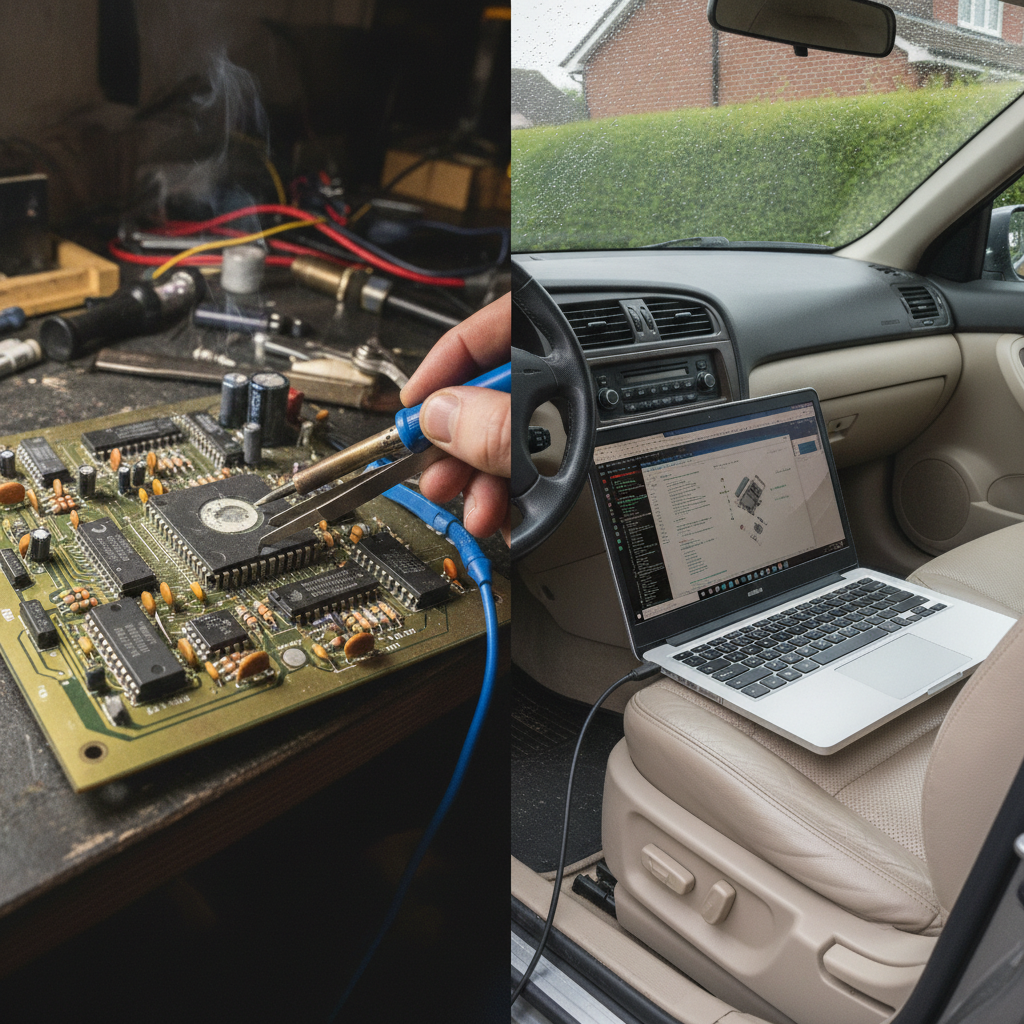
- Software map‑outs — the tuner edits the ECU file so it stops looking for AdBlue system feedback and no longer logs certain faults.
- Emulator boxes — a device is wired into the system to “pretend” the tank, pump and sensors are working, even if they’re not.
The two approaches differ in reliability, detectability, and what happens if you need to reverse them. For a full comparison, see our guide on AdBlue emulators vs software ECU deletes.
In both cases, the goal is to silence the warnings and stop the vehicle going into limp mode or refusing to start. What they don’t tell you is that the underlying fault is still there — and the vehicle is now running outside the emissions standards it was approved for.
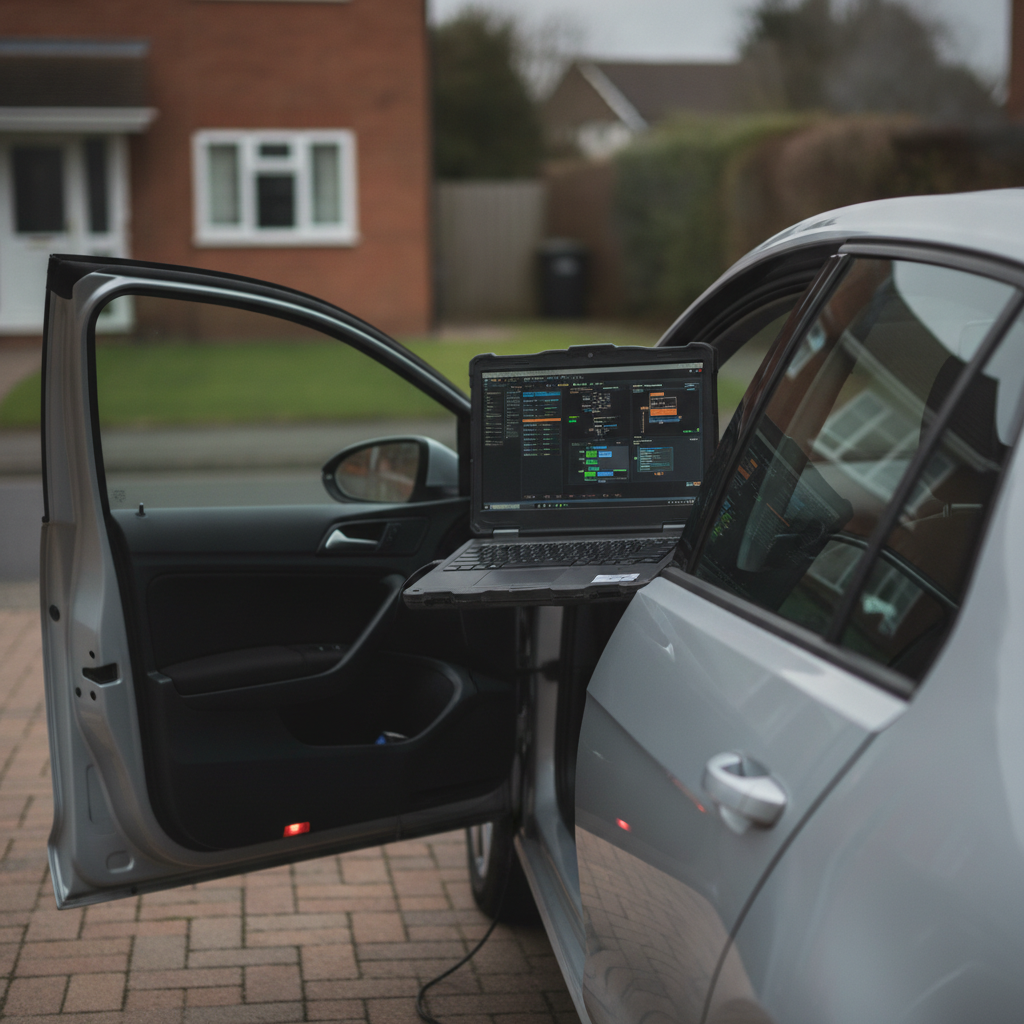
Emulators are also increasingly visible to modern diagnostic tools. Dealer-level equipment used at main agents and by some independent garages can flag emulator signals, creating problems at service time as well as MOT.
If you’re not sure how the AdBlue system is meant to work in the first place, our guide to common AdBlue system faults in modern diesels is a useful starting point before making any decisions.
2. Legal and MOT Disadvantages of AdBlue Delete
The biggest disadvantage is simple: in the UK, permanently disabling or removing AdBlue on a road‑going vehicle is not legal.
- UK regulations treat AdBlue/SCR as part of the vehicle’s emissions control equipment. Removing or disabling it breaches the Road Vehicles (Construction and Use) Regulations.
- MOT testers are instructed to fail vehicles where emissions systems have clearly been tampered with or removed.
- DVSA has already run enforcement campaigns against AdBlue emulators on HGVs and buses — and in 2026, roadside camera enforcement targeting excess NOx emissions has expanded to light vehicles.
That means an AdBlue delete can lead to:
- MOT failures and re‑test fees.
- Prohibition notices or fines if the vehicle is inspected at the roadside.
- Potential prosecution of the garage that carried out the work.
- Potential action against operators in the case of fleets and work vans.
For a full breakdown of the legal position, including what the regulations say in plain English and how enforcement has changed in 2026, see our dedicated article on whether AdBlue delete is legal in the UK.
3. Insurance and Liability Risks
Another major disadvantage of AdBlue delete is how an undeclared modification can affect your insurance:
- Most policies require you to declare material modifications. An AdBlue delete is a clear change to the emissions system and arguably to the vehicle’s legal roadworthiness.
- If a serious accident leads to an engineer’s report, a visible emulator box or obvious software tampering can give your insurer grounds to refuse a claim.
- In a worst‑case scenario, you could be personally liable for third‑party costs if the insurer walks away from the policy.
- Commercial vehicle and fleet policies often include a specific clause around compliance with construction and use regulations — a delete can void that coverage entirely.
None of that appears in the original £200 delete quote. It’s a risk that becomes very real if something goes wrong on the road.
4. Technical Problems With AdBlue Delete
From a mechanical and electronic point of view, AdBlue deletes introduce their own set of reliability problems — separate from the legal risks entirely.
4.1 Hiding real faults instead of fixing them
The most obvious disadvantage is that a delete hides the symptoms, not the cause. Common underlying issues like:
- Crystallised AdBlue blocking injectors or lines.
- Failing NOx sensors.
- Tank heater or pump failures.
are still present in the background. If those faults start to affect other parts of the exhaust or engine, you’ll never see the early warnings — only the expensive damage later. A deleted system doesn’t protect the hardware; it just prevents you from knowing when that hardware is failing.
4.2 Poor‑quality software and wiring
Many cheap deletes and emulator installs involve:
- Cutting into factory wiring looms with non-standard connectors.
- Using low‑quality insulation and joins that degrade over time.
- Flashing untested or generic remap files from unknown sources.
We regularly see vehicles in the workshop where the delete itself has caused:
- Intermittent electrical faults and random warning lights unrelated to AdBlue.
- Communication errors between CAN bus modules.
- Unstable running, poor fuel economy or increased smoke.
4.3 Harder and more expensive diagnostics in future
Once an emulator or compromised remap has been fitted, any future diagnostic work becomes more complicated and more expensive. Before we can identify what’s actually wrong, we often have to:
- Locate and remove the emulator and repair the wiring back to factory standard.
- Restore the ECU to a known‑good software state (which may require original file recovery).
- Re‑run all tests from scratch with clean data.
That undoing process can take as long as the original diagnostic would have — meaning you pay twice: once for the delete, and once to undo it.
4.4 Resale value and pre-purchase inspections
A vehicle with a known or suspected AdBlue delete becomes significantly harder to sell. Private buyers increasingly request pre-purchase inspections, and any dealer doing a proper check will flag a modified ECU or emulator in the system. In many cases, the vehicle either sells at a steep discount or doesn’t sell at all until the delete is reversed and the system is properly restored — an additional cost that’s rarely factored in at the time of the original modification.
5. The Long‑Term Financial Cost vs a Proper Fix
On paper, a £200 delete looks cheaper than a £600 repair. But once you factor in all of the disadvantages above, the numbers shift considerably:
- MOT failures and re‑test fees.
- Potential fines or prohibition notices from roadside enforcement.
- Extra labour to undo the delete and restore factory wiring and software before any further diagnostic work can begin.
- Higher risk of expensive exhaust or engine damage if underlying faults go undetected behind the delete.
- Reduced resale value and potential costs to restore the vehicle for sale.
In a significant number of cases, the total cost of “delete now, fix properly later” ends up higher than diagnosing and repairing the AdBlue system correctly the first time. The £200 upfront saving can easily turn into a four-figure problem within 12–18 months.
6. Environmental and Reputation Impact
While it’s not always top of mind when you’re facing a repair bill, there are also environmental and practical reputation downsides worth considering:
- A deleted AdBlue system can emit many times more NOx than a compliant vehicle — a particularly significant issue in urban areas where air quality monitoring is active.
- For businesses and fleets, being associated with emissions tampering carries brand and contractual risk, particularly if the business works with local authorities, schools, or any organisation with environmental commitments.
- Clean air zones and low-emission zone regulations continue to expand across UK cities in 2026. Non-compliant vehicles face daily charges or outright bans, and the trend is only going in one direction.
7. Better Alternatives to Risky AdBlue Delete
If you’re mainly considering a delete because you’re fed up with faults and downtime, there are usually better options available — many of which cost less than people expect.
7.1 Proper diagnostics and targeted repair
In many cases, the real fault is a NOx sensor, injector, heater element or wiring issue. Once diagnosed correctly, repairing that specific component can restore normal operation without touching the rest of the system. A targeted repair costs far less than a full system overhaul and leaves the vehicle fully compliant.
7.2 Manufacturer goodwill and extended warranty
Some manufacturers have known issues with certain AdBlue components across specific model years. It’s worth checking whether your vehicle qualifies for:
- Extended warranty repairs at a reduced cost.
- Goodwill contributions toward parts or labour.
- Software updates that improve SCR system reliability.
7.3 Diagnostic‑led AdBlue solutions from Leicester Remaps
At Leicester Remaps we focus on solutions that:
- Start with proper diagnostics using dealer-level tools, not guesswork.
- Keep the vehicle road‑legal and MOT‑compliant.
- Balance repair cost, reliability and how you actually use the vehicle day to day.
You can see an overview of how we approach AdBlue faults on our AdBlue solutions service page, and we provide brand‑specific guidance for:
8. Next Steps if You’re Already Considering a Delete
If you’ve been quoted for an AdBlue delete or emulator — or you’re already driving a vehicle that’s been modified — the most important next step is to get honest, technical advice before committing to anything.
Leicester Remaps can:
- Check the current state of your AdBlue and emissions systems with dealer-level diagnostic tools.
- Identify any existing deletes or emulator boxes and explain your options without pressure.
- Help you move towards a solution that keeps you legal, keeps you moving, and doesn’t cost more than it needs to.
To get started:
- Read our AdBlue delete legality guide for the full UK legal picture.
- Visit the AdBlue solutions page to see how we approach diagnostics and repair.
- Use the details on our contact page to request a quote or book a diagnostic session.
Understanding the full picture of AdBlue delete disadvantages makes it much easier to choose a repair path that protects your wallet, your vehicle and your licence in the long run.
Frequently Asked Questions
What are the main disadvantages of an AdBlue delete?
The main disadvantages are legal (it’s not road-legal in the UK), MOT-related (the vehicle will fail if tampering is detected), insurance-related (undeclared modifications can void your policy), and technical (the delete hides underlying faults rather than fixing them, and poor-quality installs frequently cause additional electrical problems).
Will an AdBlue delete fail the MOT in 2026?
Yes — any vehicle where the AdBlue or SCR system has been visibly tampered with or disabled is subject to an automatic fail. MOT testers are trained to spot missing or modified emissions components, and diagnostic tools can flag emulator signals. With DVSA roadside enforcement expanding in 2026, the risk extends beyond the MOT test itself.
Is an AdBlue delete ever legal in the UK?
Not for vehicles used on public roads. AdBlue/SCR is classified as emissions control equipment under UK law. Disabling or removing it on a road-registered vehicle breaches the Road Vehicles (Construction and Use) Regulations, regardless of whether the vehicle “feels” like it runs better afterwards.
What happens if I buy a used car that already has an AdBlue delete?
The liability effectively transfers to you as the registered keeper once you’re driving it on public roads. At MOT time, the modification will likely be flagged. The most straightforward course of action is to have the emulator removed and the ECU restored before the vehicle’s next MOT — the cost is usually lower if done as a planned job rather than as emergency pre-MOT remediation.
Is there a legal AdBlue fix that still stops the warnings?
In most cases, yes — the right approach is to diagnose and repair the specific component causing the fault (NOx sensor, heater, injector, or wiring), then recalibrate the ECU software to work correctly with the repaired system. This removes the warnings because the fault is fixed, not because the system has been fooled into thinking everything is fine.
How much does it cost to reverse an AdBlue delete?
It varies depending on how the delete was carried out. A software-only map-out can often be reversed with an ECU restore, though this requires access to the original file. Emulator removal involves locating and removing the device and repairing any wiring that was modified. We’d always recommend a diagnostic session first to understand the exact scope before quoting — contact us for an honest assessment.
Get Honest AdBlue Advice Before You Decide
Don’t commit to an AdBlue delete without understanding the full picture. Leicester Remaps offers proper diagnostics, transparent advice and compliant solutions across Leicestershire — no pressure, no guesswork.
📞 07849 475153 leicesterremaps@gmail.com