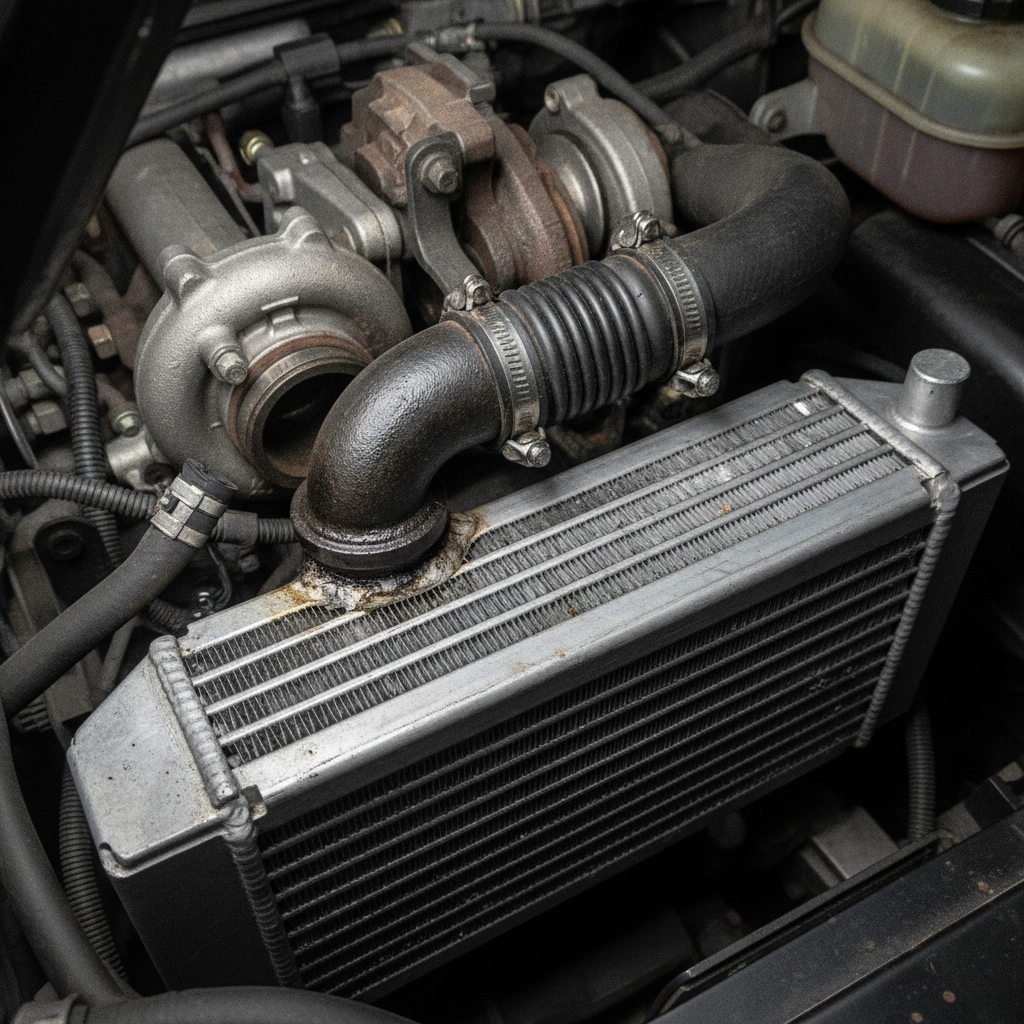
EGR Cooler Leak Symptoms: White Smoke, Coolant Loss and Why a Delete Won’t Fix It
An EGR cooler leak is one of the few diesel faults that looks exactly like a head gasket failure and gets misdiagnosed as one almost every time. Here is how to tell them apart, what the DVSA actually says about the EGR system at MOT, and why software cannot solve a coolant problem.
Coolant Loss
White Smoke
Diesel Diagnostics
EGR Solutions
In This Guide
The Short Answer
EGR cooler leak symptoms in 50 words
A leaking EGR cooler causes coolant loss with no visible puddle, thick white sweet-smelling smoke that is worst on start-up and under load, an unexplained drop in the header tank, and often an EGR flow fault code. The oil usually stays clean — which is what separates it from a head gasket.
If you have arrived here because your diesel is drinking coolant and blowing white smoke, the single most useful thing to know is this: the exhaust gas recirculation cooler sits between the coolant system and the exhaust system, so when its internal core cracks, coolant goes straight into the exhaust stream and out of the tailpipe as steam. Nothing drips on the driveway. Nothing shows on a visual inspection. It is a hidden leak by design.
The rest of this guide is about proving it is the cooler rather than something more expensive, and about a point most articles on this topic get wrong.
What the EGR Cooler Actually Does
The exhaust gas recirculation system exists to cut oxides of nitrogen. It takes a measured amount of exhaust gas from the exhaust side and feeds it back into the intake, which both lowers the oxygen content of the air-fuel mixture and lowers peak combustion temperature. Less oxygen and less heat means less NOx. That is the whole principle, and component manufacturer NGK describes the same double effect — reducing the oxygen in the mixture and reducing the temperature in its technical documentation on EGR valve function.
The problem is that raw exhaust gas leaves the manifold extremely hot. Feeding it straight back into the intake would undo the temperature benefit and cook the intake components. So on most modern diesels the gas is routed through a cooler first — a small heat exchanger plumbed into the engine coolant circuit that drops the gas temperature before it reaches the inlet.
NGK’s own product range reflects this: alongside pneumatic and electric EGR valves, it lists electric valves with an integrated cooling unit specifically to reduce the temperature of the recirculated gases further. The cooler is not an optional extra. On a Euro 5 or Euro 6 diesel it is a load-bearing part of the emissions strategy.
The design compromise
Inside an EGR cooler, engine coolant at around 90°C runs within millimetres of exhaust gas that can arrive at several hundred degrees, separated only by thin metal tubes or plates. That thermal gradient is what the part is for — and it is also exactly why the part eventually fails.
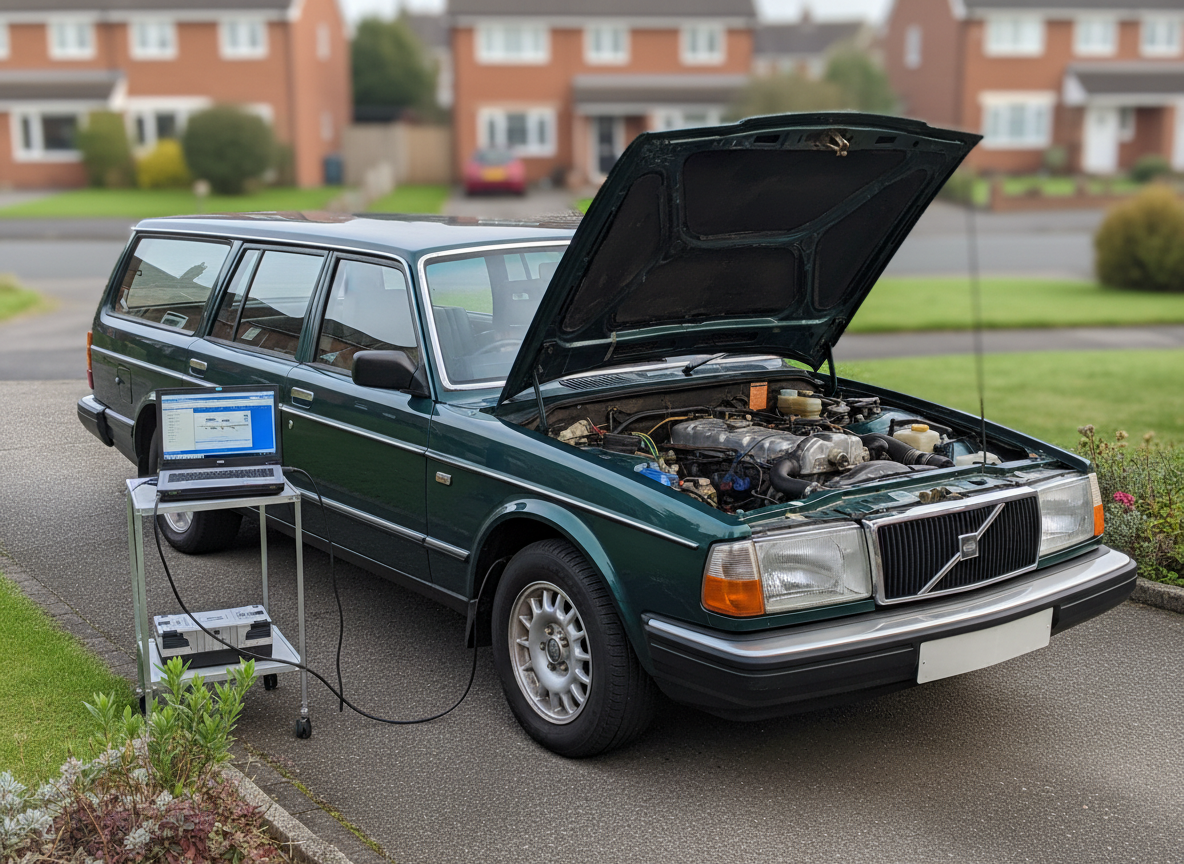
The Six Symptoms of a Leaking EGR Cooler
Not every failing cooler shows all six. In practice most owners notice two or three and only join the dots later.
1. Coolant loss with no external leak
You top the header tank up, it drops again over a few hundred miles, and there is nothing under the car and nothing damp in the engine bay. This is usually the first sign and the one that brings people to a garage.
2. Thick white smoke, worst on start-up
Coolant boiling off in the exhaust produces dense white smoke that hangs in the air rather than dissipating quickly like cold-morning condensation. It is often heaviest for the first thirty seconds after start-up, when coolant has pooled overnight, then clears and returns under load.
3. A sweet smell from the exhaust
Ethylene glycol has a distinctly sweet odour. If the smoke smells sweet rather than sooty or fuelly, coolant is being burnt somewhere.
4. Rough running or a misfire when cold
Coolant entering the intake side of the system rather than the exhaust side interferes with combustion. This tends to show up as a stumble on start-up that clears once the engine is warm.
5. EGR flow and pressure fault codes
A cracked core changes the gas flow characteristics the ECU expects, so EGR flow insufficient, EGR flow excessive and manifold pressure correlation codes are all common. Note that these codes point at the EGR system generally — they do not distinguish a cooler from a valve, which is where a lot of misdiagnosis begins.
6. Pressurised header tank or coolant in the intake
In a more advanced failure, exhaust gas pushes back through the crack into the coolant circuit. The header tank pressurises quickly, sometimes within minutes of a cold start, and the coolant may look dark or oily.
EGR Cooler or Head Gasket? How to Tell
This is the question that matters commercially, because one of these is a few hours’ work and the other is an engine strip.
Four checks that separate them
1. Check the engine oil. A leaking EGR cooler dumps coolant into the exhaust or intake, not into the sump. The oil normally stays clean and at level. A head gasket failure between a coolant gallery and the crankcase gives you the classic mayonnaise on the filler cap.
2. Watch the temperature gauge. Head gasket failures usually come with genuine overheating or wildly swinging temperatures. A cooler leak often runs at a perfectly normal temperature right up until the coolant level gets low enough to matter.
3. Note when the smoke appears. Cooler leaks tend to be worst on start-up and again under boost, when exhaust pressure is highest. Head gasket smoke is usually more constant.
4. Isolate the cooler. The definitive test. A technician blanks or bypasses the coolant feed to the cooler and pressure-tests it independently of the engine. If the cooler holds pressure and the engine does not, the cooler is innocent.
A combustion gas test on the coolant — the blue-liquid sniffer test — is worth doing but is not conclusive on its own here. Exhaust gas pushed back through a cracked EGR cooler will turn the fluid just as a head gasket failure does. Plenty of engines have been stripped on the strength of that test alone when the actual fault was a £200 heat exchanger.
The point of view most guides miss
Because EGR cooler failure mimics head gasket failure so precisely, the correct diagnostic order is to rule out the cheap part first, not last. Isolating the cooler takes far less time than lifting a cylinder head and it costs nothing if it turns out to be clear.
Why EGR Coolers Crack in the First Place
Three causes account for most failures we see on Leicestershire vehicles.
Thermal cycling. Every journey heats the core and every shutdown cools it. Over tens of thousands of cycles the welds and tube joints fatigue. This is ordinary ageing and it is why coolers rarely fail before roughly 80,000 miles.
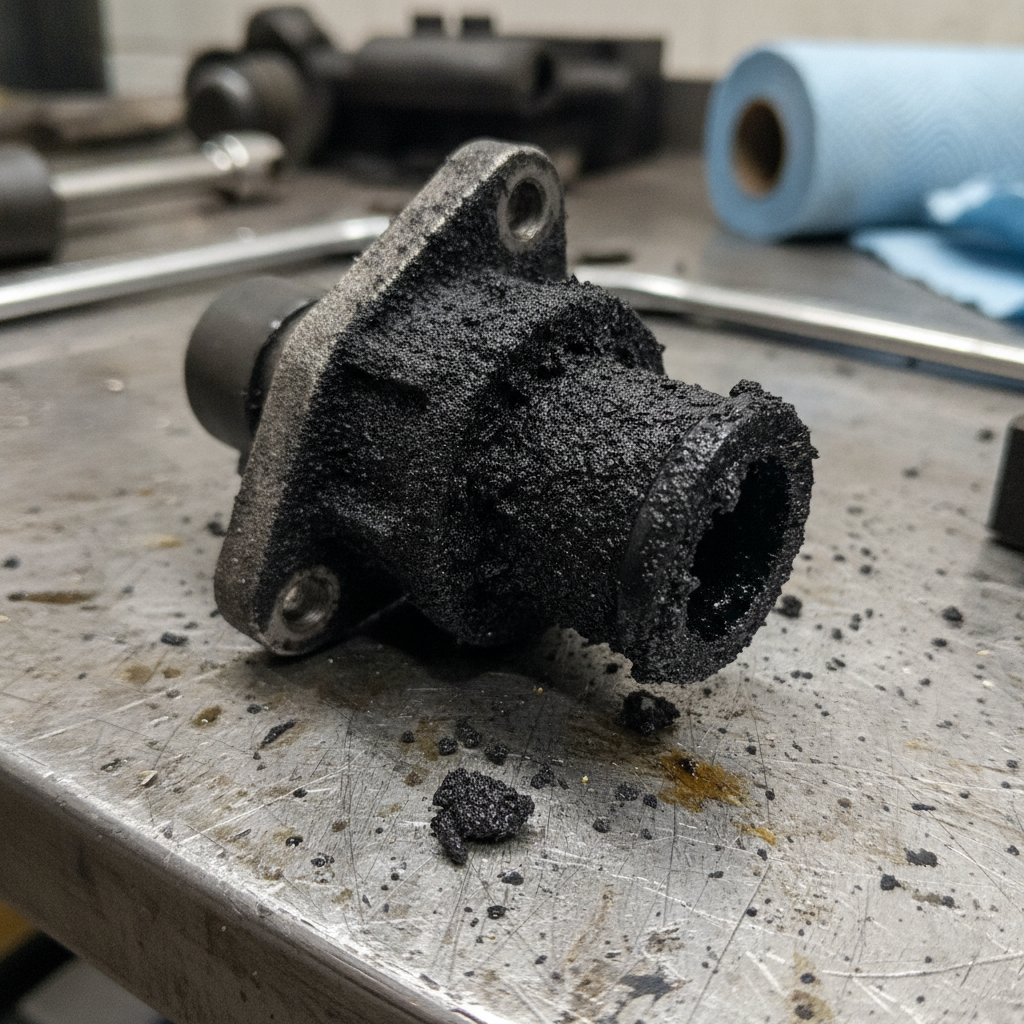
Soot fouling. Recirculated exhaust gas is dirty. Soot builds up on the gas side of the core, which insulates it, which raises local metal temperatures, which accelerates fatigue. A vehicle used mainly for short urban journeys fouls its cooler far faster than one that does regular motorway miles — the same reason short-trip diesels struggle with carbon build-up across the intake and inlet valves.
Coolant condition. Old, contaminated or incorrectly mixed coolant is more corrosive and conducts heat less well. Coolers on vehicles with a neglected coolant change history fail noticeably earlier.
Why an EGR Delete Does Not Fix a Leaking Cooler
This is the part of the subject that gets handled badly online, including by people who should know better.
An EGR delete is a software change. It stops the ECU commanding the EGR valve to open, so exhaust gas is no longer recirculated. On a vehicle with a sticking, clogged or seized valve, that removes the fault condition and the associated limp mode. It is a legitimate solution to a valve problem on an off-road or track vehicle.
It does nothing whatsoever to a cracked cooler. The crack is between the coolant circuit and the gas passage. Coolant is pushed through it by the water pump, not by the EGR valve. Close the valve in software and the coolant still finds its way through the crack into the exhaust, and you still lose coolant, and you still get white smoke. You have simply added a software change to a mechanical problem and made the diagnosis harder for whoever looks at it next.
Be wary of anyone who offers a delete as the fix for coolant loss
If you describe white smoke and a dropping header tank and the answer is “we can map that out”, the diagnosis has been skipped. The honest answer is that the cooler needs replacing or blanking mechanically, and only then is there a conversation to be had about the valve.
Where software genuinely belongs in this picture is afterwards. Once the cooler is dealt with, a vehicle whose EGR valve is also worn or heavily fouled may benefit from the range of EGR fault solutions and remapping options we offer — but that is a second, separate decision, taken on the valve’s condition, not on the cooler’s. Our guide to EGR valve issues and what an EGR delete remap actually changes covers where that line sits.
Where the MOT Stands on the EGR System
Two things from the DVSA inspection manual are worth knowing before you make any decision here.
First, EGR valves are named. Under compression ignition engine emissions, the manual instructs testers to check components that are visible and identifiable, and it lists exhaust gas recirculation valves alongside diesel oxidation catalysts and particulate filters, with emission control equipment fitted by the manufacturer that is missing, obviously modified or obviously defective recorded as a Major defect. A Major defect is a fail. That applies to physically removing or blanking the valve; it is a visual check, not a software audit.
Second, the smoke test itself has conditions attached. The manual requires the engine to be at least 80°C, or at normal operating temperature if that is lower, before an instrumented opacity reading is taken. It also states that it is not normally sufficient to run the engine while stationary to warm it up. That matters here for a practical reason: a car losing coolant may never reach a stable operating temperature, and the smoke you see on a cold engine is not the smoke the meter will measure. Judge the fault on a properly warm engine.
If the white smoke question is really an MOT question for you, our breakdown of how DPF and EGR deletes interact with current MOT rules goes through it in more detail.
What to Do Next
A sensible order of work
1. Record the facts: how much coolant you are losing over what mileage, when the smoke appears, and whether the oil is clean.
2. Get the fault codes read. EGR flow and manifold pressure correlation codes narrow the field even though they do not name the cooler.
3. Ask specifically for the EGR cooler to be isolated and pressure-tested before any head gasket work is quoted.
4. If the cooler is the fault, replace or mechanically blank it. On some engines a delete kit that physically removes the cooler from the coolant circuit is a durable answer; on others replacement is cleaner.
5. Only once the coolant loss has stopped, review whether the EGR valve itself needs attention — and whether a software solution is appropriate for how the vehicle is used.
We deal with EGR faults across Leicester, Leicestershire and the wider East Midlands, and a fair proportion of the calls we take are people who have already been quoted for a cylinder head. It is worth ten minutes of diagnosis to be sure.
EGR Diagnosis and Mobile ECU Remapping in Leicester
Leicester Remaps provides custom ECU calibration and EGR fault solutions across Leicester, Leicestershire and the wider Midlands — with honest diagnosis first.
- Fault code reading and EGR system assessment before any software work
- Custom calibration for each specific vehicle, never a generic file
- Original ECU file backed up and fully reversible
- Mobile service — we come to your location
Can you drive with a leaking EGR cooler?
For short distances and with the coolant level checked before every journey, usually yes — but it is not a fault to leave alone. Coolant loss risks overheating, and coolant passing through the exhaust can damage the diesel particulate filter and the turbo over time. Treat it as a fault to book in within days, not months.
How much does an EGR cooler replacement cost in the UK?
It varies enormously by engine, because the labour depends almost entirely on how buried the cooler is. On some engines it is an hour; on others the inlet manifold has to come off. Get a written quote against your specific vehicle rather than relying on a generic figure, and make sure the diagnosis has actually been confirmed before you agree to the work.
Will a leaking EGR cooler fail an MOT?
Potentially, on two counts. Emission control equipment that is obviously defective is a Major defect under the DVSA inspection manual, and heavy visible smoke or a failed opacity reading is a separate fail. In practice, a cooler leak bad enough to smoke visibly is likely to cause a problem at test.
Does an EGR delete remap stop coolant loss?
No. An EGR delete is a software change to how the valve is commanded. A leaking cooler is a mechanical crack between the coolant circuit and the gas passage, and coolant continues to pass through it regardless of what the software does. The cooler has to be replaced or physically bypassed.
How do I know it is the EGR cooler and not the head gasket?
The strongest single indicator is clean oil at the correct level combined with coolant loss and white smoke. A head gasket failure more often contaminates the oil and causes genuine overheating. The definitive test is to isolate the cooler from the coolant circuit and pressure-test it separately, which should always be done before any head gasket work is quoted.
Reviewed and signed off by Leicester Remaps. Published 13 October 2026. Last updated 13 October 2026. Leicester Remaps provides mobile ECU remapping, DPF, EGR and AdBlue solutions across Leicestershire and the East Midlands. For a diagnosis or to book a mobile session, get in touch via the contact page.