Glow Plug Failure Symptoms: What They Cost You All Year, Not Just in Winter
Most guides tell you a failing glow plug means a hard start on a cold morning. On a modern diesel that is the least of it — post-heating runs long after the engine has fired, and a dead plug quietly raises soot output, fouls the EGR valve and loads the DPF twelve months a year.
Diesel Cold Start
Soot & Smoke
EGR & DPF
Diagnostics
In This Guide
The Short Answer
Glow plug failure symptoms in 50 words
The signs are prolonged cranking when cold, a lumpy idle for the first minute, white or blue smoke on start-up, a flashing glow plug light, a stored glow plug circuit fault code, and rising soot output. On modern diesels a failed plug also fouls the EGR valve and loads the DPF year-round.
The reason that last point matters is a piece of engineering most owners have never been told about. Glow plugs on current diesels do not simply switch off the moment the engine fires. They keep glowing — and how long they keep glowing is the difference between a clean warm-up and several minutes of unnecessary soot on every single cold start.
How Glow Plugs Actually Work on a Modern Diesel
A diesel has no spark. Fuel ignites because compressing air heats it past the fuel’s auto-ignition temperature. When the engine is cold, the cylinder walls and head pull heat out of that compressed air fast enough that ignition becomes unreliable. The glow plug puts the heat back, working, in effect, like an immersion heater in the combustion chamber.
That is the part everyone knows. The part that has changed is the timing. Modern plug control has three phases: pre-heating before you crank, in-glow while the engine turns over, and post-heating — or after-glow — once it has started.
Post-heating is where the real work happens on a current engine. According to manufacturer NGK, its ceramic high-temperature plugs reach 1,000°C in under two seconds and can after-glow for more than ten minutes at temperatures of up to 1,350°C. NGK is explicit about why: sustained after-glow reduces white and blue smoke, lowers hydrocarbon and carbon monoxide emissions, and eliminates cold-start knocking.
Read that again with a failed plug in mind. If one cylinder has no after-glow, that cylinder burns cold and dirty for up to ten minutes of every cold start. The engine still runs. You may barely notice. But it is producing smoke and unburnt hydrocarbons for the entire warm-up, every time, all year.
Two plug types, different behaviour
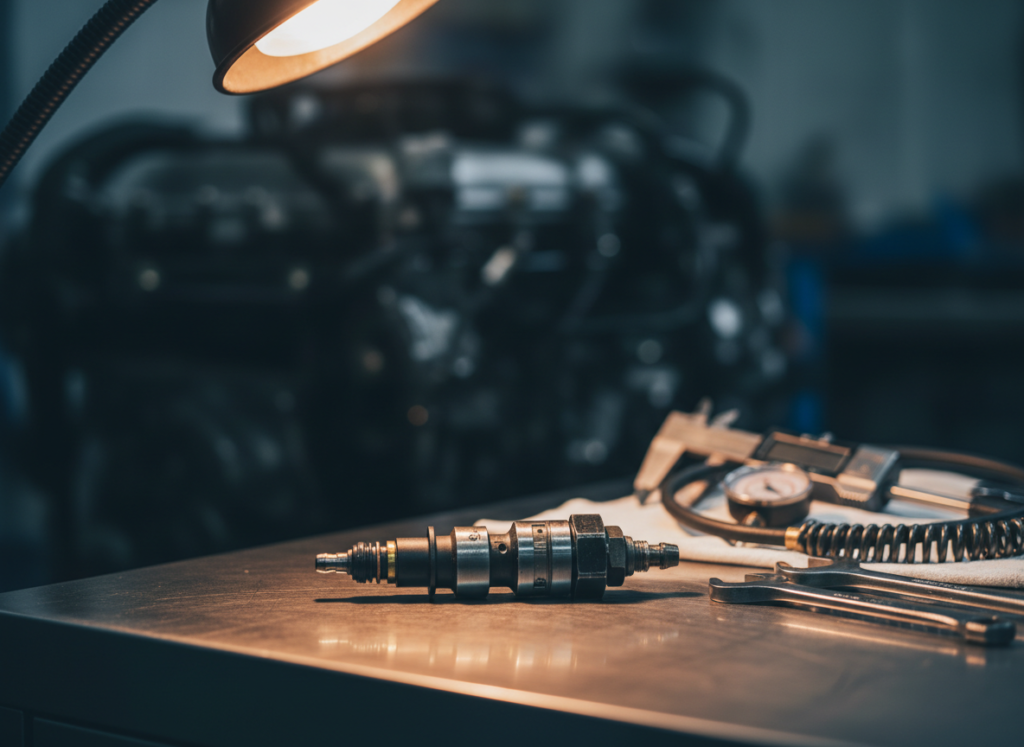
Metal rod plugs use a heating coil inside a heat-resistant rod, packed with magnesium oxide to protect the coil from vibration and conduct heat outwards. Ceramic high-temperature plugs use a fully ceramic heating element and reach higher temperatures faster. Ceramic plugs tolerate more, but are also more fragile in the wrong hands during removal.
Seven Glow Plug Failure Symptoms
1. Extended cranking from cold
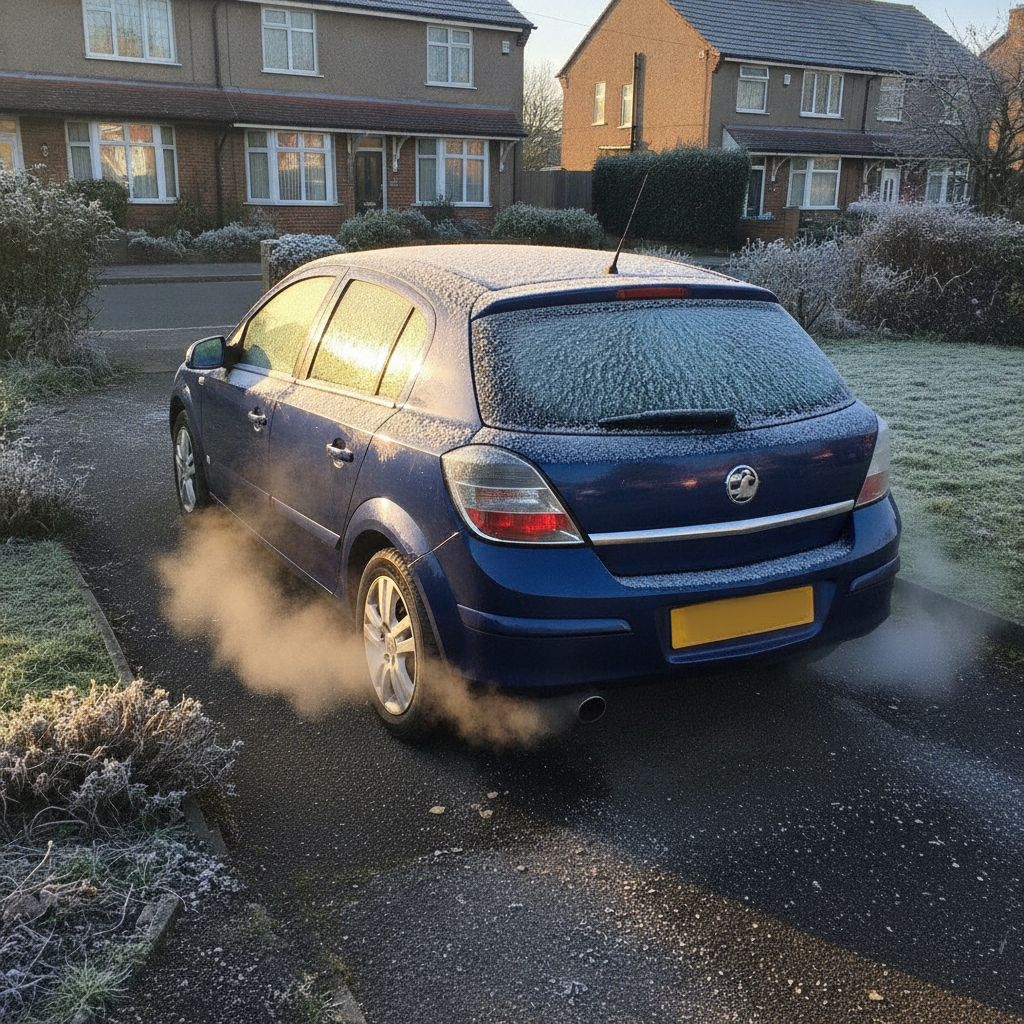
The engine turns over noticeably longer before catching, and only when it has been standing. A warm restart is unaffected, because the cylinder is already hot enough. This is the classic sign and usually the first one noticed.
2. A rough first minute, then normal
One or two cylinders not contributing properly gives a lumpy, uneven idle that smooths out as the engine warms. If the idle is rough hot as well, look elsewhere.
3. White or blue smoke on start-up
Unburnt fuel leaving a cold cylinder shows as white or grey-blue smoke that clears as the engine comes up to temperature. Because after-glow exists specifically to suppress this, persistent start-up smoke on an otherwise healthy engine is a strong glow plug indicator.
4. Flashing glow plug light
On many vehicles the coil-shaped glow plug lamp flashing after start-up is the ECU reporting a fault in the glow plug circuit rather than asking you to wait. Check what your handbook says the flash means — manufacturers differ.
5. Engine management light and stored codes
Glow plug circuit codes are typically logged per cylinder, which is genuinely useful: the code often tells you which plug. Worth knowing before test day, because the DVSA inspection manual requires the engine malfunction indicator lamp to be checked on diesel vehicles first used on or after 1 July 2008, and a lamp that stays on is a defect in its own right.
6. Reduced power and hesitation while cold
A missing cylinder for the first few minutes is a real power loss. Drivers usually describe it as flatness pulling away from the first junction of the day.
7. Rising soot and shortened DPF regeneration intervals
The quiet one, and the expensive one. See the next section.
Glow plugs fail one at a time
A four-cylinder engine will normally start on three working plugs, and often on two. That means failure is gradual and easy to miss — by the time the car will not start at all, plugs may have been failing for a year. The symptoms above are worth acting on early rather than waiting for a no-start.
The Downstream Cost: EGR, DPF and Soot
This is the argument for fixing a glow plug you could technically live with.
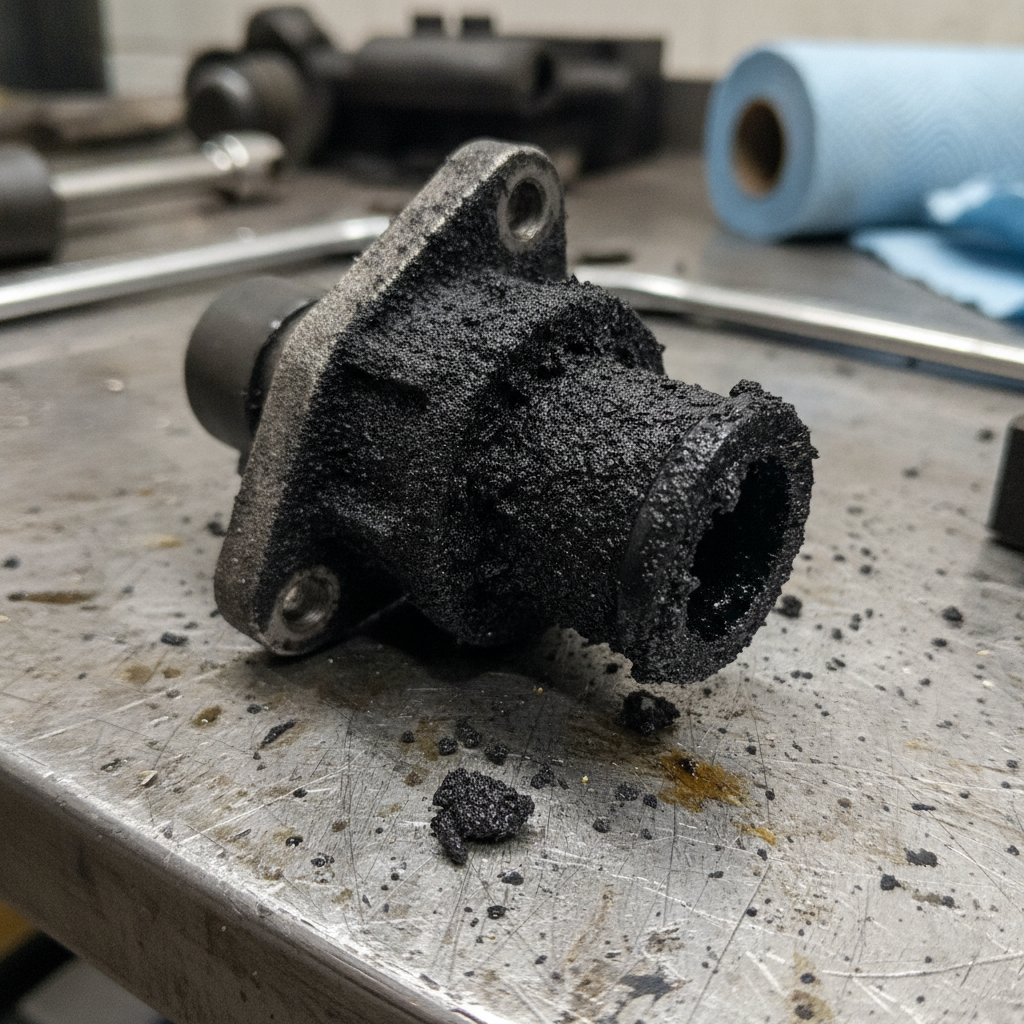
Incomplete combustion produces soot. Soot goes two places on a modern diesel: back through the EGR system into the intake, and down the exhaust into the particulate filter. Neither of those parts is cheap, and both of them degrade with soot load rather than with mileage.
The link is not speculative. In its technical guidance on EGR valves, NGK lists defective glow plugs among the direct causes of EGR valve failure, and advises that defective glow plugs in diesel engines should always be replaced even if the engine still starts. That last clause is doing a lot of work. A parts manufacturer is saying plainly that “it still starts” is not a reason to leave it.
The same guidance notes that a neglected EGR fault goes on to damage the particulate filter, coat the intake valves and gum the manifold — the same chain of consequences we cover in our guide to carbon build-up in diesel engines. A failed glow plug sits at the front of that chain.
There is a second-order effect too. Extra soot means the DPF fills faster, which means the engine runs active regeneration more often, which means more fuel dumped late in the cycle and more diesel washing into the oil. On a short-journey vehicle that rarely completes a regeneration, this compounds quickly — which is why glow plugs are worth checking on any vehicle where the DPF light keeps returning after a motorway run.
When It Is Not the Plug At All
Hard cold starting is not a glow-plug-only symptom, and replacing four plugs on a guess is an expensive way to find that out. Rule these out first.
The glow plug relay or control module. If every plug tests dead, suspect the relay before the plugs. A single failed relay produces exactly the symptoms of four failed plugs, at a fraction of the cost.
Wiring and connectors. Corroded or broken supply wiring at the plug tip is common on high-mileage vehicles and reads as an open circuit.
Low compression. If the engine cannot generate the heat, no glow plug will save it. Worth testing on a very high-mileage engine.
Fuel delivery and injectors. Leaking-back injectors give a long cold crank that looks identical to glow plug failure. A leak-off test separates the two.
Battery condition. Glow plugs draw heavy current. A tired battery that cranks acceptably in summer may not sustain both cranking and pre-heat in January.
If a hard start appeared shortly after other work was carried out on the vehicle, our guide to cold start behaviour after a remap covers how to separate a calibration question from a mechanical one.
How Glow Plugs Are Tested
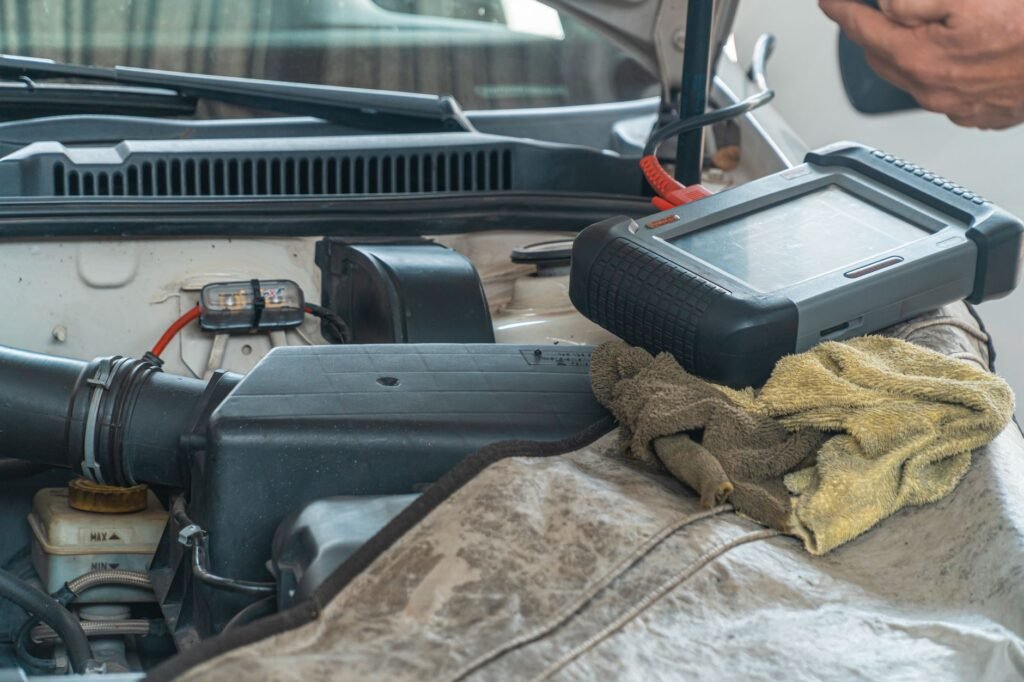
The sequence a technician follows
1. Read fault codes first — per-cylinder glow plug circuit codes often identify the offending plug immediately.
2. Check supply voltage at the plug connector during the pre-heat window, to confirm the relay and wiring are doing their job.
3. Measure resistance across each plug with the connector removed. A healthy plug typically reads a low resistance in the region of one ohm; an open circuit means a dead plug.
4. Compare current draw across the set. A plug that draws far less than its siblings is failing even if it is not yet open circuit.
5. Confirm against live data. Many ECUs report glow plug status and post-heat duration directly.
Resistance figures vary by plug type and vehicle, so treat any single number you read online as indicative only and check it against the manufacturer’s specification for your engine.
Replacement: What to Expect
Two practical points are worth setting out honestly, because they explain why quotes vary so widely.
Replace the set, not the one. Plugs age together. Fitting one new plug alongside three worn ones restores starting but leaves you doing the job again shortly. Most workshops will recommend the full set and they are right to.
Seized plugs are the real cost. Carbon deposits weld the plug body into the cylinder head over years of heat cycling. A plug that will not release, or that snaps and leaves its tip in the head, turns a straightforward job into a long one and occasionally into a head removal. This is why a glow plug quote can range from modest to alarming on the same engine size, and it is a reason not to leave a known bad plug for another two winters.
Fitting torque matters too. Glow plugs are tightened to a specified figure for the engine, and over-tightening risks damaging the threads in the head or deforming the plug body. It is not a job to do by feel.
Where Remapping Fits In
Plainly: a remap does not fix a glow plug, and nobody should tell you otherwise. Glow plug control is not something a standard Stage 1 calibration targets.
The relationship runs the other way. Glow plug condition is one of the things worth confirming before a remap, because a remapped engine asks more of combustion, and an existing cold-start weakness tends to become more noticeable rather than less. It is a five-minute check that avoids a fault being blamed on the software.
Where we do get involved is the downstream side. If a long-running glow plug fault has already loaded the DPF or fouled the EGR valve, the mechanical fault gets fixed first and only then is there a sensible conversation about DPF fault solutions or the EGR system. Software after diagnosis, never instead of it.
Diesel Diagnostics and Mobile ECU Remapping in Leicester
Leicester Remaps provides custom ECU calibration and diesel fault solutions across Leicester, Leicestershire and the wider Midlands — diagnosis first, software second.
- Fault code reading and live data before any calibration work
- Custom calibration for each specific vehicle, never a generic file
- Original ECU file backed up and fully reversible
- Mobile service — we come to your location
Can you drive with a failed glow plug?
Usually yes — a four-cylinder diesel will normally start on three working plugs. But driving on is not free. The affected cylinder burns incompletely through every warm-up, which raises soot output, loads the particulate filter and, per NGK’s own guidance, contributes to EGR valve failure. It also increases the chance the plug seizes in the head before you get round to it.
Do glow plugs only matter in winter?
No. Post-heating runs on every cold start regardless of season, and on ceramic plugs can continue for several minutes. A failed plug produces extra soot and unburnt hydrocarbons in July as well as January — you simply notice the starting problem less.
How long do glow plugs last?
There is no single figure, because it depends on plug type, engine and how the vehicle is used. Frequent short journeys, heavy cold-start duty and poor fuel quality all shorten life. Rather than replacing to a mileage, have them tested when any of the symptoms above appear.
Will a failed glow plug fail an MOT?
Not directly — there is no glow plug check in the inspection manual. Indirectly it can, in two ways: an engine management light that stays on is inspected at MOT on diesels first used on or after 1 July 2008, and the extra smoke from a cold-running cylinder can affect the opacity reading.
Should I replace all the glow plugs at once?
Generally yes. They age at a similar rate, and the labour is largely the same whether you change one or all of them. Replacing the set avoids repeating a job that carries a real risk of a seized plug each time it is done.
Can a remap cause glow plug problems?
A standard Stage 1 remap does not target glow plug control on most vehicles. What can happen is that a marginal plug, already on its way out, becomes more obvious once the engine is asked to do more. That is the existing fault surfacing rather than the software creating one — and a pre-remap health check is the way to avoid the ambiguity.
Reviewed and signed off by Leicester Remaps. Published 15 October 2026. Last updated 15 October 2026. Leicester Remaps provides mobile ECU remapping, DPF, EGR and AdBlue solutions across Leicestershire and the East Midlands. For a diagnosis or to book a mobile session, get in touch via the contact page.