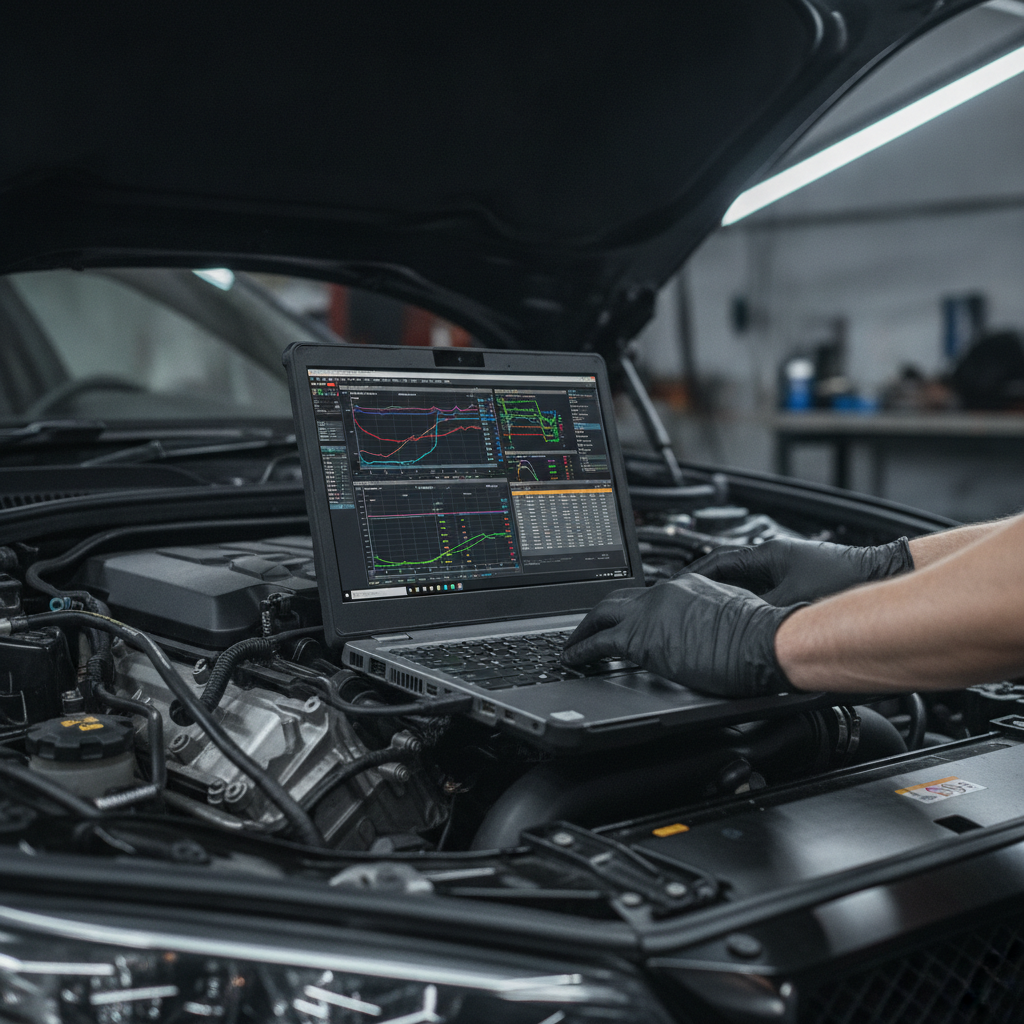
Stage 1 Remap for Pickups: Ford Ranger, Toyota Hilux & Navara Gains
Most remap guides focus on hatchbacks and family saloons. If you’re running a Ford Ranger, Toyota Hilux or Nissan Navara as a workhorse, the brief is different — you need usable torque low in the rev range for towing and hauling, not peak power at high rpm. Here’s what a Stage 1 remap actually delivers on the three most-remapped pickups in the Midlands, based on published rolling-road data.
Toyota Hilux remap gains
Nissan Navara remap
Mobile service · Leicester & Midlands
Quick answer
A Stage 1 remap for a Ford Ranger 2.2TD adds up to 31 BHP and around 60 Nm of additional torque. Toyota Hilux 3.0 D4D owners typically gain 39 BHP and 120 Nm. Nissan Navara D40 2.5 DCi gains average around 24% more power — all via software only, with no hardware changes required.
Why pickup diesel engines respond so well to remapping
Manufacturers calibrate diesel pickups conservatively for two reasons: to spread performance across multiple engine output variants within the same range, and to meet Euro 5 and Euro 6 emissions limits across different markets with a single ECU file. The result is an engine that has considerably more capability in its hardware than the factory map unlocks.
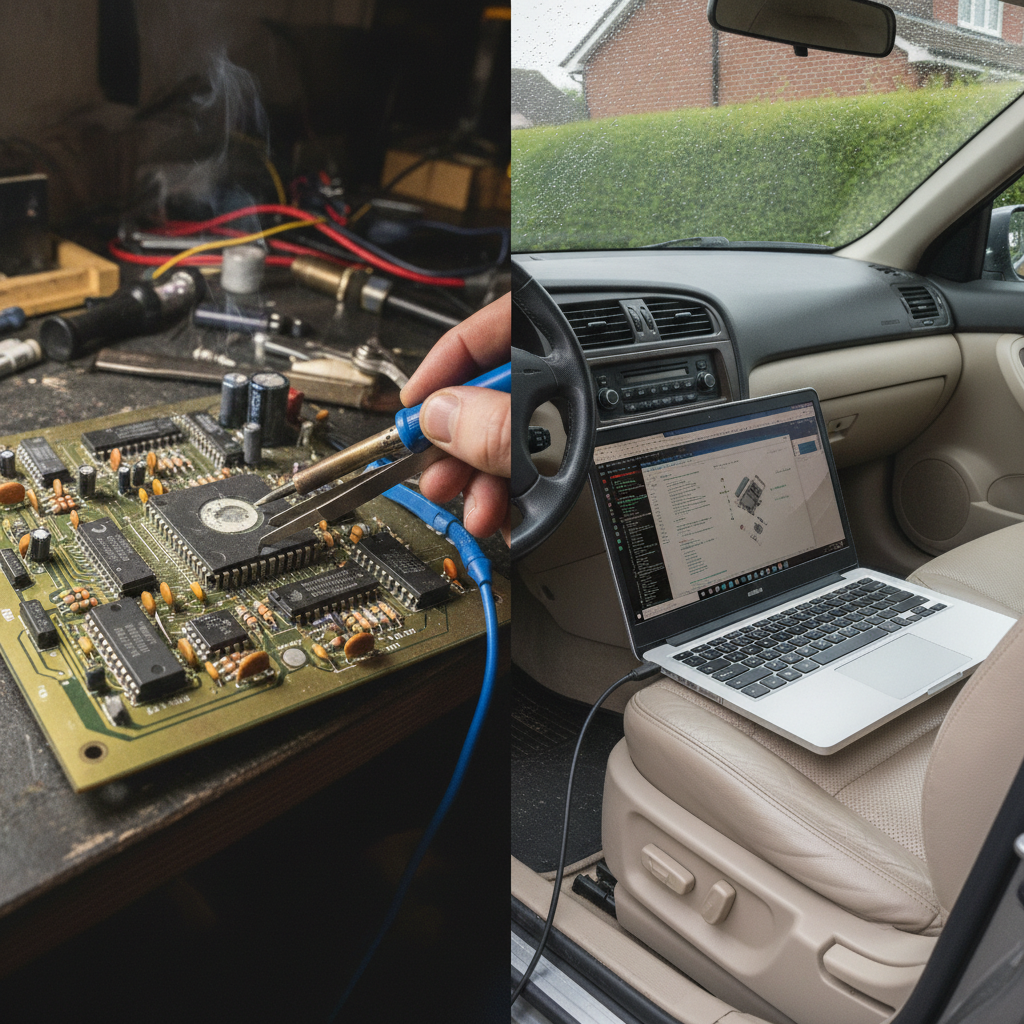
A Stage 1 remap works entirely in software — adjusting fuelling curves, boost pressure targets, injection timing and torque limiters within the engine’s designed tolerances. No intercooler swap, no hardware modification, no physical changes. On a diesel pickup, this typically delivers a broader torque plateau rather than a sharp power spike: more pull from 1,500 rpm, which is exactly where most pickup driving happens — loaded, towing, or accelerating from a junction.
Custom calibration, not generic files
Every pickup we remap gets a calibration built around its specific ECU read. We connect with Autotuner or KESS, take a live read of your vehicle’s current map, and write a custom file — not a generic Stage 1 downloaded from a file-sharing repository. This matters most on high-mileage engines where a by-the-book gain target may need adjusting slightly for injector or turbo health.
Ford Ranger Stage 1 remap: what to expect
The Ford Ranger is one of the most frequently remapped pickups in the UK, and for good reason. Its Duratorq diesel engines — particularly the 2.2 and 3.2 five-cylinder units — are well-understood platforms with proven calibrations. The 2.0 EcoBlue found in post-2019 Ranger models is a newer platform but equally responsive to a Stage 1 remap.
| Engine | Stock BHP | Stock Torque | Stage 1 Gain (BHP) | Typical Torque Gain |
|---|---|---|---|---|
| 2.2 Duratorq TDCi (MK5) | 158 bhp | ~385 Nm | +31 bhp | +55–65 Nm |
| 3.2 Duratorq TDCi (MK5) | 200 bhp | ~470 Nm | +35–40 bhp | +60–80 Nm |
| 2.0 EcoBlue (MK3+, post-2019) | 170 bhp | ~420 Nm | +30–38 bhp | +50–70 Nm |

Verified Stage 1 gains for the Ranger 2.2TD (158 bhp) show +31 BHP from a Stage 1 remap, based on rolling-road data published by Superchips UK. Celtic Tuning’s data for older 3.0 TDCi Ranger models shows gains of up to 32% from Stage 1 diesel tuning.
In practice, what Ranger drivers notice most is the improvement in mid-range driveability. On a loaded truck — tow bar attached, bed carrying materials — the 2.2TD before a remap needs frequent downshifts to maintain speed on A-road inclines. After a Stage 1, those inclines flatten out. Fuel economy also improves on longer runs: the engine reaches its cruising speed with less throttle, translating to 8–12% better mpg in measured use.
For towing-specific guidance, see our published guide: how remapping affects towing and what changes on a loaded drivetrain.
Toyota Hilux Stage 1 remap: what to expect
The Toyota Hilux has a durability reputation that makes drivers cautious about any modification. That caution is understandable but overstated when it comes to a correctly written Stage 1 remap. The Hilux 3.0 D4D engine — found across the 2005–2015 range — produces some of the most dramatic Stage 1 torque figures of any pickup in the UK market.
| Engine | Stock BHP | Stock Torque | Stage 1 BHP Gain | Torque Gain |
|---|---|---|---|---|
| 3.0 D4D (172 bhp, 2005–2015) | 172 bhp | 360 Nm | +39 bhp → ~211 bhp | +120 Nm → ~480 Nm |
| 2.5 D4D (142 bhp, 2005–2015) | 142 bhp | ~300 Nm | +27% ≈ +38 bhp | +25–30% |
| 2.4 D-4D (150 bhp, post-2016) | 150 bhp | 400 Nm | +28–35 bhp | +40–60 Nm |
The 3.0 D4D figure of +120 Nm of torque from Stage 1 alone — verified via Celtic Tuning’s rolling-road programme — is one of the largest single-step torque gains available in the pickup segment without hardware changes. That shift in low-end pull makes a real difference when towing on inclines or getting off soft ground with a loaded bed.
For Hilux owners specifically: a Stage 1 remap does not shorten engine life when the calibration stays within the engine’s tolerance envelope. What wears engines prematurely is running lean, overheating, or over-boosting. A properly written Stage 1 file manages all three.
Is a Stage 1 remap safe for your pickup?
Stage 1 is the conservative end of the remapping spectrum. It works within the standard drivetrain — clutch, gearbox, driveshafts — and within the engine’s designed boost and temperature limits. The changes are software-only, the original file is backed up before anything is written, and the calibration can be returned to factory spec at any time.
The main risk in a Stage 1 remap is a poorly written file, not the principle of remapping itself. An aggressive calibration that pushes boost beyond safe limits, or removes timing safety margins, will stress an engine over time. This is why the file source matters: we write calibrations around the specific ECU read from your vehicle, not from a shared file library.
For towing, Stage 1 remains appropriate as long as you stay within your pickup’s rated tow capacity. The improved torque doesn’t change the vehicle’s structural tow rating — it changes how much effort the engine needs to meet that rating.
When to address issues before booking a remap
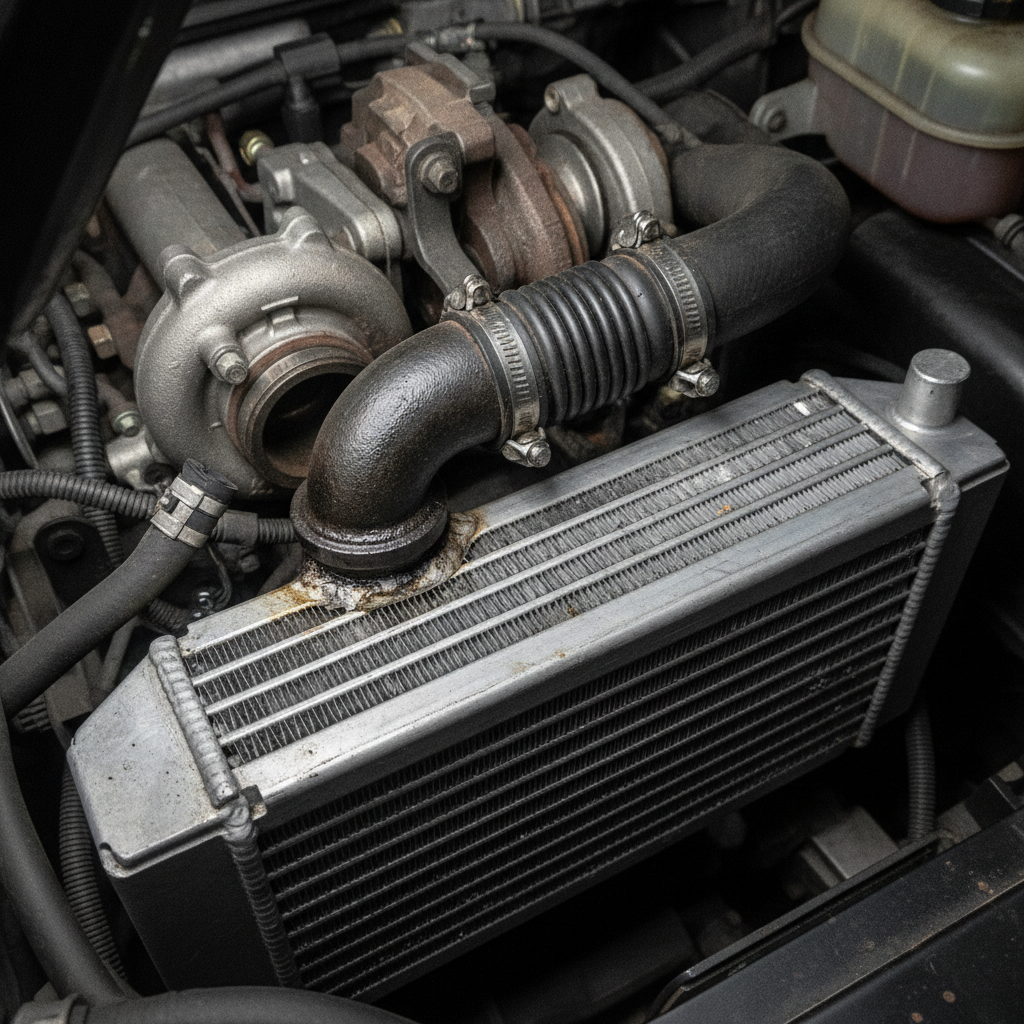
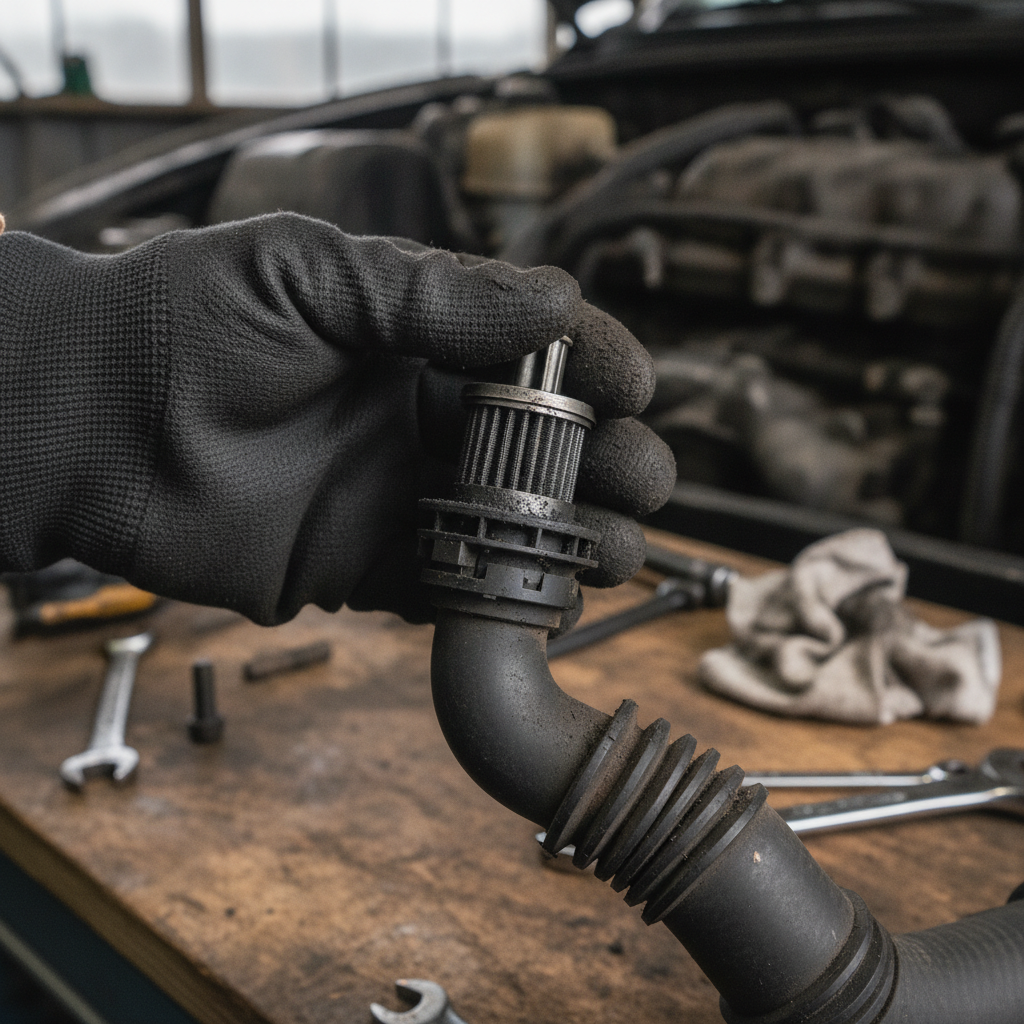
If your pickup is showing boost pressure faults, has boost pipes with visible heat damage, or your intercooler is corroded, address those first. A Stage 1 remap will expose weaknesses in the intake system that the factory map was masking at lower boost levels. Our pre-remap diagnostic will pick these up — but it’s useful to know beforehand if anything has been flagged recently.
What to expect from our mobile pickup remap
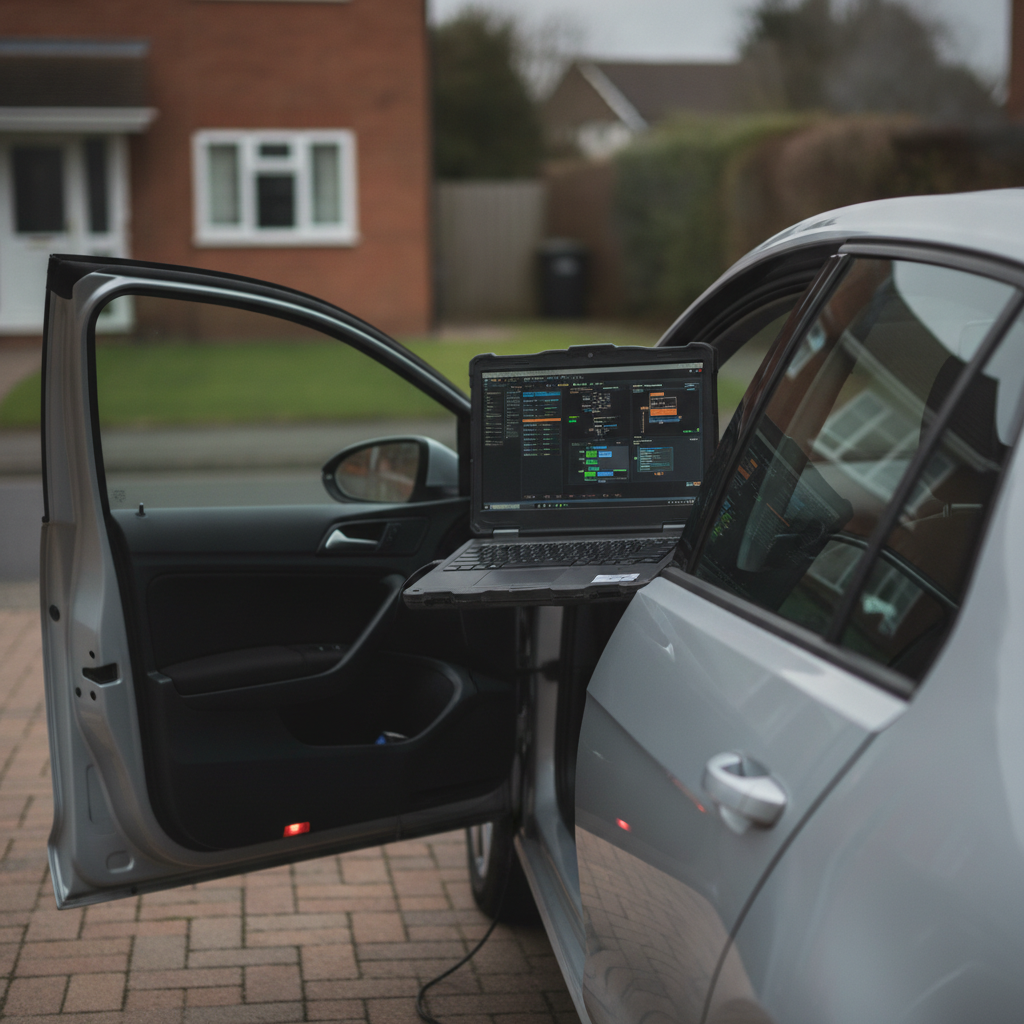
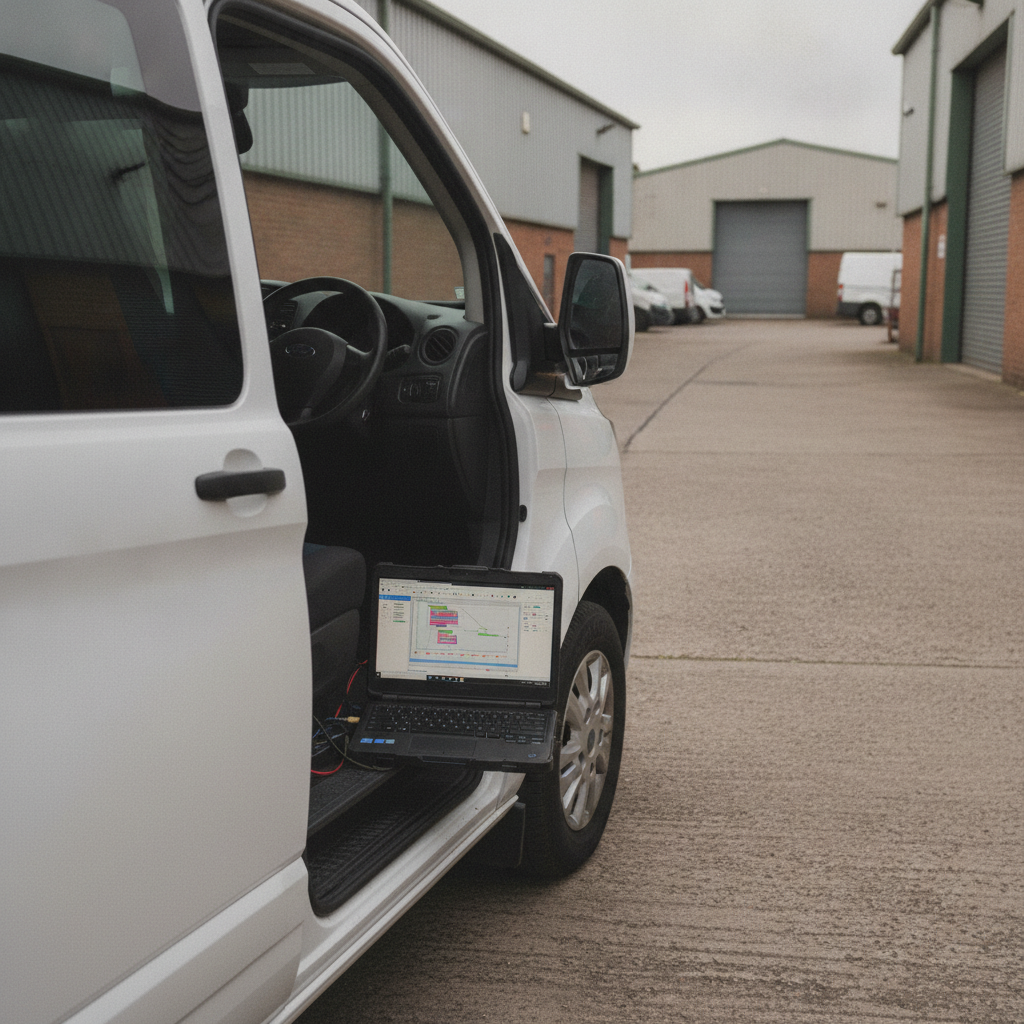
All remaps are carried out at your location — home, workplace or farm. We don’t have a fixed workshop; the mobile approach is the business model. Here’s how a typical pickup remap runs:
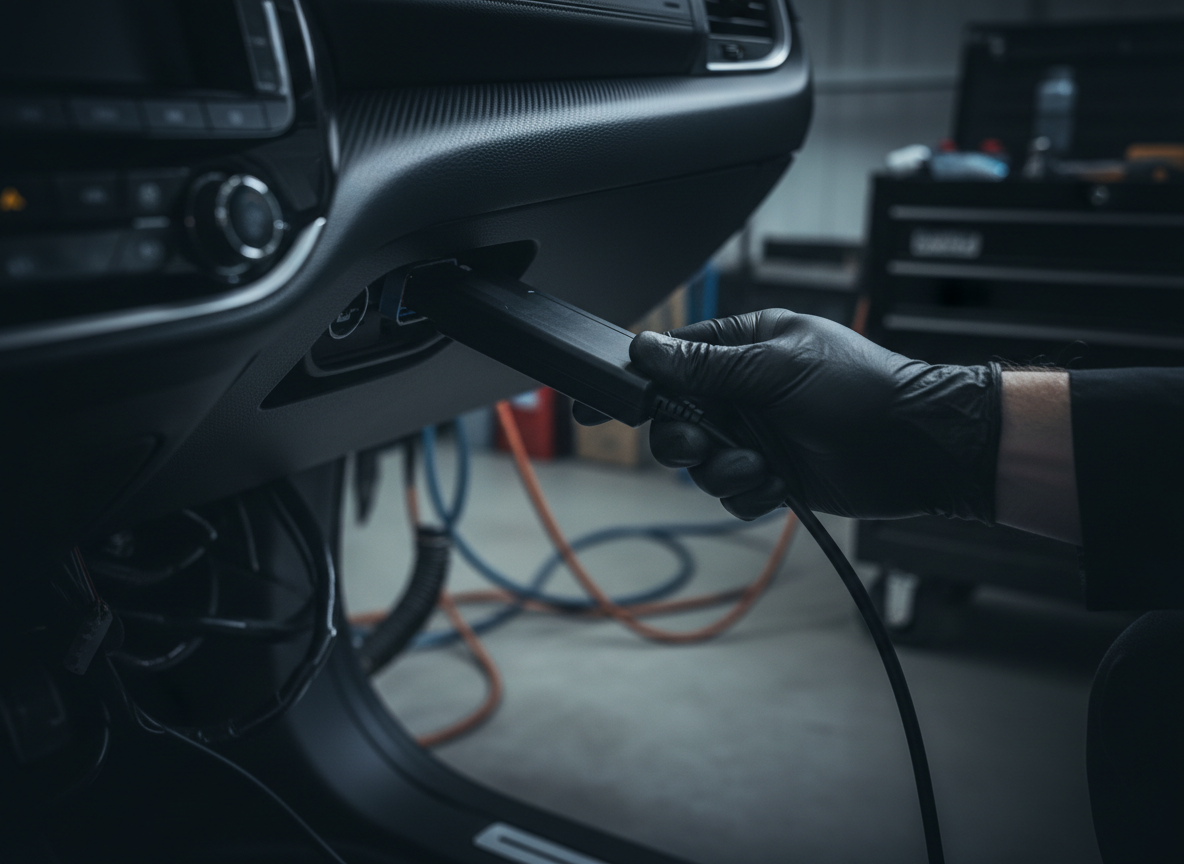
- Pre-remap diagnostic: We read fault codes and live engine data before connecting to the ECU. If we spot injector faults, boost leaks or intake issues, we let you know before any calibration work begins.
- ECU read and backup: We connect via Autotuner or KESS and take a full read of your current ECU file. Your original map is safe regardless of what happens next.
- Custom calibration: We prepare a calibration built around your specific ECU read — not a generic Stage 1 download. This accounts for your engine’s current state rather than assuming it matches a brand-new example.
- Write and road test: The new calibration is written to your ECU. We carry out a short road test with live data monitoring to confirm the remap is pulling cleanly across the rev range.
- Post-remap diagnostic: A final scan confirms no new fault codes and that the ECU is reading correctly. Lifetime software warranty is issued at this point.
Most pickup remaps take 90 minutes to two hours from arrival. We cover Leicester and the wider Midlands — Hinckley, Loughborough, Coalville, Coventry and beyond. See our Stage 1 remap service page for pricing and booking, and our Stage 1 BHP gains guide for a broader picture across diesel platforms.
FAQ
Will a Stage 1 remap void my pickup’s warranty?
A Stage 1 remap is software-only and the original ECU file is backed up and restorable. That said, many manufacturers’ warranties exclude engine damage traceable to ECU calibration changes. If your pickup is within its manufacturer warranty, check your cover before booking. Most Ranger, Hilux and Navara vehicles being remapped are out of warranty and have no constraint to consider.
Is it safe to tow after a Stage 1 pickup remap?
Yes — a well-written Stage 1 calibration stays within the drivetrain’s designed tolerances. Your rated tow capacity doesn’t change; what changes is how much effort the engine expends reaching it. Most owners find towing noticeably easier after a remap: fewer downshifts on inclines, less lag pulling away loaded, better fuel economy on tow journeys.
How much does a mobile pickup remap cost?
Stage 1 remap pricing varies by vehicle. We confirm a fixed price at booking based on your specific pickup make, model and engine. Get in touch with Leicester Remaps directly for a quote on your Ranger, Hilux or Navara.
Does a Stage 1 remap affect my pickup’s MOT?
A Stage 1 software remap alone does not affect the standard UK MOT diesel emissions test. Pre-Euro 6 pickups are tested by tailpipe opacity, which a correctly calibrated Stage 1 typically improves. Euro 6 diesel vehicles are tested by OBD readiness flags — a properly written Stage 1 keeps those flags in order.
Book your mobile pickup remap
Running a Ranger, Hilux or Navara in Leicester or the wider Midlands? We’ll come to you — home, workplace or farm. Call 07849 475 153 or visit our Stage 1 remap service page to book.