P0299 Underboost: What the Code Really Means on a Modern Diesel
A P0299 underboost code almost never means the turbo is finished. On the vans and cars we see across Leicestershire, it usually means the turbo cannot reach the boost the ECU asked for — and the reason for that sits somewhere else entirely.
Diesel diagnostics
Leicester & Leicestershire
On this page
The short answer
P0299 means the ECU commanded a boost pressure the engine did not deliver. It is a result code, not a diagnosis: a boost leak, a split intercooler hose, a sticking variable-vane mechanism, a lazy actuator, a failing pressure sensor or excessive exhaust backpressure will all produce it. Replacing the turbo without finding the cause usually just repeats the fault.
What P0299 actually means
Every time you accelerate, the ECU works out a target boost pressure for that load and engine speed. It then compares that target against what the boost pressure sensor in the inlet is reporting. If the measured pressure sits below the target by more than a set margin, for longer than a set time, the ECU stores P0299 — “turbocharger/supercharger A underboost condition”.
That is the whole logic. The code is a statement about a gap between commanded and delivered boost. It says nothing about which component created the gap.
This is why P0299 is one of the most commonly misdiagnosed diesel codes on the road. A driver reads “turbocharger underboost”, assumes the turbo, and gets quoted for a turbo. On the vehicles we plug into around Leicester, the turbo itself is the culprit in a minority of cases.
What most guides get wrong
Plenty of pages list P0299 causes alphabetically, as if each is equally likely. They are not. Air leaks and sticking vane mechanisms account for the majority of the underboost codes we see on 2010-onwards common-rail diesels. A mechanically destroyed turbo is comparatively rare, and it usually announces itself with noise or oil consumption long before a code appears.
The seven real causes, in the order we find them
Ranked by how often each one is the answer on a modern Euro 5 or Euro 6 diesel:
| Cause | What you would notice | Typical giveaway |
|---|---|---|
| Boost (charge air) leak | Power loss builds with load; fine at idle | Hissing under acceleration, oily residue at a joint |
| Split or popped intercooler hose | Sudden, dramatic loss of pull | Loose clamp or a visible split at a bend |
| Sticking VNT vanes or linkage | Intermittent — worse when cold or after town driving | Fault clears after a long run, returns later |
| Turbo actuator fault (vacuum or electronic) | Consistent flat spot, often instant limp mode | Actuator arm does not sweep on a live test |
| Boost pressure or MAF sensor fault | Erratic behaviour, sometimes no other symptom | Live data disagrees with a known-good reading |
| Excessive exhaust backpressure | Progressive dulling over weeks, plus filter warnings | Underboost code alongside exhaust-side codes |
| Turbo bearing or shaft wear | Whine, smoke, oil use | Shaft play and oil in the intake pipework |
The two exhaust-side entries matter more than people expect. A turbo can only make boost if exhaust gas can leave. When the exhaust path is restricted, the turbine slows, and the ECU sees underboost even though nothing on the intake side is wrong.
That restriction has its own separate family of fault codes, and our DPF diagnosis and solutions service deals with that side of it. If your vehicle has stored an underboost code and filter-related codes together, treat the exhaust restriction as the primary fault and the underboost as the symptom.

Why VNT vanes cause more underboost codes than dead turbos
Almost every modern diesel uses a variable-geometry turbo. Turbo manufacturer Garrett explains the principle plainly: a row of vanes inside the turbine housing closes at low engine speeds to restrict exhaust flow and increase boost pressure, and opens at high speeds to avoid over-speeding the turbo. That variable geometry is what gives a small modern diesel its low-down shove.
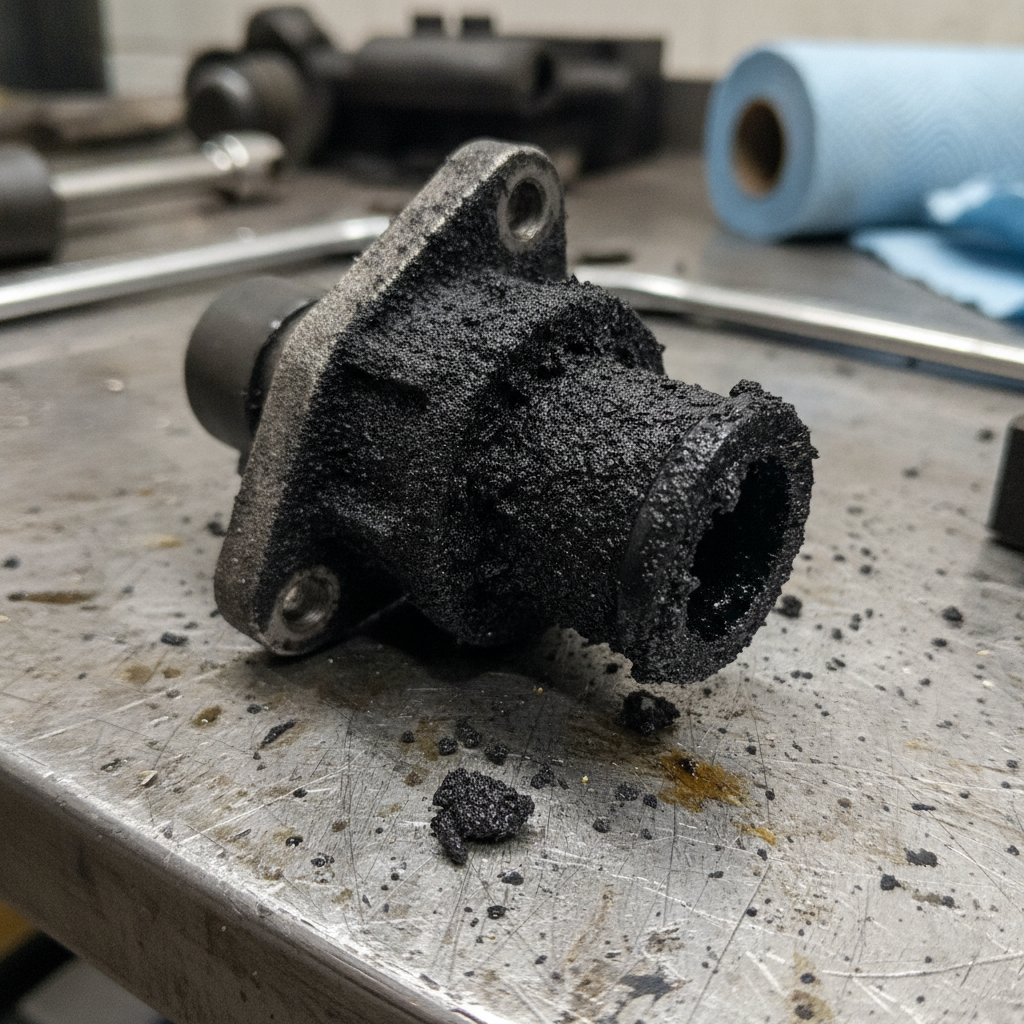
It also introduces a moving mechanism that lives in soot. Over years of short journeys, carbon builds around the vane ring and the linkage. The vanes stop sweeping through their full range. The ECU commands a boost figure the turbo can no longer reach, and P0299 appears.
The tell is the pattern. A carboned vane mechanism is typically intermittent: worse from cold, better after a long motorway run that heats everything through, then back again a fortnight later. A mechanically failed turbo does not get better on its own.
Carbon does not only build on the vanes, either — it accumulates through the whole intake and exhaust path on a diesel doing short, cold runs. We covered that pattern in detail in our guide to carbon build-up in diesel engines.
How to diagnose a P0299 underboost fault in the right order
The order matters, because the cheap checks rule out the expensive conclusions.
- Read the full code list, not just P0299. Companion codes usually name the real fault. An underboost code sitting on its own points somewhere very different from one sitting alongside exhaust or sensor codes.
- Check freeze-frame data. Engine speed, load and coolant temperature at the moment of the fault tell you whether this is a cold-start problem or a full-load problem.
- Inspect the charge pipework by hand. Every clamp, every hose bend, every joint from turbo outlet to inlet manifold. Look for oily witness marks where pressurised air has been escaping.
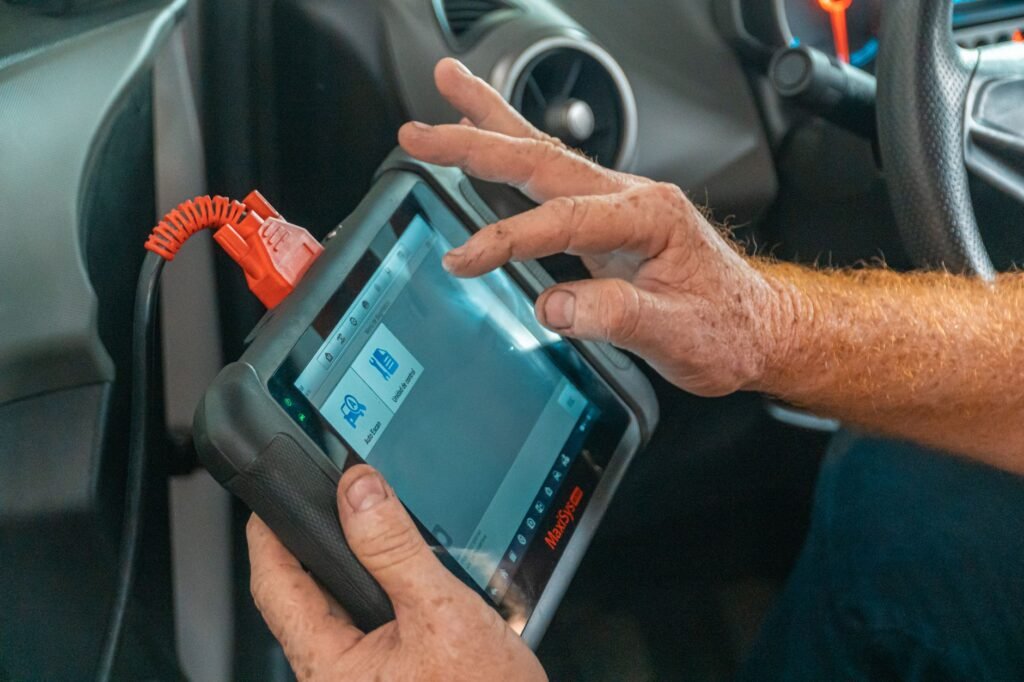
- Compare commanded versus actual boost on live data. This is the single most useful test. Watch how far apart the two lines run and at what load they separate.
- Test the actuator through its range. Vacuum or electronic, it should move smoothly and hold position, not stick partway.
- Only then consider the turbo itself. Shaft play, oil in the intake, and audible whine are the evidence that justifies that conversation.
One reading that saves a lot of money
If commanded and actual boost track closely at low load and only diverge under heavy acceleration, you are usually looking at a leak or a restriction, not an electronic fault. If they diverge everywhere, including gentle driving, suspect the actuator or the sensor first.
If the vehicle has also dropped into limp mode, the underlying trigger is often the same one. Our post on what puts a diesel into limp mode covers how the ECU decides to protect the engine, and our guide to diesel turbo fault symptoms covers what genuine turbo failure sounds and looks like.
Can you drive with it? Limp mode, smoke and the MOT
Short answer: you can usually get home, but you should not leave it. A vehicle running with an underboost fault is often also running an incorrect air-fuel balance, which is where black smoke and higher soot loading come from — and soot loading is what turns a cheap fault into an expensive one.
There is an MOT dimension too, and it is more definite than most drivers realise. The DVSA MOT inspection manual requires testers to inspect the engine malfunction indicator lamp on diesel vehicles first used on or after 1 July 2008. A dashboard warning light that stays on because of a stored fault is not a cosmetic problem when the test comes round.
The same manual also fails vehicles emitting clearly visible black smoke during the opacity check. An unresolved underboost fault can push a borderline vehicle across that line.
Does a remap cause P0299 — or fix it?
Both questions come up constantly, and the honest answers are not the ones people want.
A remap does not fix a mechanical underboost fault
If the turbo cannot physically reach the boost the standard map asks for, asking for more boost achieves nothing except a faster return of the fault. Any remapper offering to “map around” an underboost code is proposing to hide a fault, not repair one. That is a short road to a hotter turbo and a heavier soot load.
A badly done remap can cause one
An overly aggressive boost target on a tired VNT mechanism will produce underboost codes that the standard map never triggered, because the target has moved beyond what the hardware can now deliver. That is not an argument against remapping; it is an argument against remapping a vehicle nobody health-checked first.
This is why every job we do starts with a fault-code read and a live-data check before anything is written to the ECU. If a vehicle shows a boost fault, the map conversation stops until the mechanical fault is fixed. Our mobile ECU remapping service comes to you across Leicester and Leicestershire, and that diagnostic check is part of the visit rather than an extra.
Costs vary widely depending on which of the seven causes above turns out to be responsible — a slipped hose clamp and a replacement turbo are not remotely the same job. Nothing on this page is a quote; the only way to price the work is to identify the actual fault first.
Frequently asked questions
Can I drive with a P0299 code?
Usually yes, for short distances, but the vehicle will feel flat and may be in limp mode. Driving on it for weeks is the risk — incomplete combustion increases soot output, which loads the exhaust aftertreatment and can turn a cheap air leak into a much larger bill.
Will clearing the code fix it?
No. Clearing P0299 removes the record, not the cause. If the underlying gap between commanded and actual boost is still there, the code returns within a few drive cycles — often within a single journey once the engine is under load.
Does P0299 always mean the turbo needs replacing?
No, and this is the most expensive assumption in the whole subject. Leaks, hoses, sensors, actuators and sticking vanes all produce the same code. The turbo should be the conclusion you reach after testing, not the one you start with.
Why does the fault come back after a long motorway run clears it?
That pattern points strongly at a carboned variable-vane mechanism. Sustained high exhaust temperatures free the vanes temporarily; town driving lets the deposits build again. It is a strong hint that the mechanism needs cleaning or attention rather than the whole turbo being condemned.
Underboost fault on a Leicestershire diesel?
We diagnose boost faults at your home or workplace across Leicester, Loughborough, Hinckley, Coalville and the surrounding county — reading the full code list and live boost data before anybody talks about parts.
Contact Leicester Remaps to arrange a mobile diagnostic visit, or read more about mobile ECU remapping across Leicestershire.