Does Car Remapping Affect Your Insurance? A UK Driver’s Guide
One of the most common questions before booking a remap: will my insurance go up? Can they cancel my policy? What do I actually need to tell them? This guide gives you a clear, practical answer — so you can make an informed decision before you pick up the phone.
Topic: insurance declaration
Intent: pre-purchase concern
Location: Leicester & Midlands
In this guide
Does Remapping Affect Your Car Insurance?
Yes — remapping a car is a modification, and modifications must be declared to your insurer. This applies to ECU remaps regardless of whether the change is a Stage 1 performance remap, a fuel economy remap, or a software solution for a system like DPF or EGR.
The reason insurance is affected is straightforward. A remap changes the way your engine performs. Insurers price their premiums based on known risk profiles for specific vehicles. When that profile changes — even through software alone — it falls outside the standard underwriting data they used to calculate your original premium.
This doesn’t mean your insurance will skyrocket or that you’ll be refused cover. Many drivers with remapped cars pay a modest uplift and nothing more. But you do need to tell your insurer, and you need to do it before you drive the car after the remap is done.
Key point
A remap is a modification under UK insurance rules. Failing to declare it is not a grey area — it is a material non-disclosure that can invalidate your policy.
What You Need to Declare to Your Insurer
When you contact your insurer after a remap, you will need to declare it as a modification. Most insurers will ask for the following details:
- The type of modification — ECU remap or software tuning
- Whether it is a performance remap or a functional software change
- Any power or torque increase (your remapper can confirm these figures)
- Who carried out the work — a professional tuner, not a DIY job
Some insurers will ask for a specific power output figure after the remap. Others are satisfied with a general description. It is worth having this information ready before you call.
If your insurer asks for a written record of the work, a reputable remapping specialist like Leicester Remaps will be able to provide confirmation of what was done, including the tools used and the type of calibration applied.
What counts as a modification?
Under UK insurance rules, any change to the manufacturer’s standard specification is a modification. ECU remaps are included in this — even if the car looks identical from the outside and the change is only in the software. Engine output, throttle mapping, boost pressure and other calibrated parameters all affect vehicle performance, which is why insurers treat remaps as a declarable change.
Good practice
Keep a copy of your remap confirmation and the details of your tuner. This makes declaration straightforward and gives you documentation if a question ever arises.
What Happens If You Don’t Declare a Remap?
Not declaring a remap is a material non-disclosure. This is one of the most serious things that can go wrong with an insurance policy in the UK.
If you have an accident and your insurer discovers that the car had an undeclared modification, they can:
- Refuse to pay out your claim entirely
- Void your policy from the date of the modification
- Recover costs they have already paid out from you personally
- Flag the non-disclosure with other insurers
This is a significant risk. A refused claim after a serious accident is not just inconvenient — it can result in substantial personal liability. The cost of declaring is almost always much lower than the potential cost of not doing so.
Do not rely on “they’ll never know”
Insurers are increasingly thorough when investigating claims. Diagnostic data, service records and the ECU file itself can all reveal that a remap was present. If there is any reason to investigate — an accident, a dispute, a total loss — the modification will likely surface.
What if I remapped the car before I took out the policy?
The same rules apply. When you answer questions on an insurance application, you are declaring the current state of the vehicle. A remap that was done before the policy started should still be declared at the point of application. If you are renewing and the car is remapped, it must be included in your renewal declaration.
How Much More Will Insurance Cost After a Remap?
This varies by insurer, by vehicle, and by the type of remap. There is no single answer, but some general patterns are worth understanding.
| Remap type | Typical insurer response | Expected cost impact |
|---|---|---|
| Stage 1 performance remap | Most accept with declaration | Modest uplift — often £20–£80/year |
| Fuel economy / efficiency remap | Many accept; some decline to alter premium | Minimal or no uplift in many cases |
| Stage 2 (with hardware changes) | Fewer standard insurers; specialist market | More significant uplift; specialist policy often needed |
| Software solutions (DPF, EGR, AdBlue) | Varies widely; depends on insurer’s view of the change | Low to moderate; some may not increase at all |
For a Stage 1 remap on a standard diesel or petrol car, many drivers find the premium impact is relatively small — sometimes less than the cost of a tank of fuel per year. A few insurers will not accept remapped vehicles at all, but these are a minority in the current market.
It is always worth shopping around or using a broker who specialises in modified vehicles. The difference between what one insurer charges for a remapped car and what a specialist will charge can be significant.
Finding an Insurer That Accepts Remapped Cars
Standard comparison sites will show policies from insurers who may or may not accept modifications. When you declare a remap, many policies will simply drop out of the results — which is not a problem in itself, because those policies would not have been valid cover for your car.
The most straightforward options are:
- Use a modified car specialist insurer — companies like Adrian Flux, Footman James, or Greenlight Insurance specifically underwrite modified vehicles and are familiar with ECU remaps.
- Use a broker — a broker who deals with performance and modified vehicles can place your policy with an insurer who has appropriate underwriting for remapped cars.
- Check your current insurer first — many mainstream insurers will accept a Stage 1 remap with a small uplift. Call them, declare the modification, and see what they say before assuming you need to switch.
What to tell them
When you speak to your insurer or a broker, be specific. Tell them it is an ECU remap, give the approximate power increase if available, and confirm it was carried out by a professional using proper tuning equipment. This gives them what they need to underwrite accurately and avoids confusion with less reputable DIY tuning.
Leicester Remaps tip
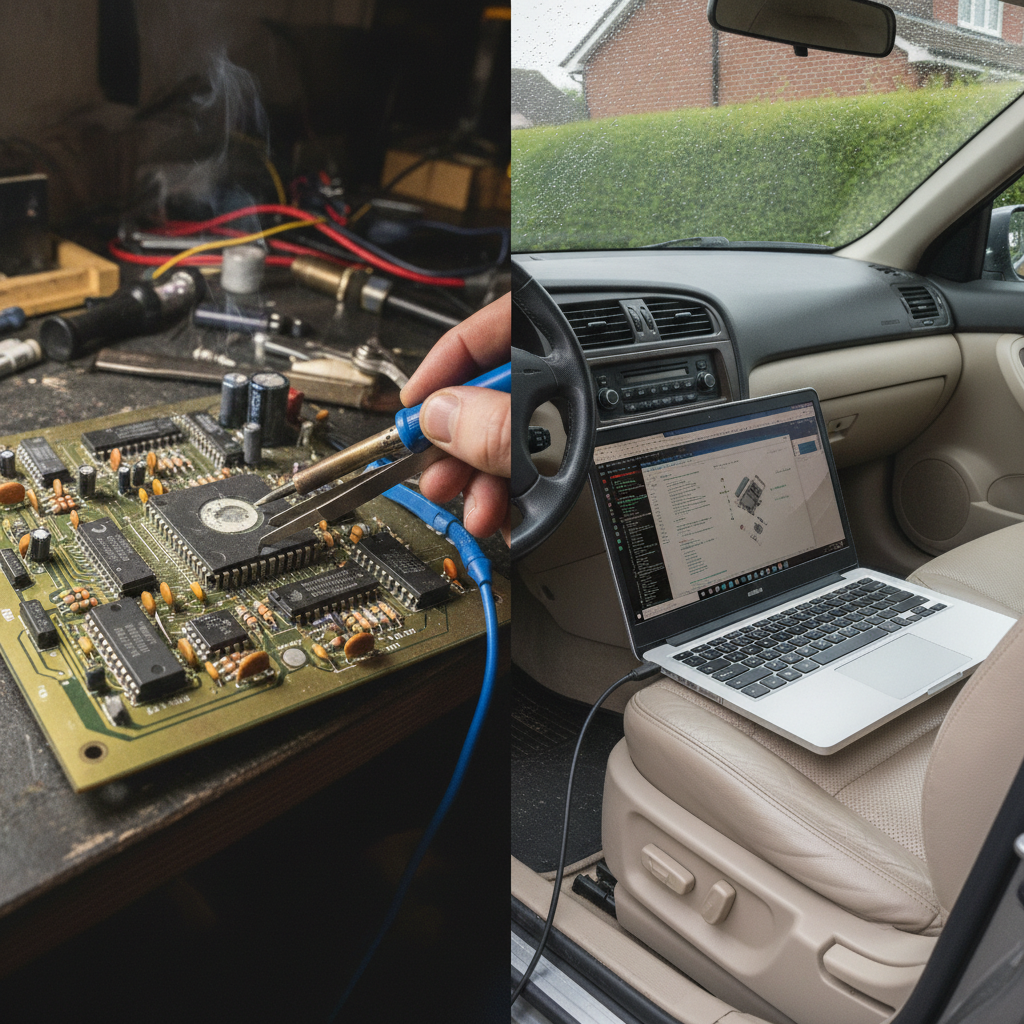
If your insurer needs written confirmation of the work done, ask your remapper at the time of the appointment. Leicester Remaps uses professional tools including Autotuner and KESS, and can confirm the type of calibration applied and the tools used.
Can You Reverse a Remap If Needed?
Yes. One of the key advantages of a properly done ECU remap from a reputable specialist is that it is reversible. The original ECU file is backed up before any work is done, so the car can be returned to factory settings if required.
Reasons drivers sometimes want to reverse a remap include:
- Selling the car and wanting to restore standard specification
- A manufacturer warranty claim that the dealer will only honour on a standard ECU
- Switching to an insurer who will not accept the modification
If reverting is something you want to keep as an option, confirm this with your remapper before the appointment. Leicester Remaps backs up original ECU files as part of the standard process, so the option to revert is retained.
It is worth noting that returning the car to factory settings for a warranty claim is a common practice. If a dealer carries out a software update, your remap may be overwritten in the process — this is a known risk with any ECU remap and something to factor in if your car is within a manufacturer warranty period.
On reversibility and insurance
If you reverse a remap, you should inform your insurer that the modification has been removed. They may adjust your premium accordingly. Keep records of both the original remap and the reversal for your own peace of mind.
Common Questions
Will remapping invalidate my car warranty?
An ECU remap may affect your manufacturer warranty if the car is still within the warranty period. Most manufacturers’ warranties are voided if software modifications are detected. However, Leicester Remaps retains the original ECU file, meaning the remap can be reversed before a dealer service if needed. Once your manufacturer warranty has expired, this concern is largely removed.
Does a Stage 1 remap count as a modification for insurance?
Yes. A Stage 1 remap is an ECU software modification that changes engine output and calibration. It must be declared to your insurer regardless of the power increase involved. Most mainstream and specialist insurers will accept a Stage 1 remap with a small premium adjustment.
Can my insurer find out about a remap if I don’t declare it?
Yes, this is a realistic risk. If an accident or claim triggers an investigation, diagnostic tools and ECU data can reveal that a remap is present. In addition, some dealers and MOT garages can detect remapped ECUs. It is not safe to assume a remap will go undetected indefinitely.
What if I’m buying a remapped car — do I need to declare someone else’s remap?
Yes. When you insure a vehicle, you are declaring the current condition of the car. If the car was remapped before you bought it, that modification must be declared on your policy. If you are uncertain whether a used car has been remapped, a diagnostic check can confirm this before purchase.
Are fuel economy remaps treated differently by insurers?
Some insurers take a more relaxed view of remaps focused on fuel economy rather than power output. However, it is still a modification and still needs to be declared. Do not assume a fuel economy remap is exempt from declaration requirements.
Ready to Book a Mobile Remap in Leicester?
Leicester Remaps offers mobile ECU remapping across Leicester, Loughborough, Coventry, Nottingham, and the wider Midlands. We come to your home or workplace, carry out full diagnostics before and after the remap, and retain your original ECU file for reversibility. If you have insurance questions before booking, we are happy to confirm the details of what was done in writing.
Leicester Remaps — mobile ECU remapping in Leicester, Leicestershire and the wider Midlands. Phone: 07849 475 153.