Carbon Build-Up in Diesel Engines: Causes, Symptoms and What You Can Do
Carbon deposits are an inevitable side effect of diesel combustion — but the rate at which they accumulate,
and where they build up, is heavily influenced by how the engine is used and whether its emissions systems
are working correctly. This guide explains what carbon build-up actually means for your engine, how to
recognise the symptoms, and what role EGR systems, DPF regeneration, and ECU tuning play in the process.
Leicester & Midlands
EGR solutions
DPF solutions
Jump to a section
- What is carbon build-up and where does it occur?
- What causes carbon build-up to accelerate?
- The EGR valve connection
- How DPF regeneration relates to carbon deposits
- Symptoms of carbon build-up in a diesel
- Short journeys: the biggest accelerant
- What can be done about carbon build-up?
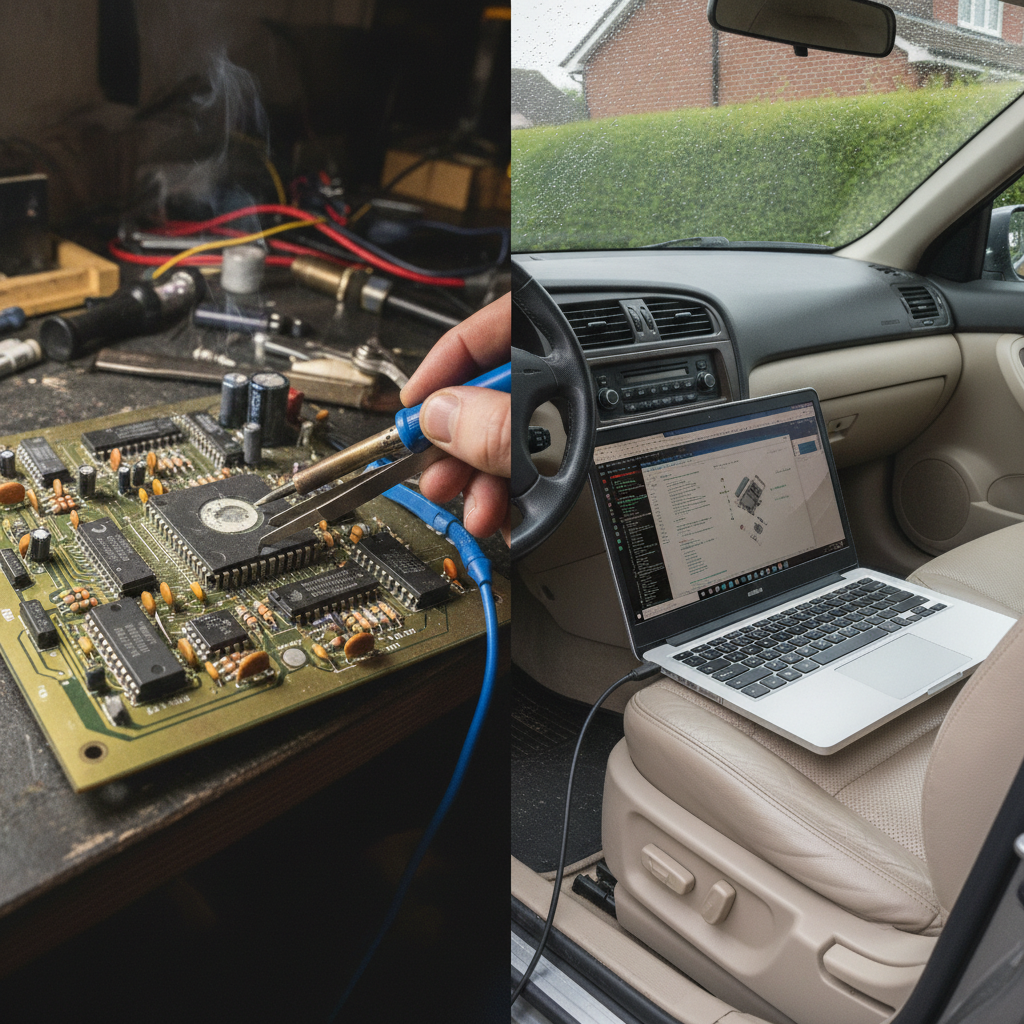
- ECU remapping and carbon build-up prevention
What is carbon build-up and where does it occur?
Carbon build-up refers to the accumulation of carbonaceous deposits — soot, unburned fuel residue, and
combustion by-products — on engine components. In diesel engines, the main areas affected are:
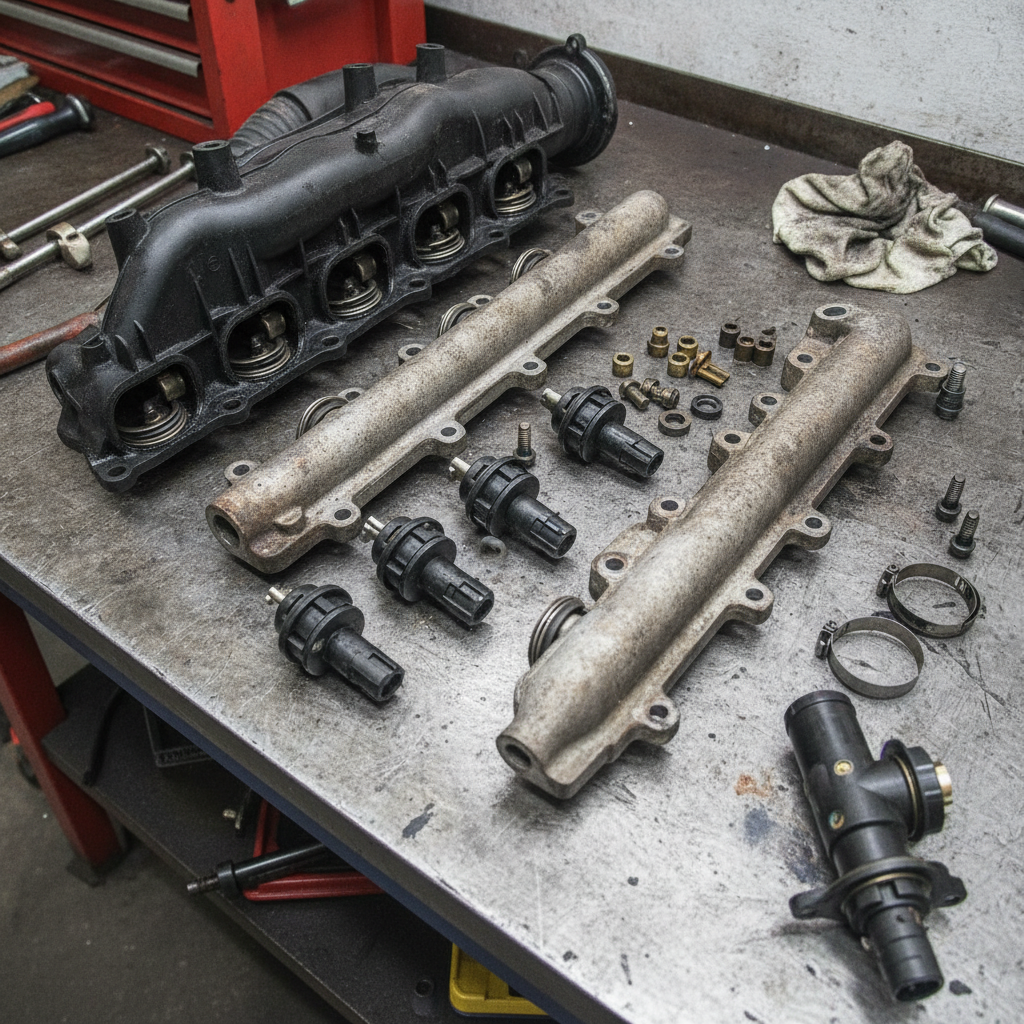
- EGR valve and passages: recirculated exhaust gases carry soot directly into the intake system
- Intake manifold: deposits restrict airflow into the combustion chambers
- Inlet valves and ports: coating on valve faces reduces flow and affects combustion quality
- Combustion chamber: deposits on piston crowns and cylinder walls affect heat transfer
- DPF filter substrate: carbon particulates captured from exhaust gases
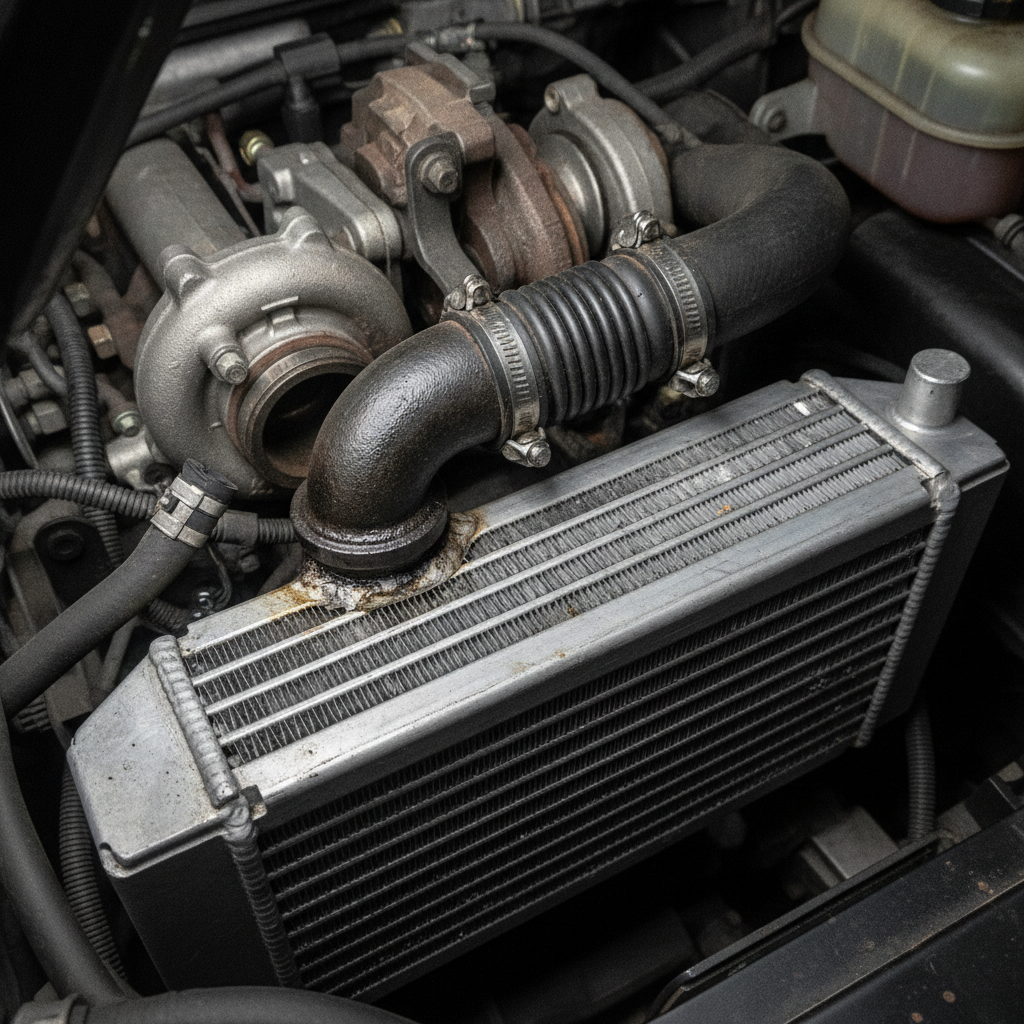
- Turbo compressor and VGT vanes: oil vapour and soot can cause vane sticking
Some level of deposit accumulation is normal in any diesel engine. Problems begin when the rate of accumulation
outpaces the engine’s ability to self-clean through normal operation, or when system faults prevent deposits
from being cleared by design-intent processes like DPF regeneration.
What causes carbon build-up to accelerate?
Several factors increase the rate of carbon deposit formation in modern diesel engines:
Low-load, low-temperature operation
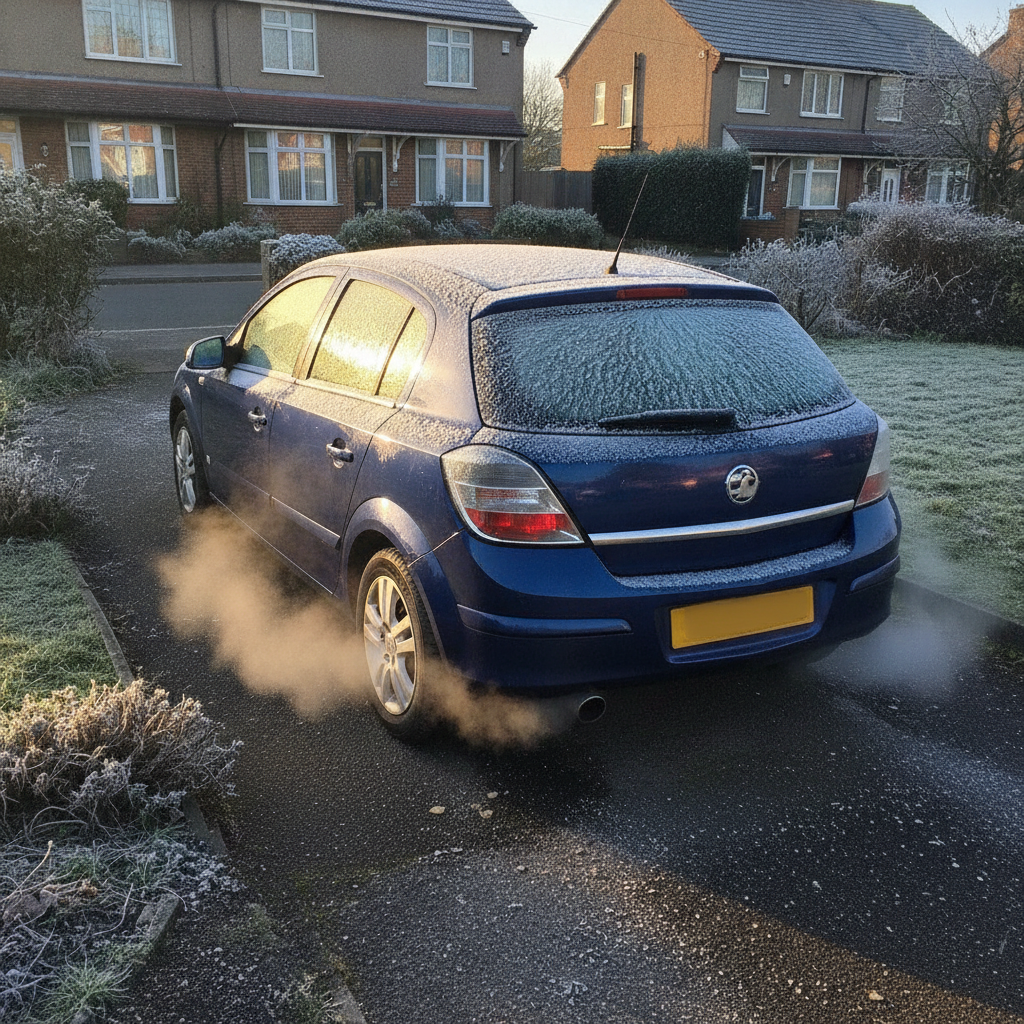
When a diesel runs at low load — idling, slow urban driving, short trips that never fully warm the engine —
combustion temperatures are too low to burn off deposits as they form. The engine cleans itself through
high-temperature, high-load operation. Without that, deposits accumulate unchecked.
Poor fuel quality or incorrect fuel
Diesel with high sulphur content, degraded fuel from a poorly maintained tank, or contaminated fuel can
increase deposit formation. Using the correct fuel grade for your engine (including premium diesel where
recommended for vehicles with high-pressure common rail systems) reduces this.
Extended oil change intervals
Degraded engine oil produces more blowby vapour, which enters the intake system through the crankcase
ventilation (PCV) system. This vapour coats intake passages and valves with an oily residue that traps
soot particles and accelerates build-up.
Faulty or recirculating EGR system
A malfunctioning EGR valve — one that’s stuck open or not closing fully — sends excessive quantities of
exhaust gas back into the intake. This is the primary route for soot into the intake manifold and onto
the intake valves in most modern turbodiesels.
The EGR valve connection
The exhaust gas recirculation (EGR) system is the main contributor to intake carbon build-up in most modern
diesel engines. The system is designed to reduce NOx emissions by recirculating a proportion of exhaust gas
back into the intake — this lowers combustion temperature and reduces the formation of nitrogen oxides.
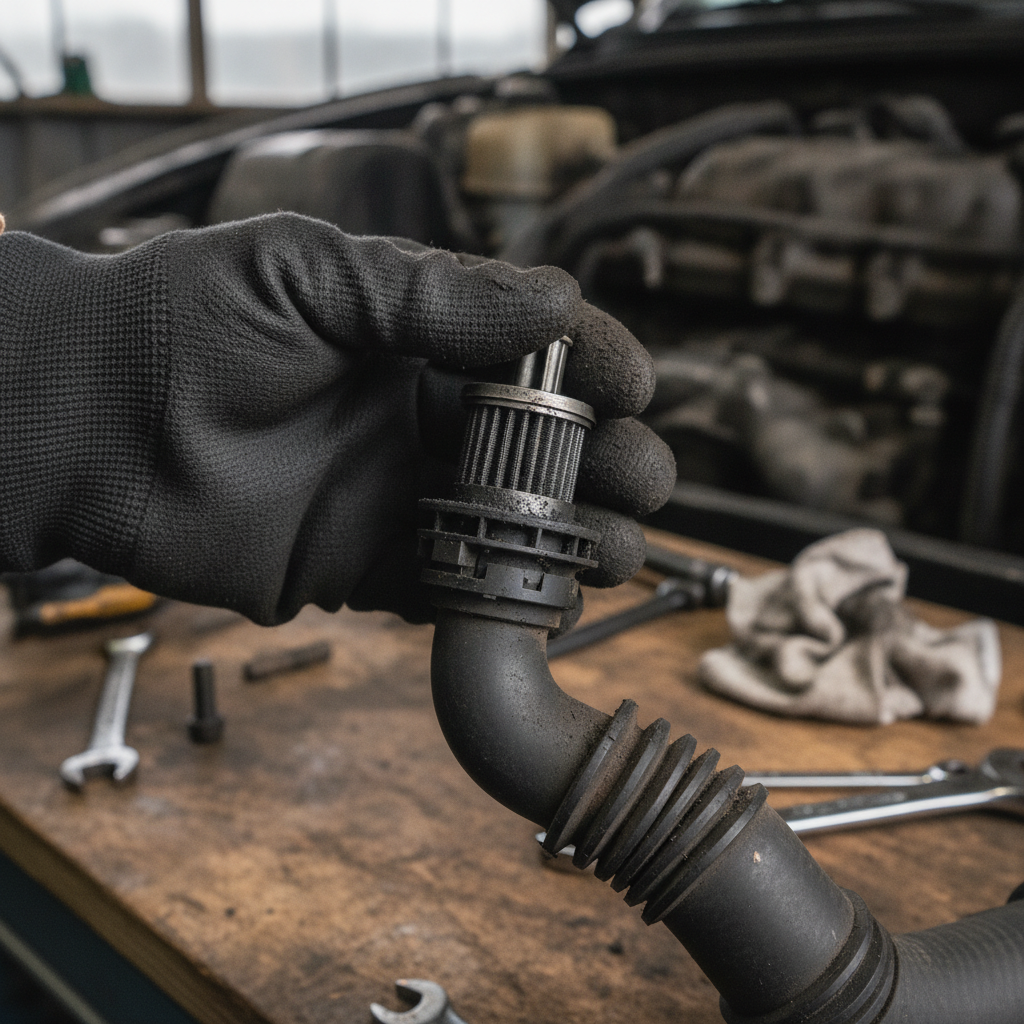
The problem is that exhaust gas contains soot particles, and those particles are routed directly into the
intake manifold. Over time, deposits build up on the EGR valve itself (causing it to stick open or closed),
in the EGR cooler, and along the intake passages to the inlet valves.
When an EGR valve sticks open, the carbon problem accelerates because more exhaust gas — and more soot —
is entering the intake than the system is designed to allow. Symptoms at this point include rougher idling,
increased fuel consumption, and in severe cases, a thick black smoke from the exhaust under acceleration.
EGR solutions at Leicester Remaps
An EGR software solution disables the EGR system via the ECU, preventing exhaust gas recirculation without
mechanical removal. This stops the source of intake carbon contamination, protecting the intake system
from further soot accumulation. Learn more at the
EGR solutions page.
EGR and DPF interaction
The EGR system doesn’t operate in isolation. If the DPF is partially blocked, back pressure increases,
which affects combustion quality and can increase soot output. More soot in the exhaust means more soot
recirculated through the EGR. The two systems interact closely, which is why faults in one often
accelerate problems in the other.
How DPF regeneration relates to carbon deposits
The diesel particulate filter (DPF) captures soot particles from the exhaust before they exit the tailpipe.
It clears itself through a process called regeneration — the ECU raises exhaust temperatures high enough
to burn off the trapped soot, converting it to ash.
Active regeneration requires the engine to reach and sustain a certain temperature, typically achieved
during motorway or sustained dual carriageway driving. If the car is primarily used on short urban trips,
regeneration either doesn’t complete properly or doesn’t trigger at all. The DPF gradually fills with
soot, leading to back pressure, reduced fuel economy, and eventually a DPF warning light.
A blocked DPF increases combustion chamber temperatures unevenly, promotes incomplete combustion, and
generates more soot than a clear system — creating a feedback loop where the DPF gets progressively
worse faster.
Forced regeneration is not the same as resolving the cause
Forcing a DPF regen at a garage clears the immediate blockage but doesn’t change the driving pattern or
system fault that caused it. If the underlying issue — short journey use, EGR problems, injector wear,
or incorrect oil — isn’t addressed, the DPF will block again, often faster than the first time.
Symptoms of carbon build-up in a diesel
The symptoms vary depending on where the deposits are concentrated, but common signs include:
- Rough idle or hunting: irregular airflow into the engine due to restricted intake
- Sluggish throttle response: particularly at low engine speeds where EGR flow is highest
- Increased fuel consumption: the ECU compensates for reduced combustion efficiency
- Smoke on acceleration: black smoke indicates incomplete combustion; blue smoke can indicate oil involvement
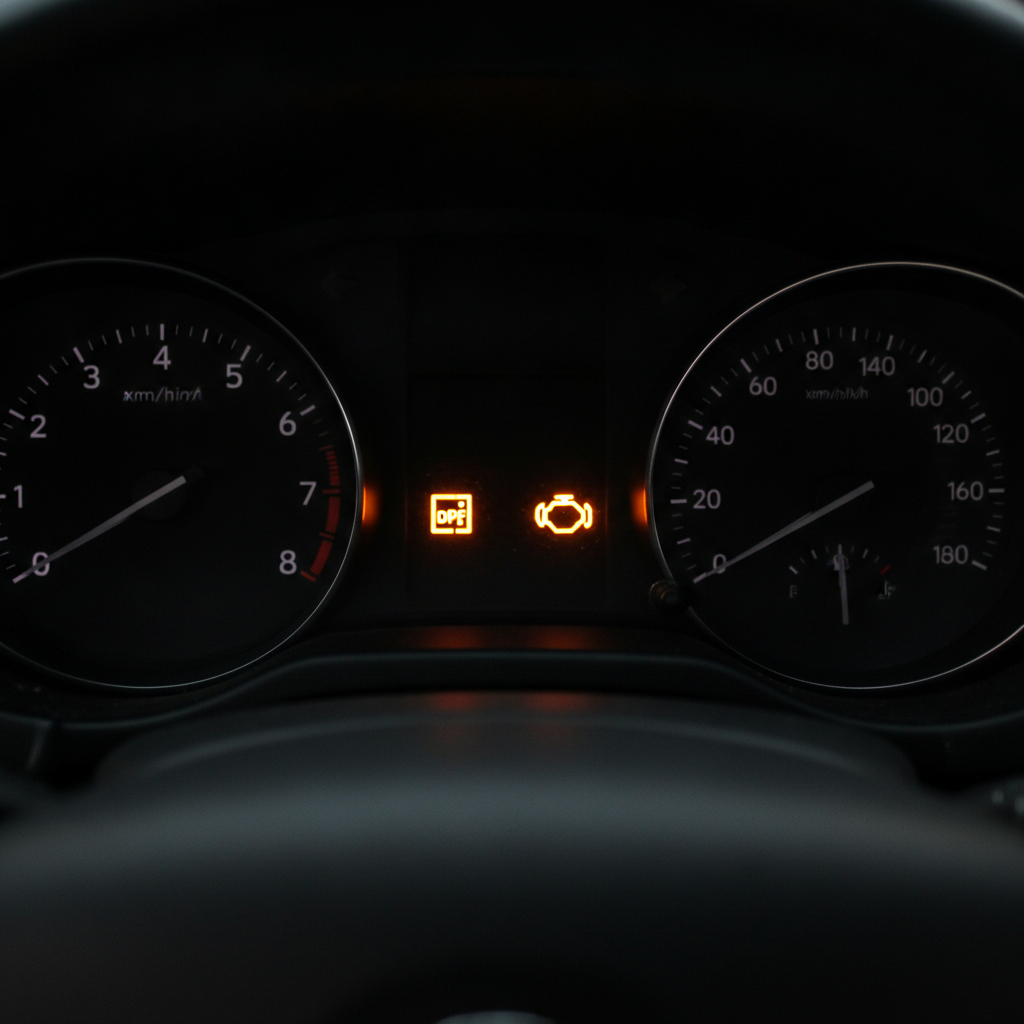
- DPF or EGR warning lights: these often appear as a consequence of carbon-related system faults
- Limp mode: severe intake restriction or EGR fault can trigger reduced-power protection
- Loss of power at mid-rev range: a common early sign before a warning light appears
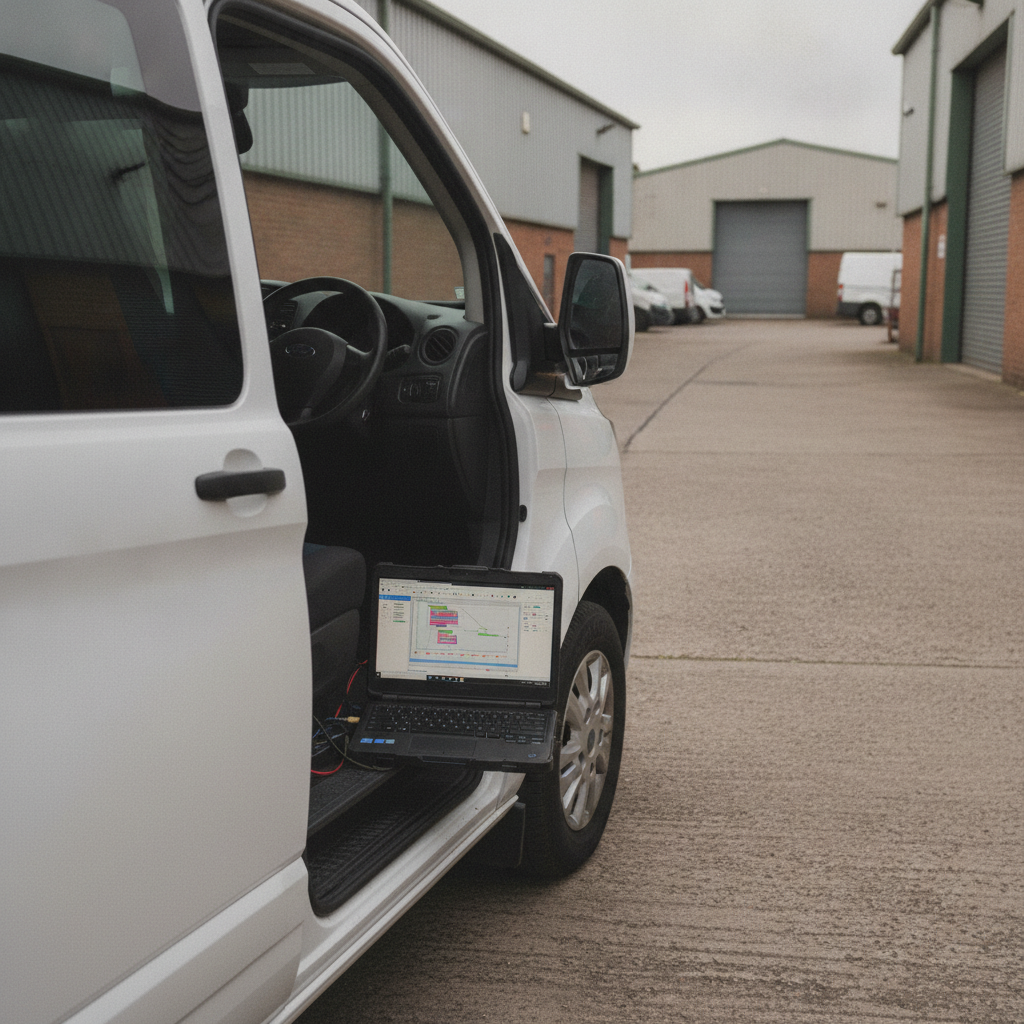
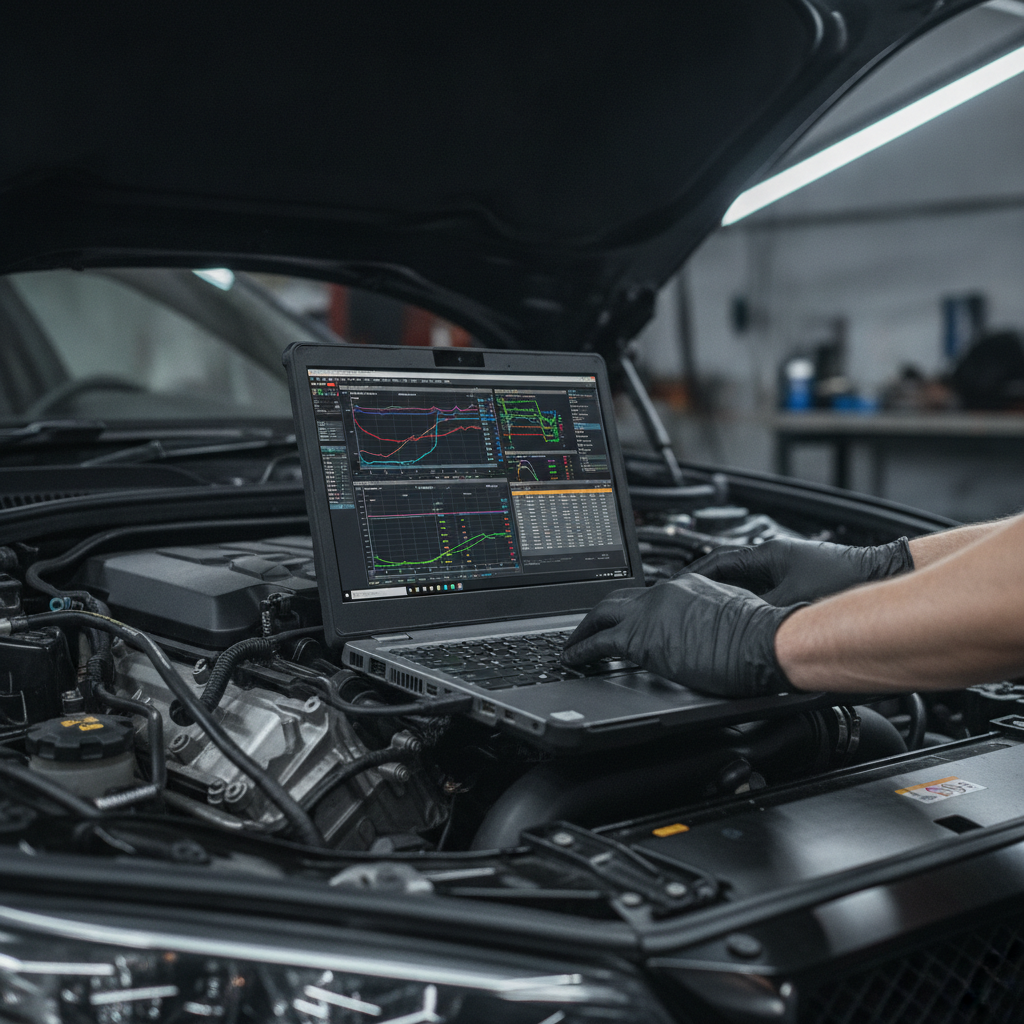
These symptoms overlap with several other diesel faults — injector issues, turbo problems, and boost leaks
can all produce similar effects. A diagnostic scan with live data is the most reliable way to identify
whether carbon build-up is the primary cause or a contributing factor.
Short journeys: the biggest accelerant
The most consistent contributor to premature carbon build-up in modern diesels is regular short-journey use.
Urban driving, school runs, local deliveries, and commutes under five miles rarely allow the engine — and
more importantly the DPF and EGR systems — to reach the temperatures needed for self-cleaning.
This affects van operators particularly heavily. A transit van or Sprinter on a parcel delivery run through
Leicester city centre, making 30 stops in 8 miles, is operating in exactly the conditions that accelerate
DPF blocking and EGR fouling. The same vehicle, driven on a regular motorway run once a week, would
largely manage its own soot levels.
If your primary use is urban and short-distance, the practical options are to either change how the car
is used occasionally (a monthly motorway run), address the symptoms as they appear, or consider ECU
solutions that reduce the rate of intake fouling at source.
What can be done about carbon build-up?
Physical intake cleaning
For significant build-up on intake manifolds and valves, physical cleaning is the most direct approach.
This typically involves removing the intake manifold, using chemical solvents or mechanical cleaning
to remove deposits, and reinstalling. On direct-injection engines — where fuel is injected directly into
the combustion chamber rather than the intake port — this is the only option for cleaning inlet valves,
as they don’t benefit from fuel washing.
Chemical cleaning treatments
Intake cleaning additives and walnut blasting (using crushed walnut shells as a blasting medium) are
common methods for inlet valve cleaning. Chemical treatments are lower cost but less effective for
heavy build-up. Walnut blasting is more thorough but requires specialist equipment and more labour time.
Addressing the EGR system
If the EGR valve is the primary source of intake fouling, cleaning it can provide a short-term improvement.
However, if the valve is worn or the driving pattern that caused the fouling doesn’t change, the problem
will recur. An EGR software solution — disabling the system via ECU — removes the source of intake
contamination permanently and prevents future accumulation through that route.
DPF maintenance and solutions
Keeping the DPF clear through regular longer journeys is the ideal preventive approach. If the DPF has
already blocked, forced regeneration, DPF cleaning, or a DPF software solution are the main options
depending on severity and the owner’s intentions for the vehicle. Learn more at the
DPF solutions page.
ECU remapping and carbon build-up prevention
A Stage 1 remap on a diesel typically increases torque output and sharpens throttle response across the
mid-range. One practical side effect — though not the primary purpose — is that a remapped diesel driven
enthusiastically produces higher exhaust temperatures more frequently, which supports DPF regeneration
and reduces the conditions that allow carbon deposits to accumulate unchecked.
More directly, EGR solutions applied via ECU remap remove the primary intake carbon contamination pathway.
On vehicles where EGR fouling is a recurring issue — particularly those used predominantly on short
urban journeys — an EGR software solution addresses the root cause rather than treating the symptom.
The remapping process also gives your remapper visibility into the engine’s current operating health.
If intake restrictions, EGR faults, or DPF pressure readings are outside expected parameters, a
good diagnostic scan before remapping will flag these, giving you a clear picture of what the engine
needs before any tuning work takes place.
EGR and DPF solutions as part of a remap
Leicester Remaps can combine EGR solutions, DPF solutions, and a performance remap in a single mobile
session. If carbon build-up has been causing symptoms, addressing the root cause via ECU at the same
time as the remap gives the cleanest result. Mobile service available across Leicester, Loughborough,
Hinckley, Market Harborough, Coventry, Nottingham, and the wider Midlands.
Got carbon build-up problems? Let’s look at the options.
Whether you’re dealing with EGR fouling, a blocked DPF, or just want to understand your engine’s health
before a remap, Leicester Remaps can help. Mobile diagnostics and remapping across Leicester and the Midlands —
no garage visit needed.
Get in touch to book or read more about
EGR solutions and
DPF solutions.