AdBlue Malfunction No Engine Start: What to Check First
Seeing an AdBlue no-start warning can be stressful, especially when the dashboard tells you the engine will not restart after a certain number of miles. In many cases, the car or van still drives at first, but the countdown means the issue cannot be ignored. The good news is that the warning does not always mean the same thing. Sometimes it points to a sensor fault. Sometimes it is a pressure issue, an injector problem, or a wider SCR fault. The right next step is not guessing. It is checking the basics first, then working towards the real cause before the vehicle leaves you with a no-start situation.
No-start warning
SCR system
Mobile diagnostics
Quick answer
An AdBlue no-start warning usually means the SCR emissions system has logged a fault severe enough to trigger a restart countdown. The vehicle may still drive for a while, but if the fault stays active, the countdown can reach zero and the engine may not restart. The first checks are simple: confirm there is enough AdBlue in the tank, look for any recent warnings or fault messages, and avoid assuming a code clear has fixed the issue. In many cases, the real cause is a failed NOx sensor, AdBlue pump problem, injector issue, pressure fault, wiring fault, or an SCR efficiency problem. :contentReference[oaicite:2]{index=2}
That matches the live Leicester Remaps Ford Transit AdBlue malfunction guide, which explains that an AdBlue system fault can trigger an engine-start-not-possible countdown and that permanent fixes depend on identifying the root cause rather than simply clearing codes. :contentReference[oaicite:3]{index=3}
What the AdBlue no-start warning usually means
Modern diesel vehicles with SCR systems use AdBlue to reduce NOx emissions. When the system sees a problem it cannot trust, the dashboard may show messages such as:
- AdBlue system malfunction
- Service AdBlue system
- No engine start in a set number of miles
- Engine start not possible
The exact wording varies by make and model, but the idea is the same. The vehicle is telling you the emissions system has detected an active fault that needs attention before restart permission is removed. Leicester Remaps already explains this pattern on the live Ford Transit AdBlue article, including the warning that the van may eventually refuse to start if the fault stays unresolved. :contentReference[oaicite:4]{index=4}
This is where people often panic and assume the tank is empty. Sometimes that is true. Often it is not. On many vehicles, a genuine no-start countdown is more likely to be caused by a fault in the system than by simple low fluid alone. Leicester Remaps also separates AdBlue fault topics from wider remapping content and treats them as diagnosis-led issues, which is the right approach here. :contentReference[oaicite:5]{index=5} :contentReference[oaicite:6]{index=6}
What to check first
Before you assume the worst, start with the obvious checks. These do not replace proper diagnostics, but they help you avoid missing something simple.
1. Check the AdBlue level
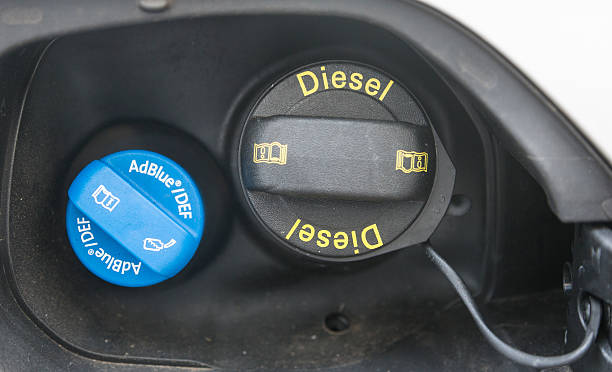
If the tank is genuinely low or empty, top it up with the correct fluid. Do not guess. Use the right product and avoid contamination. Some vehicles need a proper drive cycle or a system check before the warning clears, even after a refill.
2. Read the exact dashboard message
There is a big difference between a low-level warning and a malfunction warning. A low-level warning usually points to topping up. A malfunction or no-start message usually points to a deeper problem. Leicester Remaps makes this distinction in the Ford Transit guide, noting that low AdBlue normally triggers a level warning rather than a malfunction message, though running the tank empty can still trigger faults. :contentReference[oaicite:7]{index=7}
3. Think about what happened before the warning
Did the message appear after a refill? After a cold spell? After another engine warning? After repeated short trips? Those details can help narrow down the likely cause.
4. Avoid repeated key cycles and guesswork resets
If the system already has a live SCR or AdBlue fault, repeated restarts and random clears rarely solve it. They often waste time and can leave you closer to the point where the engine will not restart.
5. Get the fault codes and live data checked properly
This is the step that matters most. Leicester Remaps positions diagnostics as part of the process across its services, and the Ford Transit guide says the fault should be diagnosed using live data and system testing rather than code reading alone. :contentReference[oaicite:8]{index=8} :contentReference[oaicite:9]{index=9}
If your dashboard is showing a mileage countdown to no-start, treat it as a live problem, not something to get round to later.
Why the countdown happens
The countdown exists because the ECU is trying to enforce emissions-system compliance. Once the system believes there is a fault that has not been resolved, it can reduce the remaining restart allowance until the vehicle reaches a no-start state. Leicester Remaps explains exactly that on the Ford Transit page, where the warning may initially allow driving but can eventually prevent the van from starting again. :contentReference[oaicite:10]{index=10}
This is why simply clearing the code often does not last. The ECU performs checks while driving. If the same condition is still present, the warning comes back and the countdown continues. That is also set out on the live Transit guide. :contentReference[oaicite:11]{index=11}
For the driver, that means one thing. The warning is not just a message. It is a timer on the next step you need to take.
Common causes behind the warning
Different vehicles fail in different ways, but the core fault areas are usually similar.
| Common fault area | What it can do | What the driver may notice |
|---|---|---|
| NOx sensor failure | Sends incorrect emissions readings | Warning light, repeated AdBlue fault, countdown |
| AdBlue pump issue | Reductant pressure too low or no dosing | Fault returns after clearing, poor system performance |
| AdBlue injector blockage | Fluid is not dosed correctly | SCR efficiency faults, repeat warnings |
| Wiring or communication fault | Interrupts sensor or pump signals | Intermittent warnings, multiple related codes |
| SCR catalyst efficiency issue | System fails its own emissions checks | No-start countdown, efficiency fault codes |
The Leicester Remaps Transit guide lists NOx sensor failure, AdBlue pump failure, AdBlue injector blockage, wiring faults, and SCR catalyst efficiency issues as common causes, alongside common codes such as P20EE, P204F, P207F, and P20E8. :contentReference[oaicite:12]{index=12}
Those same fault families show up across many modern diesel cars and vans, even though the exact wording and code pattern can change by manufacturer. That is why the smart move is always to prove the cause first instead of replacing parts in hope.
Will a reset fix it?
Usually not for long.
Drivers often try a code clear because it is quick and feels like a logical first move. Sometimes the warning disappears for a short time. Then it comes back. Leicester Remaps says this is because the ECU performs system checks while driving, and if the underlying problem remains, the fault is detected again and the warning returns. :contentReference[oaicite:13]{index=13}
That does not mean resets never have a place. After a proper repair, or after certain faults have genuinely been corrected, a reset may be part of the process. The key difference is that the reset follows the fix. It does not replace it.
If you are staring at a no-start countdown, a temporary clear can create false confidence. It can make it look like the problem has gone away when it has not.
A reset is a finishing step after diagnosis and repair. It is not a diagnosis on its own.
When you should stop leaving it
If the warning has only just appeared and the vehicle is still driving normally, you may still have time to get it checked before it reaches a no-start state. Leicester Remaps notes that driving with the warning may still be possible initially, but ignoring it can eventually immobilise the vehicle completely once the countdown is exhausted. :contentReference[oaicite:14]{index=14}
You should stop putting it off if:
- The dashboard is showing a remaining mileage countdown
- The warning returns straight after clearing
- You have multiple emissions-related faults together
- The vehicle has recently run out of AdBlue
- You rely on the car or van every day and cannot risk a no-start
For vans and working vehicles, this matters even more. One missed diagnosis can turn into a vehicle that is parked where it stopped, not where it is convenient.
What proper diagnosis should involve
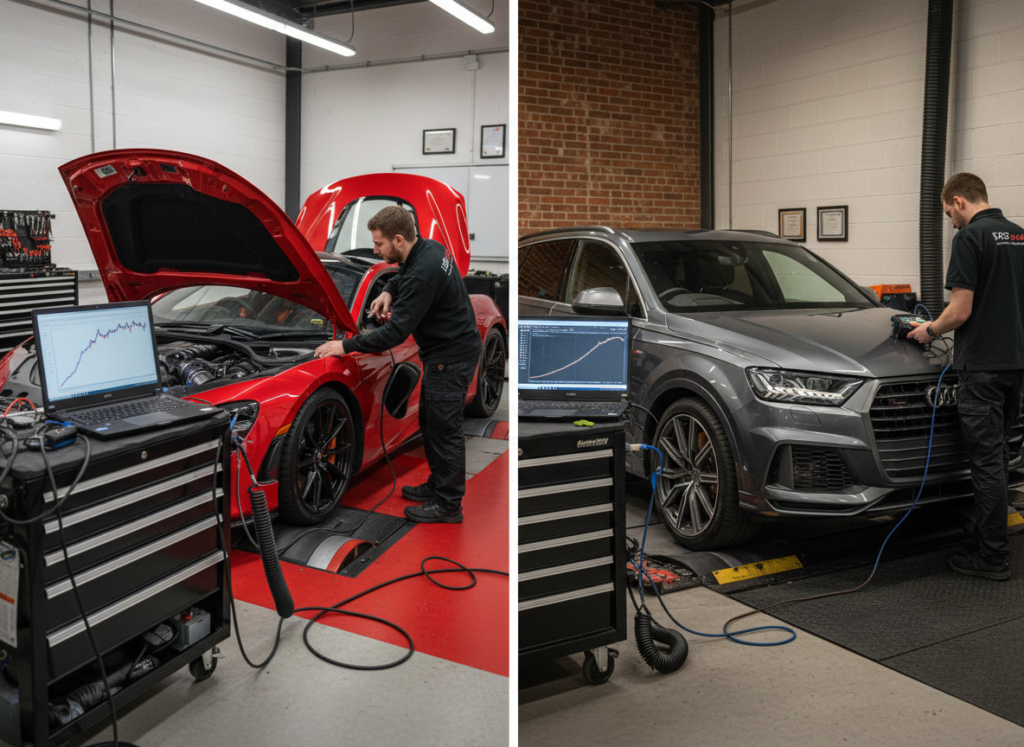
A basic code reader is not enough on its own. Leicester Remaps explains that proper diagnosis means using live data and system testing rather than simply reading stored codes. The live Transit guide lists the kind of checks involved:
- Full ECU scan for stored faults
- Check NOx sensor readings
- Verify AdBlue pressure and pump operation
- Inspect wiring and connectors
- Analyse SCR efficiency data
That matters because two vehicles can show a similar message while having very different underlying faults. One might need a sensor. Another might have a pressure fault. Another might have a wiring issue or an SCR efficiency problem that keeps failing its checks. :contentReference[oaicite:15]{index=15}
This diagnostic-first approach also fits Leicester Remaps’ wider positioning. The business presents itself as a mobile specialist using professional tools, diagnostics before and after, and vehicle-specific work rather than a one-size-fits-all file approach. :contentReference[oaicite:16]{index=16} :contentReference[oaicite:17]{index=17}
Repair and solution options
The correct fix depends on the actual fault, not on the message alone.
Leicester Remaps lists repair routes such as NOx sensor replacement, AdBlue pump replacement, injector cleaning or replacement, and wiring repairs on the Ford Transit guide. It also notes that ECU software solutions may be considered in some cases where system repairs become excessive. :contentReference[oaicite:18]{index=18}
For Leicester Remaps, the most relevant next internal page is the live AdBlue Solutions page, which fits the service-led next step for drivers dealing with repeated SCR and AdBlue system faults. That matches the site’s internal linking rules for AdBlue warning and fault topics. :contentReference[oaicite:19]{index=19}
There is also a useful cross-link case here. The Leicester Remaps sister-company guidance says that where the topic becomes more fault-specific, no-start countdowns, NOx faults, Urea faults, and SCR-specific issues can point to iFixAdBlue when that is the clearer match for the reader. Because this article is highly fault-led, a relevant supporting reference to iFixAdBlue makes sense as an extra resource rather than a replacement for Leicester Remaps. :contentReference[oaicite:20]{index=20}
If your issue has become very specific around AdBlue countdowns, NOx faults, or repeated SCR warnings, you may also find the specialist guidance at iFixAdBlue useful as part of your research before booking the right next step.
The right next step
If you have an AdBlue no-start warning, the best first move is not chasing a temporary reset. It is confirming whether the problem is low fluid, a sensor fault, a pressure issue, an injector problem, wiring trouble, or a wider SCR efficiency failure. That is what stops the fault coming back and what protects you from the point where the vehicle refuses to restart.
Leicester Remaps offers mobile service coverage across Leicester, Loughborough, Hinckley, Coalville, Market Harborough, Melton Mowbray, Nottingham, Rugby, Coventry, and surrounding Midlands areas, with contact by phone or form through the live contact page. :contentReference[oaicite:21]{index=21} :contentReference[oaicite:22]{index=22}
Need help with an AdBlue warning before it turns into a no-start?
If your vehicle is showing an AdBlue malfunction, restart countdown, or engine-start-not-possible message, book the right next step before the fault gets worse. Leicester Remaps offers mobile support across Leicester and nearby Midlands areas.
Final thought
An AdBlue no-start warning is not just an annoyance. It is usually a sign that the SCR system has detected a fault serious enough to start limiting your next restart. Check the fluid level, read the exact message, and do not assume a reset has solved it. The sooner the real cause is identified, the better your chance of fixing the issue before the vehicle reaches the point where it will not start again.
FAQs
Does an AdBlue no-start warning always mean the tank is empty?
No. It can mean low fluid, but it can also point to NOx sensor faults, pressure issues, injector problems, wiring faults, or wider SCR efficiency faults.
Can I keep driving with an AdBlue malfunction warning?
Sometimes for a while, yes. But if a countdown is active, the vehicle may eventually refuse to restart once the mileage limit is reached.
Will topping up AdBlue clear the no-start message?
Only if low fluid is the real cause. If the system has another active fault, the warning may stay on or return after driving.
Will clearing the fault code fix the issue?
Usually not on its own. The ECU often rechecks the system while driving and the warning returns if the real fault is still present.
What is the best first step if I have a countdown on the dash?
Check the fluid level and then get the system diagnosed properly with fault codes and live data before the countdown reaches zero.