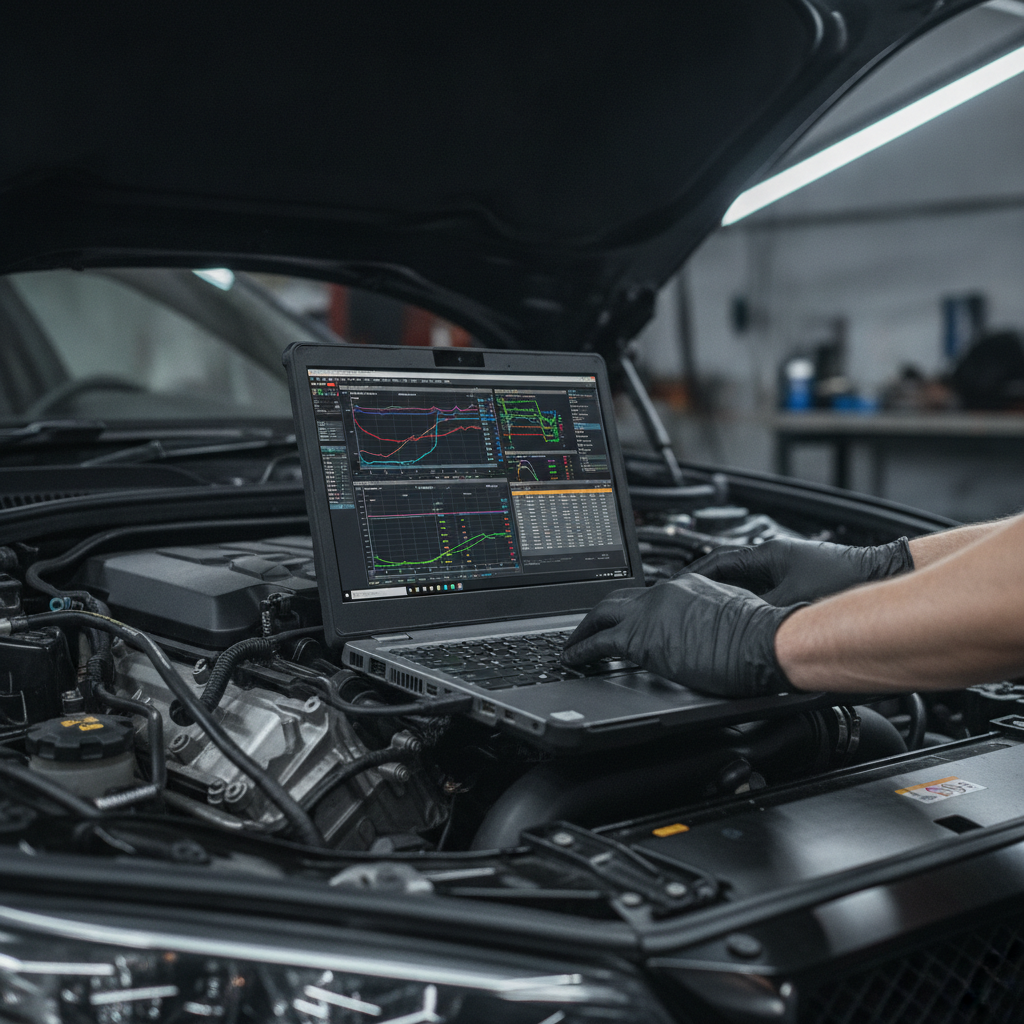
Will an ECU Remap Fail an MOT? What UK Drivers Need to Know
It is one of the most common questions drivers ask before booking a remap: will it cause problems at the MOT? The short answer is no — but the detail matters. Here’s exactly what the MOT tests, what it does not check, and how to keep your car sailing through the test after remapping.
In this guide
What the MOT Test Actually Looks For
The MOT test covers a defined checklist of items — brakes, lights, tyres, bodywork, steering, emissions, and safety systems. It does not include a check of what software is running on the ECU. There is no scanner connected to read what calibration is loaded, no dyno run, and no comparison against the car’s original power output.
From a standard MOT perspective, an ECU remap is invisible. The tester does not know — and has no way to find out — whether the software in the ECU matches what left the factory. What they do test is the output: the exhaust emissions. That is where any issues might appear.
The critical point
A remap does not directly cause an MOT failure. What matters is whether the car’s exhaust emissions pass the test. A well-calibrated remap on a well-maintained vehicle does not change that result.
The Emissions Test: Where a Remap Could Theoretically Become an Issue
The MOT emissions check measures what comes out of the exhaust. For petrol cars, it checks carbon monoxide (CO) and hydrocarbons (HC). For diesel cars, it measures particulate matter using a smoke opacity test. The results must fall within defined limits to pass.
A properly calibrated ECU remap on a healthy, well-maintained engine typically does not cause the emissions to move outside these limits. The remap modifies fuelling, boost, and ignition timing for performance — but in a controlled way that does not push exhaust outputs beyond what the engine can cleanly produce.
Situations where a remap might affect emissions
- Poor calibration: An over-fuelled remap that is not properly matched to the engine can increase particulates and CO. This is why the quality and source of a remap matters.
- Engine problems before the remap: Worn injectors, a failing turbo, or EGR issues that existed before the remap can be worsened if the calibration does not account for them.
- DPF or lambda sensor interaction: On diesels, if the remap has altered fuelling in a way that affects DPF loading or lambda sensor readings, this could interact with the emissions result.
A cheap, generic remap is a bigger risk than a quality one
Over-the-counter remap files loaded without customisation are not calibrated to your specific engine. A reputable remapper like Leicester Remaps reads your car’s existing ECU data and creates a map suited to your engine’s condition — this is fundamentally different from a plug-in generic tune.
MOT vs Insurance: Two Separate Questions
A common source of confusion is blurring the distinction between whether a remap affects the MOT and whether it affects insurance. These are completely separate issues with separate answers.
The MOT test does not ask about modifications. It tests the car’s current safety and emissions against published limits. Whether the car has been remapped, lowered, or fitted with aftermarket components does not factor into the pass or fail decision — unless those modifications cause the car to fall outside the test criteria.
Insurance is different. Most UK insurers require you to declare modifications, including ECU remaps. Failing to do so can invalidate a claim. This is not an MOT issue, but it is something to sort before your next renewal if you have not already declared the remap.
What MOT Testers Can and Cannot Check
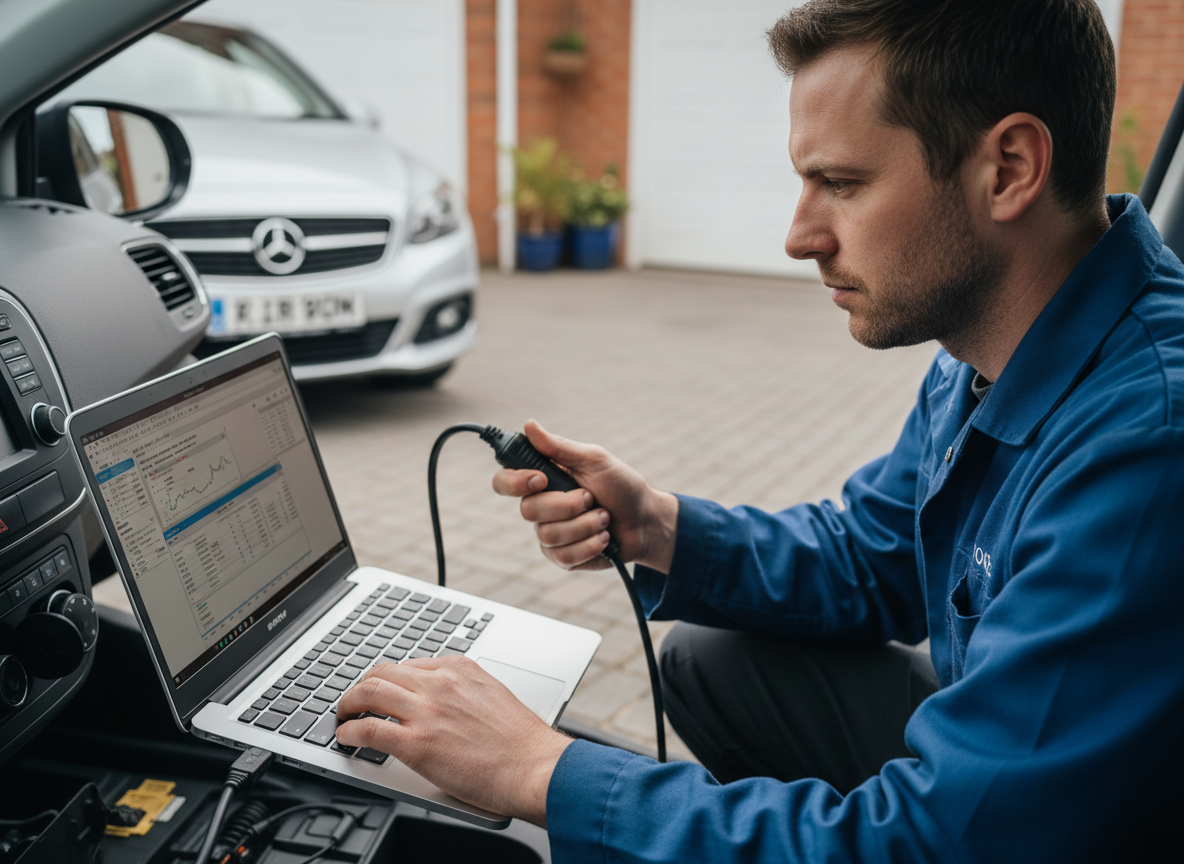
It is worth being clear about what is within scope for an MOT tester and what is not. Some drivers worry that a tester with a scanner will detect the remap — but this is not how the test works in practice.
What an MOT tester checks
- Brake efficiency and balance
- Tyre condition and tread depth
- Lights and indicators
- Steering and suspension
- Body structure and corrosion
- Exhaust emissions (CO, HC, and smoke opacity for diesels)
- Presence of DPF on diesel vehicles where fitted as standard
- Windscreen, wipers, horn, and safety items
What they do not check
- ECU software version or calibration file
- Manufacturer power figures
- Whether any modifications have been declared to an insurer
- OBD fault codes (in most cases — some testers do this as a pre-check, but it is not a pass/fail criterion)
What about OBD fault codes?
Some testers connect a basic reader as a preliminary check. Active fault codes — particularly those affecting the emissions system — may raise questions before the test. A clean, well-calibrated remap should not be generating active fault codes.
How to Keep a Clean MOT After Remapping
The straightforward answer is: keep the car in good mechanical condition. The areas most relevant to MOT performance are the engine, fuel system, exhaust, and emissions hardware.
Practical steps after a remap
- Service on schedule: Fresh oil, air filter, and fuel filter all affect combustion quality and emissions. Sticking to the service schedule is sensible after any increase in output.
- Check the DPF if applicable: On diesel vehicles, monitor DPF status, particularly if driving patterns have changed since the remap. A DPF-related issue is the most common emissions-related MOT concern.
- Address existing fault codes: Before your MOT, get any stored fault codes checked and resolved. Underlying issues the remap may have highlighted are worth clearing first.
- Use the correct oil: Low-ash oil is essential for DPF-equipped vehicles. Using the wrong spec increases particulate loading over time.
Is a Remap Reversible Before an MOT?
Yes — in most cases. One of the principles Leicester Remaps works to is retaining the original calibration file before any modifications are applied. This means the original software can be restored if needed.
In practice, there is rarely a reason to reverse a remap before an MOT — it is not something the test is looking for, and a well-done remap does not affect the emissions result. But for drivers who want the reassurance of knowing the option exists, it is there.
Pre-MOT check routine
- Ensure the car is fully serviced and no warning lights are active
- Check the DPF status if the vehicle has one
- Clear any stored fault codes that have been addressed
- Book the MOT with confidence — the remap itself is not a concern
ECU Remapping Across Leicester and the Midlands
Leicester Remaps provides mobile Stage 1 remapping, Stage 2 tuning, and fault-related software solutions across Leicester, Loughborough, Hinckley, Coventry, Nottingham, and the wider Midlands. We come to your home or workplace — no garage visit needed.
- Original file always backed up before any work
- Custom calibrations, not generic off-the-shelf files
- Stage 1, Stage 2, DPF solutions, EGR solutions, and more
- Covering Leicester, Leicestershire, and wider Midlands
Find out about our mobile ECU remapping service or get in touch to book.
Common Questions
Will a remapped car fail an MOT?
Not because of the remap itself. The MOT tests emissions output, safety systems, and mechanical condition — not ECU software. A well-calibrated remap on a maintained engine does not affect the test result.
Do I need to tell the MOT station my car has been remapped?
There is no requirement to declare a remap to the MOT testing station. It is not part of the test criteria. You do, however, need to declare it to your insurer.
Can a remap cause a diesel smoke test failure?
A poor-quality or over-fuelled remap could theoretically contribute to increased smoke, but a properly calibrated remap should not. The more common cause of a diesel smoke failure is an underlying mechanical issue — worn injectors, a failing turbo, or a heavily blocked DPF.
Does Leicester Remaps back up the original ECU file?
Yes — we always read and retain the original calibration file before writing any changes. This means the original map can be restored if needed. It is standard practice for any reputable remapper.
Leicester Remaps covers Leicester, Loughborough, Hinckley, Coalville, Swadlincote, Coventry, Nottingham, Rugby, and surrounding Midlands areas. Call 07849475153 or use the contact page to book.