Winter in Leicester brings cold temperatures, damp conditions, and challenging driving. If your car feels sluggish, struggles to start, or performs poorly during the colder months, you’re not alone. Many drivers experience winter performance issues—but not all of them realise that a remap could be the solution.
In this guide, Leicester Remaps explains the common winter car problems, why they happen, and how ECU remapping can help your vehicle perform better when temperatures drop.
Why Do Cars Perform Worse in Winter?
The Science Behind Winter Performance Loss
Cold weather affects your car’s performance in several ways:
1. Engine Efficiency Drops
- Cold air is denser than warm air
- Engine needs more fuel to maintain the same power output
- Combustion process becomes less efficient
- Result: Power loss of 5-15% in winter vs summer
2. Fuel Vaporization Issues
- Petrol doesn’t vaporize as easily in cold temperatures
- Engine control unit (ECU) compensates by adding more fuel
- This creates a richer fuel mixture
- Result: Poor fuel economy, sluggish acceleration
3. Oil Viscosity Changes
- Engine oil thickens in cold weather
- Thicker oil creates more friction and resistance
- Engine has to work harder to turn over
- Result: Slower cold starts, reduced power delivery
4. Battery Performance Decreases
- Cold reduces chemical reactions inside the battery
- Battery output drops by 30-50% in freezing temperatures
- Starter motor struggles to turn the engine
- Result: Difficult cold starts, electrical issues
5. Tyre Pressure Drops
- Air contracts in cold weather
- Tyre pressure can drop 1 PSI per 10°C temperature decrease
- Lower pressure increases rolling resistance
- Result: Sluggish acceleration, poor handling
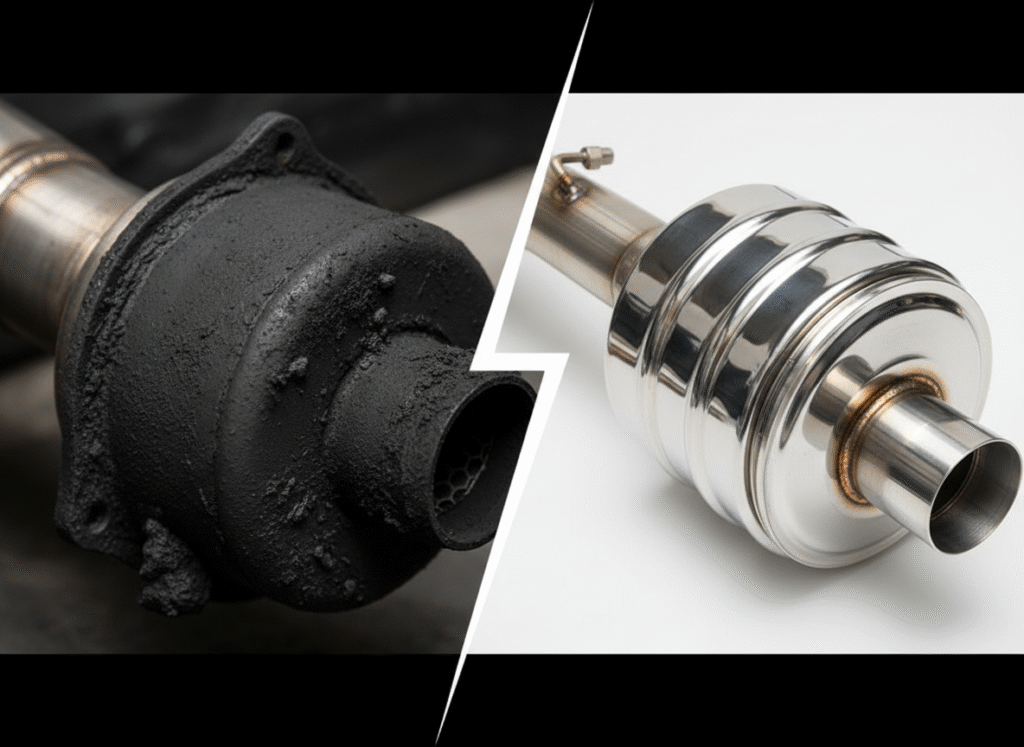
6. DPF (Diesel Particulate Filter) Issues
- Diesel engines struggle to reach regeneration temperature in winter
- DPF becomes clogged more easily
- Engine goes into limp mode
- Result: Loss of power, warning lights
Common Winter Car Problems in Leicester
1. Cold Start Difficulties
The Problem: Your car takes longer to start or won’t start at all on cold mornings.
Why it happens:
- Engine oil is thick and viscous
- Battery output is reduced
- Fuel doesn’t vaporize easily
- Starter motor struggles
Symptoms:
- Cranking takes 5-10 seconds instead of 2-3
- Engine sounds rough for first 30 seconds
- Dashboard warning lights appear
- Frequent clicking sound when turning key
Impact on Performance:
- Delayed acceleration
- Rough idle for 1-2 minutes
- Poor fuel economy during warm-up
2. Sluggish Acceleration
The Problem: Your car feels underpowered and slow to accelerate in winter.
Why it happens:
- ECU runs in “winter mode” with enriched fuel mixture
- Cold air reduces oxygen content
- Engine management system is conservative to protect engine
- Turbo (if fitted) takes longer to spool up
Symptoms:
- Noticeably slower 0-60 times
- Hesitation when pressing accelerator
- Feels like the car is “holding back”
- Takes longer to merge on motorways
Impact on Performance:
- 10-20% reduction in power
- Frustrating driving experience
- Safety concerns (slower merging, overtaking)
3. Poor Fuel Economy
The Problem: Your MPG drops significantly in winter months.
Why it happens:
- Engine runs richer (more fuel, less air)
- Cold engine takes longer to reach optimal temperature
- More idling time in traffic
- Thicker oil increases engine friction
- Tyre pressure is lower (more rolling resistance)
Symptoms:
- Fuel gauge drops faster than summer
- Visiting petrol station more frequently
- Noticeable difference in MPG readings
- Engine stays in “warm-up” mode longer
Impact on Performance:
- 15-25% worse fuel economy in winter
- Significant cost increase over winter months
- Wasted fuel during warm-up period
4. DPF Regeneration Problems (Diesel Engines)
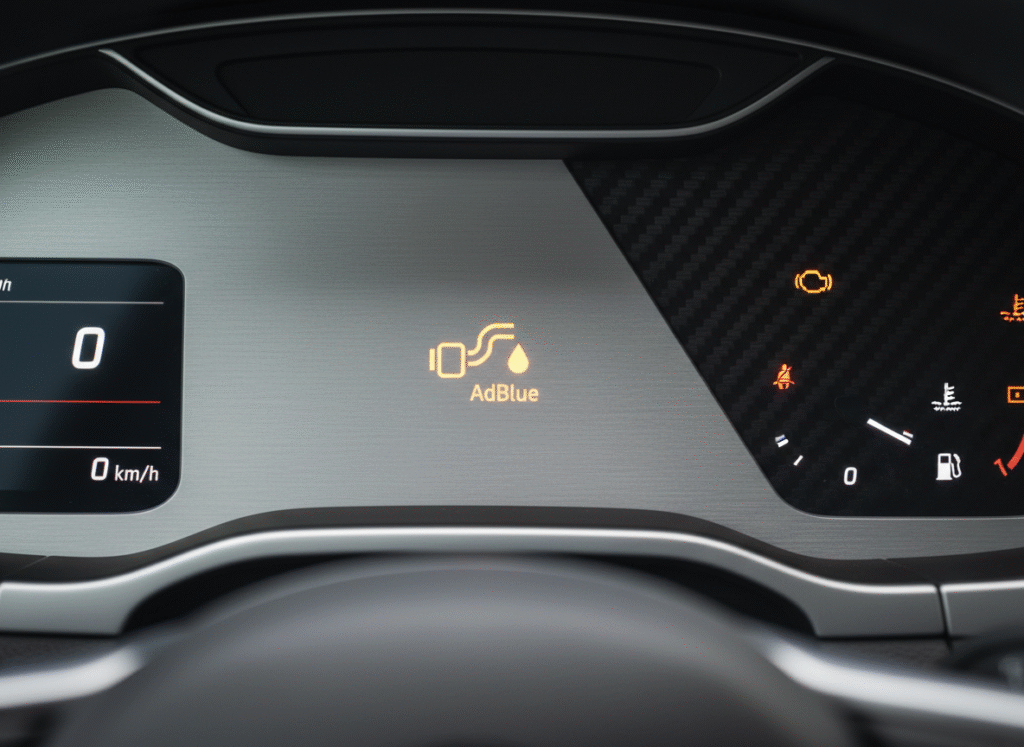
The Problem: DPF warning light appears, engine goes into limp mode, power is severely reduced.
Why it happens:
- Diesel engines need to reach 600°C+ for DPF regeneration
- In winter, short journeys don’t allow engine to get hot enough
- DPF becomes clogged with soot
- Engine management system limits power to protect engine
Symptoms:
- Orange/amber DPF warning light on dashboard
- Significant power loss (feels like car is limping)
- Increased fuel consumption
- Black smoke from exhaust
- Engine sounds rough
Impact on Performance:
- 30-50% power loss
- Car becomes undriveable for performance
- Risk of engine damage if ignored
5. Turbo Lag
The Problem: Turbo takes longer to spool up, creating noticeable lag before power kicks in.
Why it happens:
- Cold air is denser, turbo needs to work harder
- Exhaust gases cool faster in winter
- Turbo boost pressure takes longer to build
- ECU is more conservative with boost levels
Symptoms:
- Delay of 1-2 seconds before power kicks in
- Feels like car is hesitating
- Acceleration feels jerky or unsmooth
- Frustrating in traffic or when merging
Impact on Performance:
- Reduced responsiveness
- Safety concerns (slower merging)
- Unpleasant driving experience
6. Rough Idle
The Problem: Engine vibrates or shakes when stationary, especially after cold start.
Why it happens:
- Engine is cold and running inefficiently
- Fuel mixture is too rich
- Combustion is incomplete
- Engine management system is compensating for cold
Symptoms:
- Noticeable vibration through steering wheel and seats
- Engine sounds rough or uneven
- Lasts 30 seconds to 2 minutes
- More pronounced on very cold mornings
Impact on Performance:
- Uncomfortable driving experience
- Potential damage to engine mounts
- Concern about engine health
How Winter Affects Different Engine Types
Petrol Engines
Winter issues:
- Slower cold starts
- Sluggish acceleration
- Poor fuel economy (15-20% worse)
- Rough idle
Why they’re affected:
- Fuel vaporization is temperature-dependent
- Petrol needs to be atomized to burn efficiently
- Cold temperatures prevent proper atomization
Typical power loss: 5-10%
Diesel Engines
Winter issues:
- Very difficult cold starts
- Severe sluggishness
- DPF regeneration problems
- Limp mode activation
Why they’re affected:
- Diesel fuel gels in extreme cold
- Diesel engines need high compression to ignite
- DPF regeneration requires high temperatures
- Glow plugs work harder in winter
Typical power loss: 10-15% (plus DPF issues)
Turbocharged Engines
Winter issues:
- Increased turbo lag
- Slower spool-up
- Reduced boost pressure
- Sluggish initial acceleration
Why they’re affected:
- Cold air is denser (good for power, but turbo works harder)
- Exhaust gases cool faster
- Boost pressure builds more slowly
- ECU limits boost to protect engine in cold
Typical power loss: 8-12%
How ECU Remapping Helps Winter Performance
What a Winter Remap Does
A winter-optimized remap adjusts your engine’s fuel injection, ignition timing, and boost levels to compensate for cold weather conditions.
Key adjustments:
- ✅ Optimizes fuel mixture for cold temperatures
- ✅ Improves cold start characteristics
- ✅ Increases turbo boost in winter mode
- ✅ Adjusts ignition timing for cold combustion
- ✅ Reduces DPF regeneration issues (diesel)
- ✅ Maintains performance in freezing conditions
Performance Improvements from Winter Remapping
Petrol Engines
| Metric | Stock Winter | Remapped Winter | Improvement |
|---|---|---|---|
| Cold Start Time | 8-10 sec | 3-4 sec | -50-60% |
| Power Output | -10% vs summer | -3-5% vs summer | +5-7% gain |
| 0-60 mph | 9.2 sec | 8.5 sec | +0.7 sec faster |
| Winter MPG | 28 mpg | 31 mpg | +10% improvement |
| Idle Quality | Rough | Smooth | Much better |
Diesel Engines
| Metric | Stock Winter | Remapped Winter | Improvement |
|---|---|---|---|
| Cold Start Time | 12-15 sec | 5-6 sec | -60% |
| Power Output | -15% vs summer | -5-8% vs summer | +7-10% gain |
| DPF Regeneration | Frequent issues | Improved | Better performance |
| Limp Mode | Frequent | Rare | Rarely triggered |
| Winter MPG | 32 mpg | 36 mpg | +12% improvement |
Turbocharged Engines
| Metric | Stock Winter | Remapped Winter | Improvement |
|---|---|---|---|
| Turbo Spool Time | 2.0 sec | 1.2 sec | -40% |
| Boost Pressure | 0.8 bar | 1.1 bar | +37% |
| 0-60 mph | 7.8 sec | 7.1 sec | +0.7 sec faster |
| Throttle Response | Sluggish | Responsive | Much better |
Real-World Winter Remap Benefits
Example 1: Ford Fiesta 1.0 EcoBoost
- Before: Sluggish in winter, takes 8 seconds to start, 0-60 in 10.2 sec
- After: Starts in 3 seconds, 0-60 in 9.1 sec, feels much more responsive
- Benefit: Safer merging, better acceleration, smoother driving
Example 2: BMW 320d (Diesel)
- Before: DPF warning light every 2 weeks, limp mode activated, severe power loss
- After: DPF regenerates properly, no limp mode, full power maintained
- Benefit: Car is usable again, no warning lights, better fuel economy
Example 3: VW Golf 1.4 TSI (Turbocharged)
- Before: Noticeable turbo lag, sluggish acceleration, rough idle
- After: Immediate throttle response, smooth acceleration, clean idle
- Benefit: Much more enjoyable to drive, safer on motorways
Winter Remap vs Standard Remap
Standard Remap (Year-Round)
Optimized for:
- Average temperatures (15-20°C)
- Balanced power and reliability
- All-season performance
Winter performance:
- Less effective in cold weather
- Still experiences winter sluggishness
- May not address DPF issues
Cost: £299-£399
Winter-Specific Remap
Optimized for:
- Cold temperatures (0-10°C)
- Cold start characteristics
- Winter fuel mixture
- DPF regeneration (diesel)
Winter performance:
- Significantly better cold starts
- Maintains power in winter
- Reduces DPF issues
- Smoother idle
Cost: £349-£449
Our recommendation: If you live in Leicester and experience harsh winters, a winter-specific remap is worth the extra £50-£100.
When Should You Consider a Winter Remap?
You Should Get a Winter Remap If:
✅ Your car struggles to start on cold mornings✅ You experience significant power loss in winter✅ Your fuel economy drops noticeably in cold months✅ You have a diesel with DPF regeneration issues✅ You drive a turbocharged engine and notice lag✅ You regularly drive on motorways in winter✅ You want safer acceleration and merging✅ You’re frustrated with winter performance
You Might Not Need a Winter Remap If:
❌ Your car performs fine in winter already❌ You drive a modern hybrid or electric vehicle❌ You only do short urban trips in winter❌ You’re concerned about warranty implications❌ You don’t drive frequently in winter
Winter Remap Costs in Leicester
Pricing Breakdown
| Service | Cost | Time | Benefit |
|---|---|---|---|
| Winter Remap (Petrol) | £349-£399 | 60-90 mins | +5-7% power, better cold starts |
| Winter Remap (Diesel) | £399-£449 | 90-120 mins | +7-10% power, DPF improvement |
| Winter Remap (Turbocharged) | £399-£449 | 90-120 mins | Better lag, more responsive |
| Diagnostics Only | £79-£99 | 30-45 mins | Identify winter issues |
| Remap Reversal | Free | 30 mins | Back to factory settings |
What’s Included
- Full winter diagnostics
- Custom winter-optimized remap
- Cold start testing
- Performance verification
- Complete ECU backup
- Lifetime software warranty
- 30-day support
Money-Saving Potential
Fuel savings from winter remap:
- Standard winter MPG: 28 mpg
- Remapped winter MPG: 31 mpg
- Improvement: +10%
Annual fuel cost calculation:
- 10,000 miles in winter (Oct-Mar)
- At £1.50/litre and 28 mpg: £535
- At £1.50/litre and 31 mpg: £484
- Annual saving: £51
Over 3 years: £153 saved on fuelRemap cost: £399Net cost after fuel savings: £246
Risks & Considerations
Warranty Implications
Manufacturer warranty:
- ❌ Remapping may void your manufacturer warranty
- ✅ Our remap is fully reversible (can restore factory settings)
- ⚠️ Check with your manufacturer before remapping
Insurance:
- ⚠️ Must declare remapping to your insurer
- ⚠️ May increase premium by 5-10%
- ✅ Winter remap is usually accepted by insurers
Reliability in Winter
Will a winter remap affect reliability?
Short answer: No, if done correctly.
A winter remap is specifically designed to improve reliability in cold conditions. However:
- ✅ Remap reduces engine stress in winter
- ✅ Better fuel mixture prevents rough running
- ✅ Improved cold starts reduce starter motor strain
- ⚠️ Ensure regular servicing (especially important in winter)
Our recommendation:
- Use quality fuel (98 RON for petrol, premium diesel)
- Maintain regular oil changes
- Check battery health before winter
- Monitor tyre pressure weekly
Emissions & MOT
Will a winter remap affect emissions?
Short answer: Possibly, but usually positively.
A winter remap:
- ✅ Often improves combustion efficiency
- ✅ Can reduce emissions compared to stock winter settings
- ✅ Should pass MOT emissions test
- ⚠️ Some older vehicles may need checking
Our approach:
- We test emissions before and after remapping
- We ensure your vehicle remains MOT-compliant
- We can reverse the remap if emissions are affected
FAQs: Winter Car Performance & Remapping
Why does my diesel car struggle so much in winter?
Diesel engines are particularly affected by cold weather because diesel fuel has a higher pour point (temperature at which it becomes solid). In extreme cold, diesel fuel can gel, making it impossible to ignite. Additionally, diesel engines rely on high compression for ignition, which is harder to achieve when the engine is cold. A winter remap helps by optimizing fuel injection and ignition timing for cold conditions.
Will a winter remap help my DPF problems?
Yes, significantly. A winter remap improves DPF regeneration by optimizing exhaust temperature and fuel injection. This allows the DPF to regenerate more effectively, reducing the likelihood of limp mode activation and warning lights. However, if your DPF is severely clogged, you may need a professional DPF clean in addition to a remap.
Can I use a winter remap all year round?
Yes, you can, but it’s not ideal. A winter remap is optimized for cold temperatures and may not be optimal in summer. Some customers keep a winter remap loaded in winter and switch to a standard remap in summer for maximum performance. We can do this for you.
How long does a winter remap take?
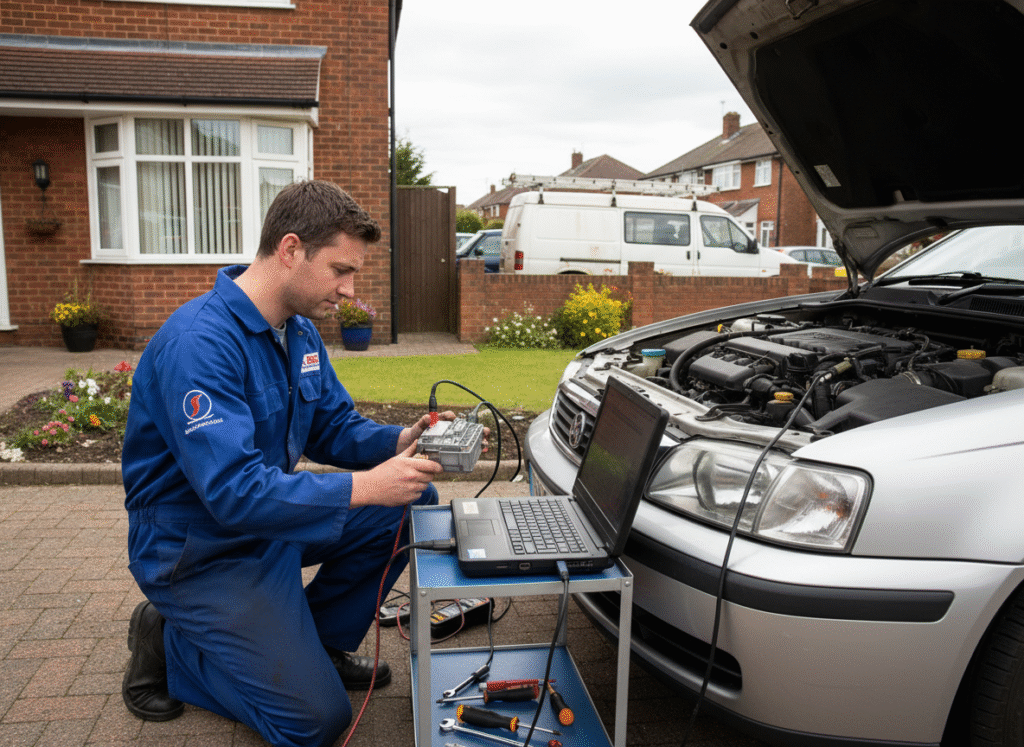
Typically 90-120 minutes, including diagnostics, remapping, and testing. We’re fully mobile across Leicester, so we come to you. You can wait in your car or go inside if we’re at your home.
What’s the difference between a winter remap and a standard remap?
A winter remap is specifically calibrated for cold temperatures, with optimized fuel mixture, ignition timing, and boost levels for winter conditions. A standard remap is optimized for average temperatures (15-20°C) and all-season use. Winter remaps provide better cold starts and winter performance, while standard remaps offer better year-round balance.
Will a winter remap void my warranty?
It may void your manufacturer warranty, depending on your vehicle and warranty terms. However, our remap is fully reversible—we can restore your factory settings if you need to claim warranty. Check with your manufacturer before remapping.
Is a winter remap legal in the UK?
Yes, winter remapping is legal for private vehicles. However, it must be declared to your insurer. For commercial vehicles, check with your fleet manager.
Can I remap my car if it has warning lights?
We recommend fixing any existing warning lights before remapping. Warning lights can indicate underlying issues that may interfere with the remapping process. We’ll diagnose any faults during the initial consultation.
How much will a winter remap improve my fuel economy?
Typically 8-12% improvement in winter fuel economy. This is because the remap optimizes fuel mixture for cold temperatures, reducing the over-fueling that happens in stock winter mode. Actual improvement depends on your driving style and vehicle.
What if I’m not happy with the winter remap?
We can fully reverse the remap and restore your factory settings at no additional cost. We keep a complete backup of your original ECU file.
Why Choose Leicester Remaps for Winter Remapping?
Winter Expertise
We specialize in winter performance optimization. We understand Leicester’s climate and have tuned hundreds of vehicles for winter conditions.
Specialist Equipment
We have diagnostic tools specifically for winter testing. We can verify cold start performance, monitor engine temperature, and test in realistic winter conditions.
Fully Reversible
We keep a complete backup of your original ECU file. If you want to switch back to factory settings or try a different remap, we can do it instantly.
Mobile Service
We come to you across Leicester, Loughborough, Hinckley, and 20-mile radius. No need to visit a workshop in the cold.
Honest Advice
We’ll tell you straight: if your car doesn’t need a winter remap, we’ll say so. We don’t push unnecessary work.
Lifetime Warranty
All our remaps come with lifetime software warranty. If you have any issues, we’ll support you throughout winter and beyond.
Book Your Winter Remap Consultation
Struggling with winter performance? We offer a free consultation to assess your vehicle and recommend the best solution.
Call 07849475153 or request a callback to discuss your winter performance issues.
We’ll:
- Diagnose your winter problems
- Explain how a winter remap can help
- Provide an accurate quote
- Answer any questions
- Schedule your remap at a convenient time
Mobile service across Leicester, Loughborough, Hinckley, Market Harborough, and 20-mile radius.
Open Monday-Saturday, 8am-6pm. Emergency callouts available for breakdown situations.
Other Winter Performance Solutions
Looking for other ways to improve winter performance?
- Battery Health Check – Ensure your battery is ready for winter
- Glow Plug Replacement – For diesel engines
- Fuel System Cleaning – Remove deposits affecting cold starts
- Tyre Pressure Monitoring – Maintain optimal pressure in cold weather
- Engine Oil Service – Use winter-grade oil for better cold starts
Don’t see what you need? Call 07849475153 for personalized winter performance advice.