Common AdBlue System Faults on Modern Diesels (and When You Actually Need a Specialist)
If you drive a modern diesel car or van, you will see AdBlue warnings at some point.
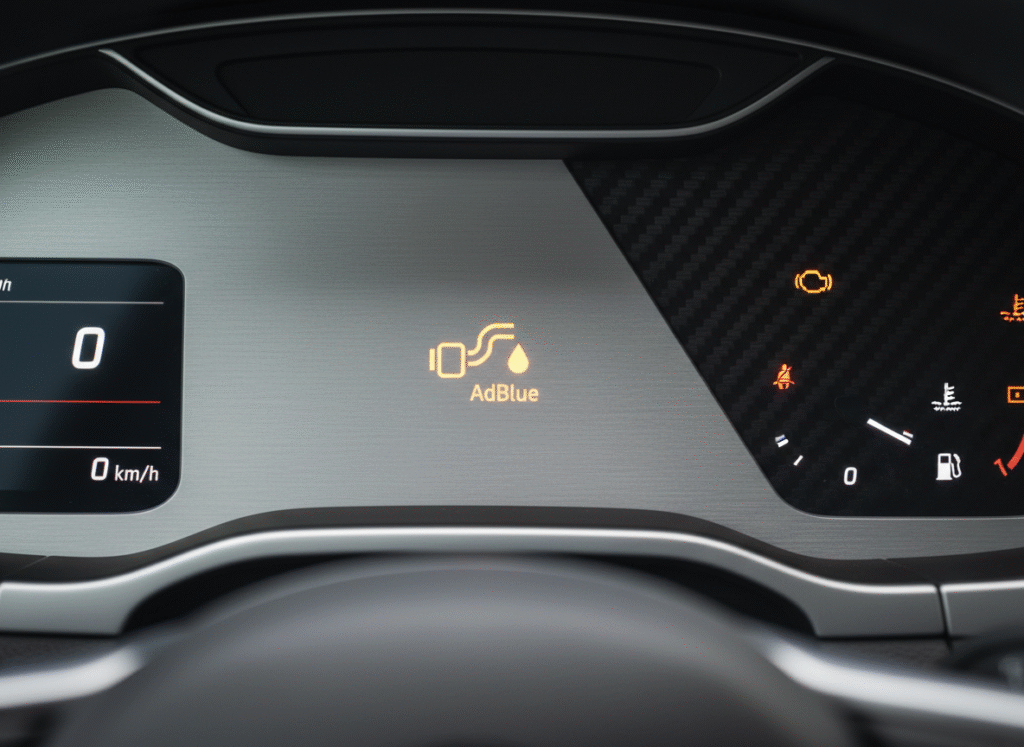
Sometimes it is just low fluid. Other times the dash lights up with “AdBlue system fault” and a countdown that threatens “No engine start in XXX miles”.
This guide is for UK diesel drivers who want clear, honest answers.
You will learn what the AdBlue system does, the most common faults, what the warning messages mean, and when you genuinely need an AdBlue specialist.
Leicester Remaps works with AdBlue faults every day across Leicester and Leicestershire.
We diagnose problems, repair systems where possible, and also offer AdBlue delete solutions for off-road, export, and track-only vehicles.
If your diesel is in limp mode or showing a no-start countdown, you can call Leicester Remaps on 07849 475153 or email
leicesterremaps@gmail.com for help.
What the AdBlue System Does (and Why Your Diesel Has It)
AdBlue is a clear liquid made from urea and deionised water. It is stored in a separate tank and injected into the exhaust, not into the engine itself.
The basic steps are:
- AdBlue is stored in a plastic tank, often at the rear of the vehicle.
- A pump sends AdBlue through lines to a small injector in the exhaust.
- Heat turns AdBlue into ammonia.
- The ammonia reacts with NOx gases in the SCR (Selective Catalytic Reduction) unit.
- NOx levels drop to meet strict Euro emissions rules.
The system is controlled by the engine ECU and one or more NOx sensors.
If the ECU thinks the system is not working, it sets warnings and starts a countdown to stop the engine from starting. That is why AdBlue faults feel so serious.
Common AdBlue Faults on Modern Diesels
AdBlue systems look simple from the outside. In reality they mix fluid, sensors, pumps, heaters, wiring, and software.
Below are the faults Leicester Remaps sees most often on cars and vans in Leicester and the surrounding areas.
1. Crystallised AdBlue in the Tank, Lines, or Injector
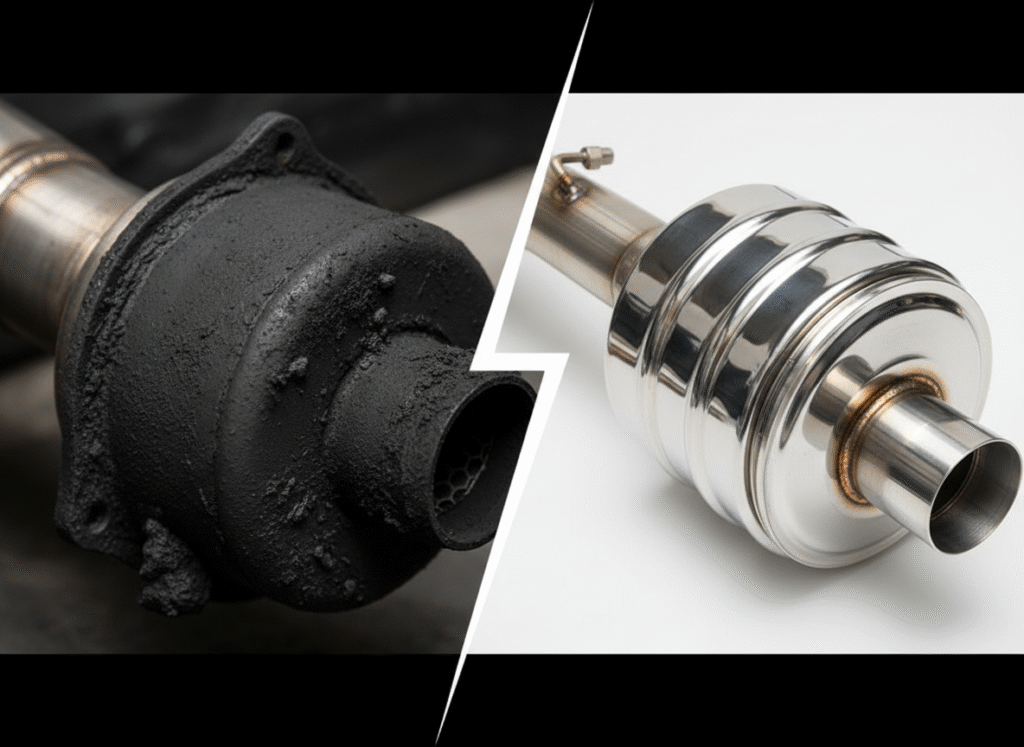
AdBlue dries into white crystals when it sits on a surface or starts to evaporate. Over time, these crystals build up in:
- The tank outlet
- The pump and internal filters
- Plastic lines and fittings
- The AdBlue injector in the exhaust
Common signs include:
- White, chalky build-up around the injector or under the car
- Strong smell of ammonia near the rear of the vehicle
- Flow faults in the AdBlue system
- Repeated AdBlue warnings even after you top up
Light build-up near the injector may be cleaned in some cases.
Once crystals work their way into the pump and filter section inside the tank, the only long-term fix often involves repair work or replacement.
2. NOx Sensor Failures
Most modern diesels use one or two NOx sensors, placed before and after the SCR.
These sensors report how well the system is working. They are exposed to heat, road spray, and salt, so they fail often.
Typical symptoms are:
- “AdBlue system fault” message with the tank still full
- EML and glow plug lights on
- AdBlue countdown warnings
- Poor fuel economy and flat performance in some cases
NOx sensors are not cheap, so guessing is risky.
Leicester Remaps always runs live data checks to confirm if a sensor is truly dead or if the fault lies elsewhere.
If you drive a Transit, we cover many common van-related faults and Ford Transit AdBlue delete options in more detail on our dedicated page.
3. AdBlue Pump or Module Failure
Many tanks have a built-in pump and control module. Some also have a heater inside to stop the fluid freezing in winter.
When the pump or module fails, the system can no longer move fluid or read correct pressures.
Common signs include:
- No AdBlue flow seen in live data
- Pump duty cycle stuck at one value
- “AdBlue system fault” on start-up
- Immediate “No engine start in XXX miles” message
On some models the pump and module are sold as one unit inside the tank.
This makes repair more costly, which is why proper diagnosis is so important before you spend money on parts.
4. Level Sensor Issues and Incorrect AdBlue Readings
Many drivers first notice a problem when the AdBlue gauge behaves oddly:
- Tank shows empty even after a full top-up
- Range jumps between values or sticks
- Warning appears straight after you fill the tank
Modern tanks often use multi-stage level sensors built into the pump assembly. If they stick or fail, the ECU thinks the tank is empty.
That leads to warnings and countdowns even when there is plenty of fluid.
In some cases, a careful top-up with the correct fluid and a proper drive cycle can reset the reading. In other cases, the level sensor needs more detailed attention.
5. Wiring and Corrosion Problems
AdBlue tanks sit low on the vehicle, right in the path of water, salt, and dirt.
Over time the wiring and connectors to the tank, NOx sensors, and control modules can corrode.
Signs that point towards wiring issues include:
- Intermittent faults that appear in wet weather
- Multiple sensor codes at once
- Communication errors with the SCR or AdBlue module
- Visible green corrosion or broken wires near the tank
A quick scan does not always show the whole picture here. We use pin-out checks, resistance testing, and experience with common break points on different brands.
6. Software Glitches After Battery Changes or Module Replacement
AdBlue systems rely on coding inside the ECU and related modules.
When a battery is changed, control unit replaced, or software updated without the right procedure, the car can throw AdBlue faults even when hardware is fine.
Typical triggers include:
- Battery disconnected for long periods
- Jump starting with poor leads or weak donor batteries
- Replacement NOx sensors or AdBlue pumps not coded correctly
- Incorrect reset procedure after topping up AdBlue
These cases often need dealer-level tools or specialist remapping equipment to reset adaptations and sync new modules.
Leicester Remaps uses the same type of advanced tools we rely on for ECU remapping Leicester drivers trust, so we can handle coding and software as well as hardware.
Typical AdBlue Warning Messages and Symptoms
Different brands use different wording, but the core messages are similar.
Some examples you may see on the dash are:
- “AdBlue system fault”
- “Check AdBlue”
- “No engine start in XXX miles”
- “AdBlue range 0 miles”
- “SCR fault – see workshop”
- Engine management light and glow plug light together
Physical symptoms often include:
- Limp mode or reduced power
- Higher fuel use
- Fan running more often
- Stop/start not working
- Rough idle on some vehicles
Once the countdown reaches zero, many cars will not start at all.
At that point, you usually need both the fault fixed and the no-start status reset with the right equipment.
Simple Checks You Can Do Yourself
Not every AdBlue warning means a big bill. There are a few basic checks you can do before you book a diagnostic visit.
1. Check AdBlue Level
- Make sure you have used proper AdBlue, not screenwash or any other fluid.
- Fill at least 5–10 litres if the range shows low.
- Use a clean funnel or nozzle to avoid dirt getting into the tank.
After filling, lock the car, wait a few minutes, then restart and drive for at least 10–15 minutes. Some systems need a short drive to update the reading.
2. Check AdBlue Quality
Old or contaminated fluid can trigger faults. You may have a problem if:
- The fluid has been open in the garage for a long time
- You can see dirt in the neck of the tank
- The fluid has frozen and thawed many times
In mild cases, draining and refilling with fresh AdBlue can help. For heavy contamination, the tank and lines may need a deeper clean or repair work.
3. Check for Obvious Damage
Look under the rear of the vehicle for:
- Cracked tank or lines
- White residue on the outside of pipes or around joints
- Dangling or damaged wiring
If you see leaks or clear damage, avoid long trips and arrange a diagnostic visit as soon as possible.
If your warning light stays on after these checks, or the car goes into limp mode, you are past the simple stage.
At that point, you need full diagnostics rather than more guesswork.
When You Absolutely Need Proper AdBlue Diagnostics
AdBlue faults can look similar on the dash but have very different causes.
Swapping parts at random gets expensive very quickly.
You should contact a specialist such as Leicester Remaps if:
- The car shows “No engine start in XXX miles” or “AdBlue range 0 miles”.
- You have topped up correctly and the warning still returns.
- You have already replaced parts and the fault keeps coming back.
- Limp mode or reduced power will not clear.
- You see multiple NOx, SCR, or AdBlue-related fault codes.
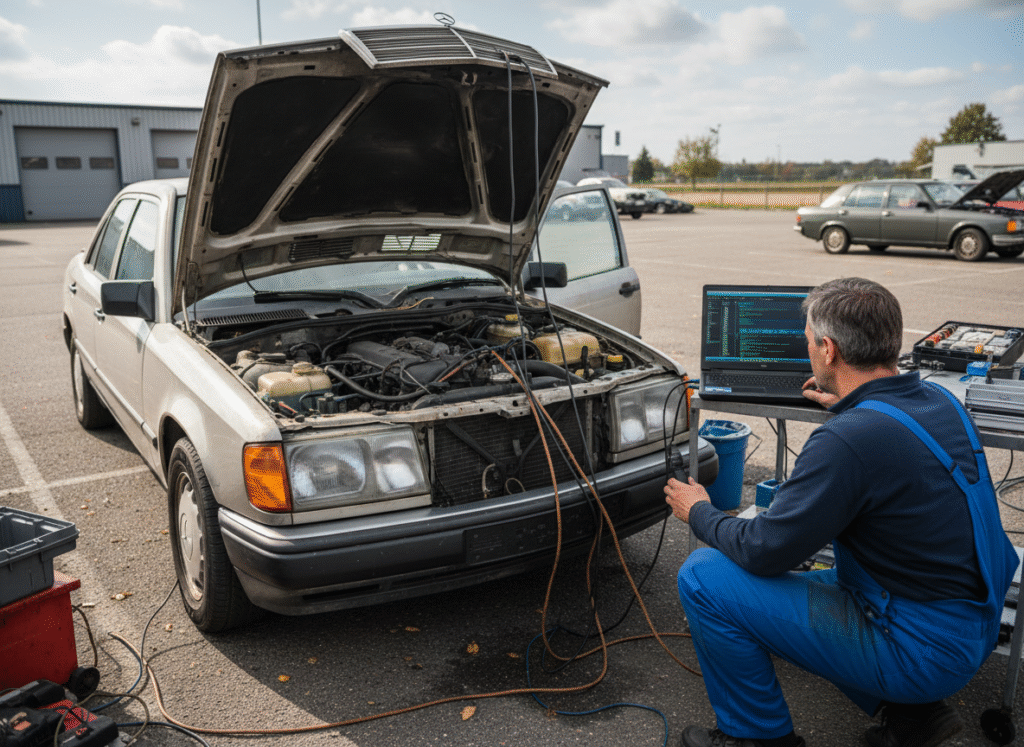
Our diagnostic process normally includes:
- Full fault code read with brand-specific equipment.
- Live data checks on pump pressure, injector duty, and NOx readings.
- Wiring and connector inspection at common weak points.
- Checks for previous poor repairs or tampering.
From there we can advise on repair, software correction, or off-road AdBlue delete where that is appropriate and lawful for the use case.
Need help now? Call 07849 475153 or message Leicester Remaps to book AdBlue diagnostics anywhere in Leicester and most of Leicestershire.
Risks of Ignoring AdBlue Warnings
Many drivers try to ignore the first warning and hope it will clear on its own.
With AdBlue systems that can lead to bigger problems.
1. No-Start Countdown
Once the system decides there is a serious fault, it starts a mileage countdown.
When that reaches zero, the vehicle may crank but will not fire, or it will refuse to crank at all.
At that stage, you will need both the root cause fixed and the countdown reset with specialist tools. Recovery costs and lost time soon add up.
2. MOT and UK Road Legality
A faulty AdBlue system can cause higher NOx levels and lead to:
- Warning lights present at MOT
- Failing emissions-related checks
- Questions about whether the car still meets its original type approval
Running for long periods with a known fault also raises issues if you are involved in an accident and an insurer inspects the vehicle.
3. Potential Long-Term Damage
While the AdBlue system sits after the engine, faults can still cause knock-on problems:
- Over-fuelling to maintain power when in limp mode
- Extra soot build-up in the DPF due to poor running
- Further stress on pumps and heaters that are already failing
Sorting the fault early often costs less than waiting until the car enters no-start mode.
Repair vs AdBlue Delete – What Makes Sense?
Leicester Remaps always starts from a simple rule: if the vehicle is used on the road in the UK, the AdBlue system should work as designed.
When Repair Makes Sense
Repair is usually the best route when:
- The vehicle is fairly new or still under manufacturer warranty.
- The fault is minor, such as one NOx sensor or light crystal build-up.
- You depend on the vehicle for daily commuting or business use on public roads.
- You want to keep full compliance for MOT and road use.
In many cases, a correct diagnosis and one targeted repair is far cheaper than multiple trips to garages that only clear codes and hope for the best.
When Drivers Ask About AdBlue Delete
Some owners contact us about AdBlue delete when:
- The vehicle has very high mileage and recurring AdBlue issues.
- Previous garages have already fitted multiple expensive parts.
- The car or van is going overseas, to a non-UK market.
- The vehicle is used off-road, on private land, or for track use.
For example, a high-mileage Audi or BMW with repeated AdBlue faults may lead an owner to ask if an AdBlue delete map is possible.
You can read more about our role as an Audi AdBlue delete specialist, or see our dedicated pages for
BMW AdBlue delete and
Mercedes AdBlue delete.
Legal Disclaimer – AdBlue Delete and UK Road Use
Removing or disabling AdBlue on a vehicle that is used on public roads in the UK can breach emissions laws.
This may affect MOT results, insurance cover, and the legal status of the vehicle.
AdBlue delete is offered by Leicester Remaps only for vehicles that are:
- Used off-road or on private land only
- Exported outside the UK
- Track or competition vehicles not used on public roads
We always explain the legal position clearly before any such work.
For a full breakdown of the rules, see our guide on
whether AdBlue delete is legal in the UK.
Why Choosing an AdBlue Specialist Matters
AdBlue systems sit across several parts of the car. They link the engine ECU, SCR system, sensors, wiring, and software.
A general garage may not have the tools or time to go deep enough.
Working with a specialist like Leicester Remaps brings key benefits:
1. Correct Diagnosis First Time
- Brand-level diagnostic tools rather than basic code readers.
- Live data checks while the car is running, not just static codes.
- Experience with patterns on specific models and engines.
This reduces the chance of paying for parts you do not actually need.
2. Proper Coding and Software Knowledge
Many AdBlue faults sit in software rather than hardware.
Resetting adaptations, pairing new modules, and adjusting ECU settings all need the right know-how.
- We handle coding after NOx sensor or pump replacement.
- We carry out AdBlue-related ECU updates and corrections.
- We can combine AdBlue work with safe ECU remapping for power and driveability, where suitable.
3. Honest Advice on Repair vs Delete
Leicester Remaps will never push you straight to delete as a first step.
We explain:
- What is wrong with the system now.
- What repair options exist and the likely cost range.
- Where delete might be considered (off-road, export, track) and the legal picture.
You stay in control and choose the route that fits your use and budget.
4. Mobile Service Across Leicestershire
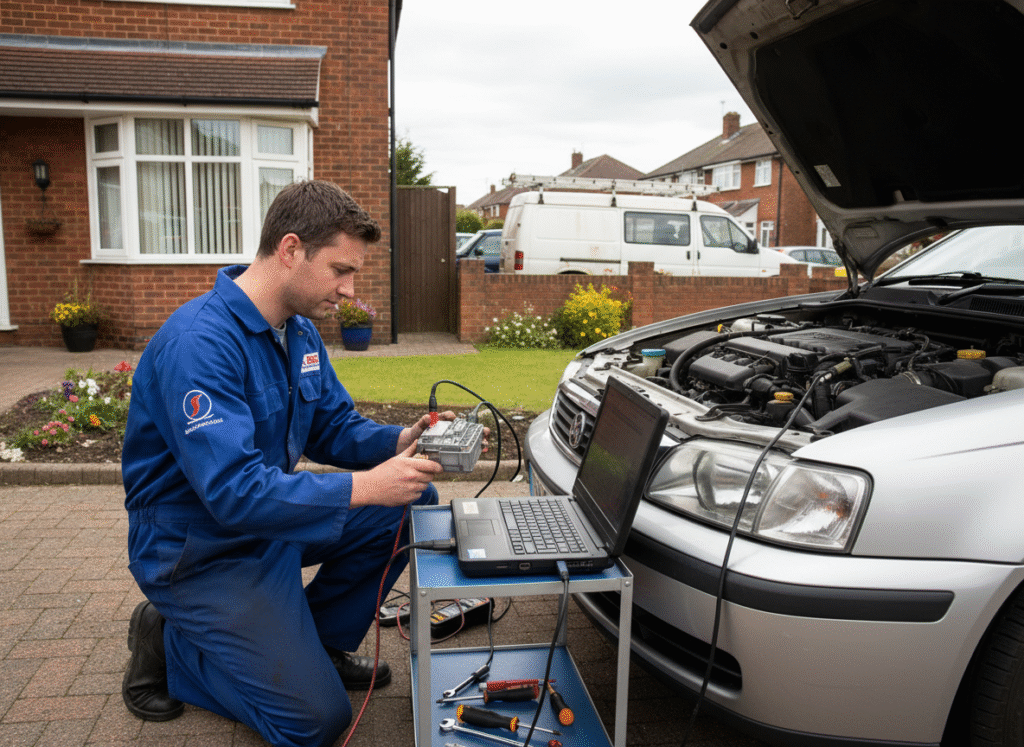
Our mobile remapping Leicester service means we often come to you.
That reduces downtime and saves arranging lifts or recovery in many cases.
We cover Leicester and nearby areas such as Loughborough, Hinckley, Coalville, Melton Mowbray, Market Harborough, and more.
To book an AdBlue diagnostic visit or discuss your options, call 07849 475153 or email
leicesterremaps@gmail.com.
Brand-Specific AdBlue Help
Some makes and models suffer more AdBlue faults than others.
Leicester Remaps has seen patterns across thousands of vehicles.
Ford Transit and Other Vans
Ford Transit vans often show:
- NOx sensor codes
- Tank and pump faults
- Countdown to no-start even with a full tank
If your Transit is affecting your work, read more about our
Ford Transit AdBlue delete options and diagnostic support.
We can also combine AdBlue work with torque-focused remaps for towing or heavy loads.
Audi AdBlue Systems
Many Audi models use complex SCR setups with two NOx sensors and detailed monitoring.
A single fault can trigger a harsh countdown and strict limp mode.
Leicester Remaps is a trusted Audi AdBlue delete specialist for off-road and export vehicles, while also offering full on-road diagnostic and repair support.
BMW AdBlue Systems
BMW diesels with AdBlue can suffer tank heater faults, pump problems, and sensor failures.
Genuine parts are not cheap, so clear diagnosis matters.
Our BMW AdBlue delete and repair solutions are tailored to each engine and driver’s use, with clear advice on what is suitable for UK road use and what is not.
Mercedes AdBlue Systems
Mercedes models often show “AdBlue – No start in XXX km” warnings and repeated NOx sensor issues.
Many owners are caught out when the countdown reaches zero.
See our page on Mercedes AdBlue delete and support, or contact us for on-road diagnostics and repair work in Leicester and surrounding areas.
AdBlue FAQs
1. What does AdBlue actually do on my diesel?
AdBlue is injected into the exhaust to help cut NOx emissions.
It does not go into the fuel tank or engine. The fluid turns into ammonia in the hot exhaust flow, then reacts with NOx in the SCR unit.
This process brings the vehicle in line with modern Euro emissions rules.
2. Can I drive with an AdBlue fault?
You can usually drive for a short time, but the system will often start a countdown to “No engine start”.
If you keep driving without fixing the fault, the car may refuse to start when the countdown reaches zero.
You also risk MOT problems and questions about emissions legality.
If you see an AdBlue warning, contact Leicester Remaps early so we can check the fault before it becomes a non-start problem.
3. Why does my car say “No engine start in XXX miles” when the AdBlue tank is full?
The countdown does not just look at fluid level. It monitors NOx sensor readings, pump pressure, injector flow, and other signals.
If the ECU thinks the system is not working, it starts the countdown even if the tank is full.
Common reasons include failed NOx sensors, crystallised injectors, faulty pumps, or incorrect software settings after a repair.
Only proper diagnostics can tell you which of these is behind your warning.
4. Can you turn AdBlue off on my car?
Leicester Remaps can remove AdBlue functions in software for vehicles that are used off-road, exported, or used on track only.
For UK road use, disabling AdBlue can breach emissions rules and affect MOT and insurance status.
We always explain the legal side clearly and will not mislead you.
For a detailed guide, see our article on
whether AdBlue delete is legal in the UK.
5. How much does AdBlue diagnostics cost?
Costs vary by vehicle, fault type, and how much testing is needed.
In many cases, early diagnosis saves you money by avoiding guesswork and unneeded parts.
The easiest way to get a clear idea is to contact Leicester Remaps with your registration, a photo of the dash warning, and a brief description of symptoms.
We can then outline likely checks and cost ranges.
6. Do you offer mobile AdBlue diagnostics in Leicester?
Yes. Leicester Remaps offers mobile remapping and AdBlue diagnostic visits across Leicester and much of Leicestershire.
We come to your home or workplace where possible, which saves you the trouble of arranging recovery or waiting in a workshop.
Ready to Sort Your AdBlue Fault?
AdBlue systems on modern diesels are now part of everyday life for UK drivers.
When they go wrong, they cause stress, limp mode, and the risk of a car that will not start.
You should contact an AdBlue specialist when:
- You see “AdBlue system fault” or “No engine start in XXX miles”.
- You have topped up with fresh AdBlue and the warning remains.
- The car is in limp mode or has already refused to start.
- You have recurring AdBlue problems that other garages have not solved.
- You need clear advice on repair vs off-road AdBlue delete for your use case.
Leicester Remaps provides honest diagnostics, clear explanations, and tailored solutions for AdBlue faults on cars and vans across Leicester and Leicestershire.
Whether you drive a Ford Transit, Audi, BMW, Mercedes, or another modern diesel, we can help you move from warning lights back to a vehicle that drives as it should.
To book AdBlue diagnostics, repair, or discuss suitable AdBlue delete options for off-road or export vehicles, contact Leicester Remaps today:
- Phone: 07849 475153
- Email: leicesterremaps@gmail.com
- Website: https://leicesterremaps.com/
Get your AdBlue system checked now and avoid being stuck with a no-start countdown later.