AdBlue Crystallisation: Causes, Symptoms and How to Prevent Expensive Repairs
You walk up to your car or van, open the AdBlue cap, and see white crusty deposits.
Or you spot a patch of white crystals under the vehicle. Soon after, the dash lights up with an “AdBlue system fault” or a no-start countdown.
AdBlue crystallisation is one of the most common AdBlue problems UK drivers see.
Left alone, it can lead to blocked injectors, damaged pumps, and four-figure repair bills.
This guide explains what AdBlue crystals are, why they appear, what you can safely do yourself, and when you need a specialist.
Leicester Remaps works with AdBlue faults every day across Leicester and Leicestershire, from light clean-ups to full diagnostic and repair work.
If you are already seeing AdBlue crystals or warning messages, you can contact Leicester Remaps now on
07849 475153 or email
leicesterremaps@gmail.com to book an
AdBlue solutions service.
What AdBlue Is (and Why It Crystallises)
AdBlue is a clear liquid made from urea and purified water. It is stored in its own tank and injected into the exhaust, not into the fuel tank.
The basic process is simple:
- AdBlue is sprayed into the hot exhaust.
- The heat breaks the fluid down into ammonia and carbon dioxide.
- The ammonia reacts with NOx gases in the SCR (Selective Catalytic Reduction) unit.
- NOx levels drop, so the vehicle meets Euro emissions rules.
The problem comes when AdBlue dries out.
As the water part evaporates, a white solid is left behind. Those are the crystals you see around filler caps, under tanks, and on exhaust parts.
A small amount of crystallisation around the filler is common.
Heavy build-up on pipes, pumps, or injectors is not normal and needs attention.
Common Causes of AdBlue Crystallisation
AdBlue does not turn into crystals for no reason. There is always a trigger.
Understanding those triggers helps you prevent future faults and avoid big repair bills.
1. Spills Around the Filler Neck
The most common cause of visible crystals is simple spillage when topping up.
Typical mistakes include:
- Pouring straight from a heavy 10L container without a proper spout.
- Using a short funnel that splashes fluid back out.
- Overfilling and letting AdBlue run down the bodywork or bumper.
Any fluid that sits around the neck or down the side of the car will slowly dry, leaving white deposits.
They look messy and, if left, can attack paint and plastics over time.
2. Poor-Quality or Contaminated AdBlue
AdBlue is very pure. It needs low mineral content and the right urea mix.
Cheap or badly stored fluid can contain:
- Dust and dirt from open containers.
- Wrong water type (not deionised).
- Wrong concentration of urea.
Contaminated fluid crystallises more easily and can clog fine filters inside the tank module.
In some cases, it also causes corrosion inside metal parts of the system.
3. Long-Term Storage and Old Fluid
Many drivers buy large drums or cans of AdBlue and keep them in the garage for years.
Over time, the urea mix can change and the water content can shift.
Problems from very old fluid include:
- Higher chance of deposits forming inside pipes and injectors.
- Stronger smell near the tank and filler.
- Increased risk of AdBlue system fault codes.
If your AdBlue has sat in a warm garage for years, it is safer to dispose of it properly and start again with a fresh container.
4. Evaporation and Temperature Changes
AdBlue lives under constant temperature swings. Cold nights, warm days, engine heat, and exhaust heat all play a part.
These changes can cause issues such as:
- AdBlue freezing in winter and thawing again.
- Slow evaporation in vented areas of the system.
- Crystals forming where fluid sits in low points or joints.
Tanks usually have heaters and insulation, but joints, vents, and injector tips are still exposed.
Once crystals start inside narrow parts, they can grow and block the system.
Symptoms and Warning Signs of AdBlue Crystallisation
Some signs are visual, others show up in the way the car behaves.
Paying attention early can stop a small issue from turning into a breakdown.
1. White Crystals Around the Filler Cap
This is the first sign many drivers notice.
- White or off-white crust around the filler neck.
- Hard flakes that break away when touched.
- Marks on the bumper or paint below the filler area.
Light build-up here is usually harmless if you clean it and fix the cause of spillage.
Heavy build-up that stretches away from the filler suggests more serious leaks or repeated overfilling.
2. Crystals Under the Vehicle
If you see white deposits under the rear of the car or van, take note. They can come from:
- Leaking AdBlue lines.
- A damaged tank or loose fitting.
- Crystallised AdBlue around the injector or joints.
This type of build-up is more worrying, as it often means fluid is leaving the system where it should not.
3. Strong Ammonia-Like Smell
AdBlue itself has only a mild smell, but when it breaks down and dries, you may notice a sharper odour.
If your driveway or garage smells strongly near the rear of the vehicle, that is a hint that fluid is leaking or evaporating from somewhere it should not.
4. Incorrect AdBlue Level Readings
Crystals in the tank can interfere with level sensors and strain the pump.
Common symptoms include:
- Gauge stuck at one level.
- AdBlue range showing empty after a large top-up.
- Range jumping up and down between drives.
While sensor faults have many causes, heavy crystallisation inside the tank is one of them.
5. Warning Messages and Countdown
As crystals grow and block flow, the system cannot inject AdBlue correctly. The ECU spots this and sets warnings such as:
- “AdBlue system fault”.
- “Check AdBlue”.
- “No engine start in XXX miles”.
- “AdBlue range 0 miles”.
You may also feel limp mode, reduced power, or see the engine management light join the party.
If you are now seeing these messages as well as white crystals, you should plan to speak with a specialist rather than guess.
What You Can Safely Do Yourself
Not every case of AdBlue crystallisation needs major work. There are a few simple and safe jobs most drivers can handle at home.
1. Careful Cleaning Around the Filler
If the only crystals you see are around the filler neck, and you have no warnings on the dash, you can usually clean this area yourself.
Steps:
- Wear gloves and eye protection.
- Use a soft cloth dampened with warm water.
- Gently loosen and wipe away the crystals around the cap and neck.
- Rinse the area, taking care not to wash large flakes into the tank.
Do not poke anything down the filler, and do not use harsh chemicals on paint or plastic.
2. Use Fresh, Good-Quality AdBlue
When topping up, always:
- Buy AdBlue from trusted brands or fuel stations.
- Check the date on the container.
- Use the supplied spout, or a proper long funnel that seals well.
- Avoid filling in high winds where fluid can blow back.
If you suspect your current AdBlue is old or contaminated, consider draining and refilling the tank with fresh fluid.
This is not always easy on a driveway, so it may become a job for a specialist.
3. Keep an Eye on Warning Lights
A single brief warning that clears after a proper top-up and drive may not be cause for panic.
If the warning comes back or you see a countdown, treat it as a clear sign to stop guessing.
At this point, contact a specialist like Leicester Remaps for proper AdBlue diagnostics rather than clearing codes with a cheap reader.
If your dash is already showing an AdBlue countdown or limp mode, call 07849 475153 to arrange an
AdBlue solutions service at your home or workplace in Leicester or across Leicestershire.
Jobs That Should Be Left to a Specialist
Once crystals move inside the system, DIY fixes become risky.
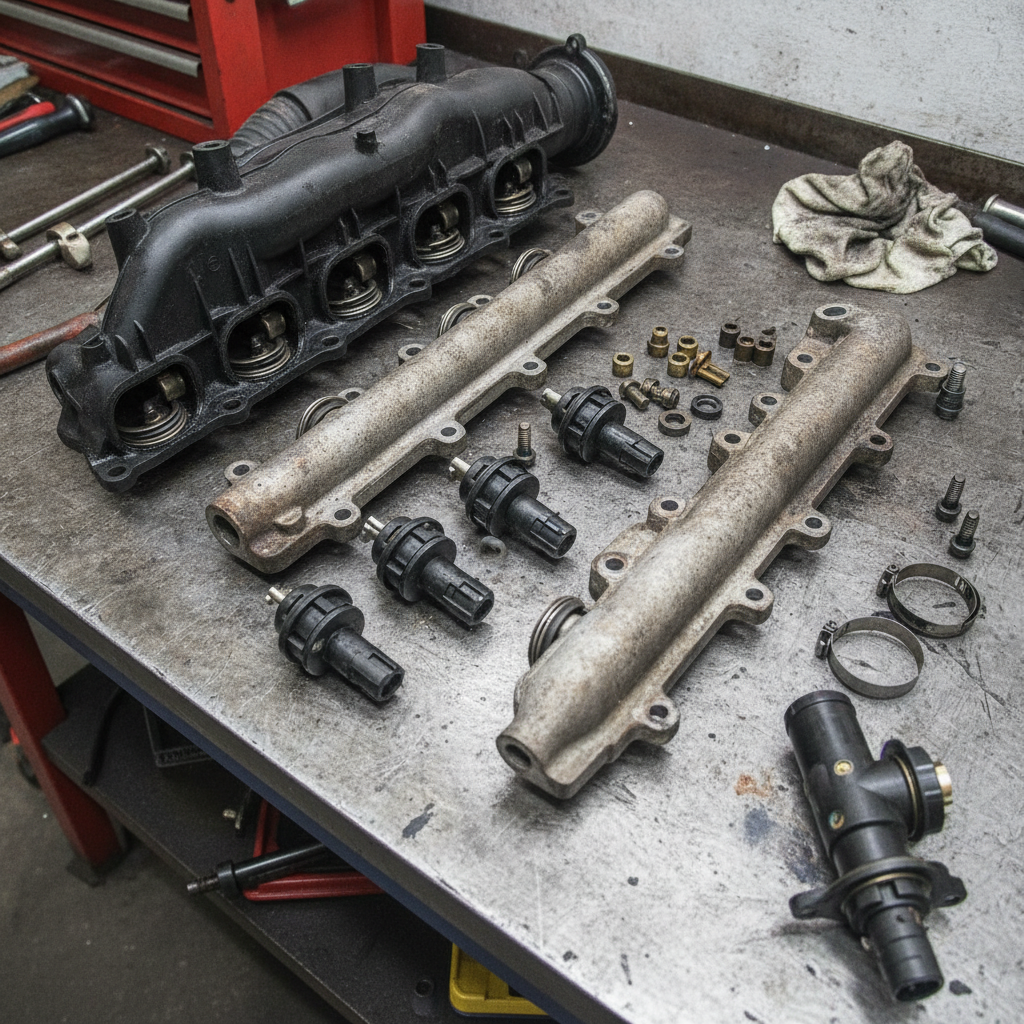
The AdBlue setup includes a tank module, pump, heater, injector, sensors, and wiring. These parts do not like guesswork.
1. Draining and Flushing the AdBlue Tank
Draining the tank sounds simple, but many modern tanks:
- Have internal filters and baffles.
- Include level sensors built into the pump assembly.
- Sit in awkward positions near exhaust and suspension parts.
A specialist will use the correct procedure to drain, clean, and refill without damaging internal parts or leaving air locks.
2. Cleaning or Replacing Pumps and Injectors
AdBlue pumps and injectors are delicate. Incorrect cleaning can destroy them.
On some models, the pump, heater, and level sensor are one combined unit inside the tank, which means mistakes are costly.
A specialist will check pressure, flow, and spray pattern first. They can then decide if cleaning is safe or if replacement is the better choice.
3. Sensor Checks, Coding, and Resets
Even if you clear stored fault codes, the underlying problem remains.
Proper AdBlue diagnostics need live data, wiring checks, and sometimes coding of new parts.
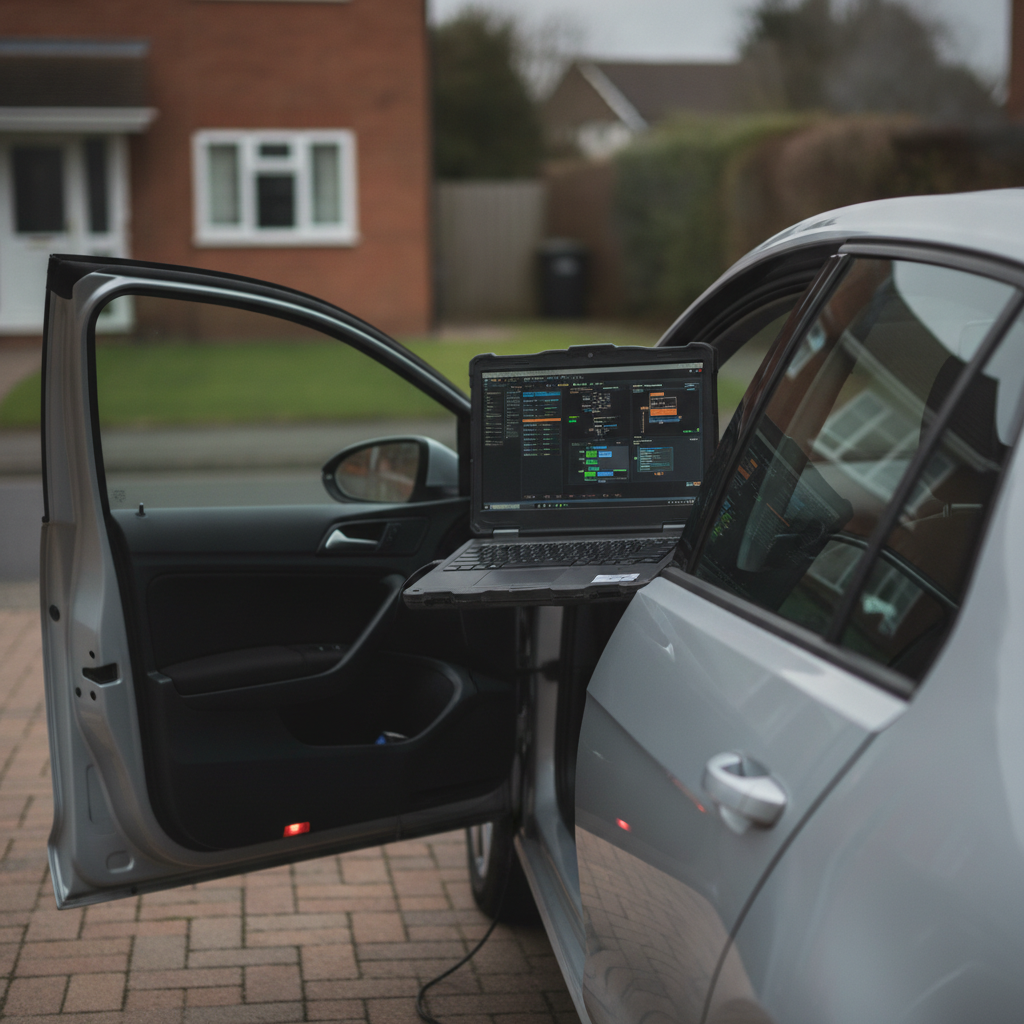
Leicester Remaps uses advanced tools for both diagnostics and ECU work. That means we can handle:
- NOx sensor testing and replacement.
- Tank and pump communication checks.
- Correct resets after parts are fitted.
- ECU updates where needed.
This is the same level of equipment we rely on for ECU tuning and remapping work across Leicester, so your AdBlue system gets the same care as your engine map.
How Leicester Remaps Deals with Crystallised AdBlue Systems
Every case of AdBlue crystallisation is slightly different. Some are mainly cosmetic around the filler, others involve internal blockages and no-start countdowns.
Our approach is to diagnose first, then fix. That way you avoid paying for parts you do not need.
1. Initial Diagnostics
We start with:
- Full fault code read with high-level tools.
- Live data checks for pump pressure, flow, and injector duty.
- Level sensor readings compared with actual tank contents.
- NOx sensor readings before and after the SCR unit.
At the same time, we inspect the tank, pipes, and visible parts for external crystals and leaks.
2. Assessing the Damage
From there we decide if:
- The problem is mostly external and cosmetic.
- Crystals have started to affect flow or sensor readings.
- Internal parts such as the pump or heater are failing.
Where possible, we will look at cleaning and flushing before jumping straight to replacement.
In some cases, though, the internal damage is too severe and new parts are the only reliable path.
3. Repair, Cleaning, or Replacement
Once we know the root cause, we can carry out:
- Careful cleaning of injectors and pipework where safe.
- Tank drain and flush with fresh AdBlue.
- Replacement of failed pumps, heaters, or sensors.
- Correct coding and resets after any new part is fitted.
All of this sits under our wider
AdBlue solutions service, designed for drivers and van owners across Leicester and Leicestershire.
To arrange diagnostics or repair for a crystallised AdBlue system, call Leicester Remaps on 07849 475153 or message us through the website.
Preventing AdBlue Crystallisation and Future Faults
A few simple habits go a long way towards keeping AdBlue crystals under control.
Prevention costs far less than tank and pump replacements.
1. Store AdBlue Correctly
If you keep spare AdBlue at home:
- Store it in a cool, dry place out of direct sun.
- Keep the cap tightly closed.
- Avoid keeping opened containers for years.
- Never pour AdBlue into another random bottle or can.
If a container looks dirty or has debris around the cap, do not use it.
2. Buy Quality AdBlue
Saving a few pounds on very cheap AdBlue can backfire. Stick with:
- Known brands.
- Busy fuel stations where stock turns over quickly.
- Suppliers who list the correct ISO and DIN standards on the label.
Avoid buying unbranded AdBlue from sources you do not trust, especially if it is decanted into plain drums.
3. Avoid Spills During Top-Ups
When filling the AdBlue tank:
- Use the proper screw-in spout supplied with the container.
- Do not rush; pour at a steady pace.
- Stop as soon as you feel resistance or hear fluid backing up.
- Wipe any small spills straight away with a damp cloth.
This reduces both cosmetic build-up and the risk of fluid tracking down into trims and plastics.
4. Act Quickly When Warnings Appear
Crystals inside the system build over time. Early AdBlue warnings can be your chance to fix a small issue before it becomes a breakdown.
If you see repeated AdBlue messages, or notice both crystals and a countdown, book diagnostics with Leicester Remaps as soon as you can.
Early checks usually cost less than waiting until the car refuses to start.
When Repeated Crystallisation Leads to AdBlue Delete Questions
Some owners face the same AdBlue faults over and over, even after new tanks, pumps, and sensors. This is common on high-mileage work vans and certain diesel cars.
At that stage, drivers sometimes ask about AdBlue delete. Leicester Remaps always explains both technical and legal sides before any decision.
Typical Situations
Common cases where people raise the topic include:
- High-mileage vans used mainly on private sites or yards.
- Vehicles heading overseas where AdBlue supply or rules differ.
- Track or competition cars where emissions systems are removed.
- Repeated AdBlue faults on older vehicles where repair costs are very high.
For workhorses like the Ford Transit, we often see heavy crystal build-up, tank faults, and countdown warnings.
You can read more about our role as a Ford Transit AdBlue delete specialist for export and off-road vans.
Drivers of Audi, BMW, and Mercedes diesels also contact us when they are tired of repeated AdBlue repairs. We offer:
- Audi AdBlue delete options for off-road and export use.
- BMW AdBlue delete options tailored to common engine types.
- Mercedes AdBlue delete solutions for non-roadgoing vehicles.
Legal Disclaimer – AdBlue Delete on UK Roads
Removing or disabling the AdBlue system on a vehicle used on public roads in the UK can breach emissions laws.
This may affect MOT results, type approval status, and insurance cover.
Leicester Remaps offers AdBlue delete only for vehicles used off-road, on private land, for track use, or for export.
We always explain the legal picture in clear language before any such work goes ahead.
For a detailed breakdown of the rules, read our guide on
is AdBlue delete legal in the UK.
AdBlue Crystallisation FAQs
1. What are the white crystals near my AdBlue cap?
Those white crystals are dried AdBlue. When a small amount of fluid spills during filling, the water part evaporates and leaves a solid residue behind.
Light build-up can often be cleaned away with warm water. Heavy deposits or strong smells suggest you should have the system checked.
2. Can AdBlue crystals damage my car?
Crystals on the outside of the car are mainly cosmetic, though they can mark paint or plastics over time.
Crystals inside the system are more serious, as they can block lines, strain the pump, and affect sensors. These internal issues can lead to “AdBlue system fault” messages and even a no-start countdown.
3. Can I just wash AdBlue crystals off myself?
You can gently clean crystals around the filler neck with warm water and a soft cloth.
Avoid pushing flakes into the tank or using strong chemicals. If you see crystals under the vehicle, around pipes, or near the exhaust, leave that to a specialist, as it often points to leaks or internal build-up.
4. Why does my car show AdBlue faults even after a top-up?
If the system is blocked with crystals or has faulty sensors, the ECU may still think there is a problem, even when the tank is full.
In these cases, the issue is not the amount of fluid, but the way it is flowing and the readings the ECU sees. Proper diagnostics are needed to find the root cause.
5. Can you turn off AdBlue if I keep getting crystals?
Leicester Remaps can remove AdBlue functions in software for off-road vehicles, track cars, and exports.
For UK road use, disabling AdBlue can break emissions rules and cause MOT and insurance problems. We always explain your options and the law before any work and will not mislead you.
6. Do you offer mobile AdBlue diagnostics in Leicester?
Yes. We offer mobile AdBlue diagnostics and repair visits across Leicester and much of Leicestershire.
That includes checks for crystallisation, sensor faults, pump problems, and countdown warnings. In many cases, we can come to your home or workplace and save you the hassle of a recovery truck.
To arrange a visit, call 07849 475153 or use the contact details on
our AdBlue solutions service page.
Dealing with AdBlue Crystals – Next Steps
AdBlue crystallisation starts small but can cause big problems if you ignore it.
Spills, poor-quality fluid, long-term storage, and temperature swings all play a part.
Key points to remember:
- White crystals around the filler usually come from spillage and poor top-up technique.
- Crystals under the vehicle or near pipes and injectors often point to leaks or internal deposits.
- Old or contaminated AdBlue increases the risk of build-up and sensor issues.
- Early warning lights are your chance to fix a small problem before it becomes a no-start countdown.
- DIY cleaning has limits; internal blockages and tank issues need a specialist.
Leicester Remaps helps drivers and van owners across Leicester and Leicestershire keep AdBlue systems under control.
From simple checks to full diagnostic work and honest advice on repair versus off-road delete, we focus on preventing bigger repair bills and keeping you moving.
If you are seeing AdBlue crystals, smelling strong fumes, or facing warning messages, do not wait until the car refuses to start.
Contact Leicester Remaps today for AdBlue diagnostics and crystallisation help:
- Phone: 07849 475153
- Email: leicesterremaps@gmail.com
- AdBlue services: https://leicesterremaps.com/services/adblue-solutions/
Sort your AdBlue crystallisation now and protect your diesel from avoidable, expensive repairs.