Turbo Actuator Problems on Modern Diesels: Symptoms, Causes & Fixes
Turbo actuator problems can feel like a mystery at first.
One day your diesel pulls fine.
The next it drops into limp mode, struggles up hills, or shows a boost control fault.
This guide helps you spot the signs, understand what fails, and choose the right fix before you throw parts at it.
Common symptom: limp mode
Typical trigger: boost control faults
Focus: modern diesel engines
Table of contents
- What is a turbo actuator and what does it do?
- Turbo actuator problem symptoms you can feel
- Common fault codes and what they usually mean
- Why turbo actuators fail on modern diesels
- A practical diagnosis checklist before replacing parts
- Fix options: repair, replace, clean, calibrate
- Can you drive with a turbo actuator fault?
- How to reduce the chance of repeat problems
- Next steps if your diesel keeps dropping into limp mode
- FAQs
If your car feels unsafe to drive, book a diagnosis before the fault turns into turbo damage.
What is a turbo actuator and what does it do?
Most modern diesels use a turbocharger to push more air into the engine.
More air lets the ECU add more fuel safely.
That gives you torque, especially low down.
The turbo actuator controls how the turbo builds boost.
It moves a mechanism inside the turbo.
Depending on the turbo type, it may control:
- Variable vanes (VNT or VGT turbos)
- A wastegate flap (common on some petrol turbos, but still seen on certain diesels)
- An internal control lever that changes exhaust flow through the turbine
The ECU constantly adjusts this control.
It looks at:
- Requested boost vs actual boost
- Throttle position and engine load
- RPM and intake air readings
- Protection limits (to avoid overboost)
Simple way to think about it
The actuator is the “hand” moving the turbo’s control mechanism.
If that hand sticks, misreads position, or moves too slowly, boost control falls apart.
Your ECU reacts by cutting power.
Turbo actuator problem symptoms you can feel
Turbo actuator problems do not always feel the same.
Some faults create sudden power loss.
Others creep in over weeks.
Common driving symptoms
- Limp mode under load, often on hills or motorway slip roads
- Power comes and goes, especially between 1,800 and 3,000 RPM
- Flat acceleration, like the turbo is not “waking up”
- Boost surge, where power jumps then drops
- Delayed response when you press the accelerator
Other clues
- Engine management light (EML)
- Fault clears after ignition off and on, then returns later
- In some cases: excess smoke when boost control goes off target
- Higher fuel use because the engine runs out of its efficient range
Watch for this pattern
If the car drives fine gently, then drops power as soon as you ask for torque, boost control sits high on the suspect list.
Common fault codes and what they usually mean
Your car may log different codes depending on the make, ECU, and turbo type.
The wording also changes between scan tools.
Still, the logic stays the same.
| Code type | What you might see | What it often points to | What to check first |
|---|---|---|---|
| Boost control | “Boost pressure control” or “Turbocharger control” | Actuator not reaching requested position | Vacuum lines, actuator movement, linkage |
| Underboost | “Charge pressure too low” | Sticking vanes, boost leak, weak vacuum supply | Boost pipes, intercooler, vacuum pump output |
| Overboost | “Charge pressure too high” | Actuator stuck, vanes jammed, incorrect control calibration | Actuator control sweep, vane lever free movement |
| Position sensor | “Actuator position implausible” | Faulty sensor inside actuator or wiring issue | Connector pins, harness rub points, live data stability |
| Control circuit | “Open circuit” or “short to ground” | Electrical fault rather than mechanical sticking | Wiring continuity, power/ground feed, corrosion |
A basic code reader often shows the headline code only.
It will not show you live boost targets, actuator position, or control duty.
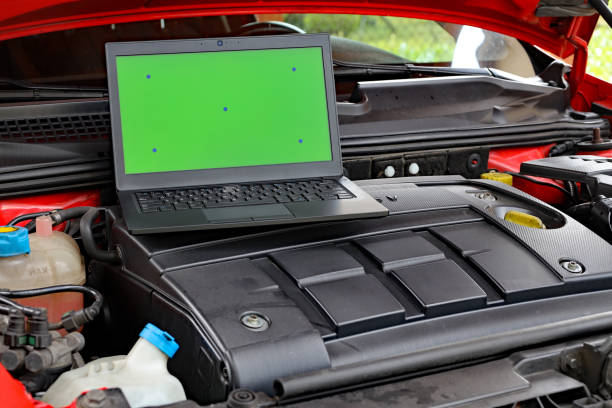
That is where proper diagnostics makes a difference.
Why turbo actuators fail on modern diesels
Modern diesels run hot.
They also recirculate exhaust (EGR) and deal with soot (DPF).
That mix creates the perfect environment for sticky mechanisms and tired control parts.
Most common causes
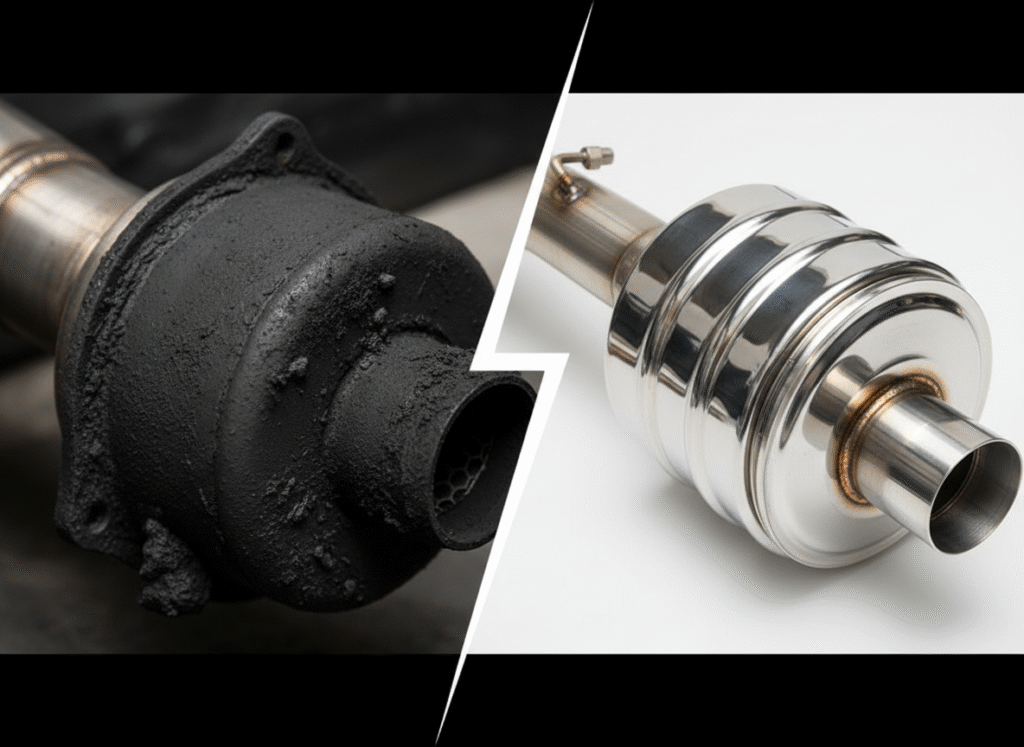
- Soot and carbon build-up causing VNT vanes to stick
- Heat cycling damaging actuator internals over time
- Vacuum issues from split hoses, weak pumps, or leaking solenoids
- Electrical faults from water ingress, corrosion, or wiring rub-through
- Boost leaks that mimic actuator faults and confuse diagnosis
Why short trips make it worse
Short journeys keep exhaust temperatures low.
That lets soot settle and harden.
Over time, the turbo’s moving parts lose range.
Then the actuator reaches its limit and the ECU cuts power to protect the engine.
Real-world scenario
You feel a random limp mode once a week.
You reset the ignition and carry on.
Two months later it happens every day.
That is typical of a mechanism that sticks more as deposits build.
A practical diagnosis checklist before replacing parts
Turbo actuator problems can look like many other faults.
If you skip checks, you can waste money fast.
Use this order to narrow it down.
Step-by-step checks
- Read codes and freeze-frame data and note when it happened (RPM, load, speed)
- Check live boost readings against requested boost under light and heavy load
- Inspect boost pipework for splits, oily leaks, loose clamps, cracked intercooler end tanks
- Check vacuum supply including pump output and hose integrity (where vacuum actuation applies)
- Test actuator movement by command test or controlled sweep and watch for sticking
- Check wiring and connectors for corrosion, oil contamination, and strain points
- Confirm related sensors like MAP and MAF behave logically in live data
What “good” often looks like
- Requested and actual boost track each other closely under steady load
- Actuator position changes smoothly without sudden jumps
- No boost pipe leaks, no hissing, no oil spray around joints
- Vacuum hoses feel sound, not soft and collapsing
Don’t guess based on a single code
“Underboost” does not automatically mean “new turbo”.
A split hose or weak vacuum line can produce the same symptom.
Fix options: repair, replace, clean, calibrate
The right fix depends on the root cause.
You want a repair that restores control and stays reliable.
Not a quick reset that returns next week.
1) Fix vacuum or control issues first
If you find split hoses, weak vacuum, or a leaking solenoid, fix that before you touch the turbo.
These are often the cheapest wins.
- Replace cracked vacuum hoses
- Test and replace boost control solenoids if faulty
- Confirm vacuum pump output
2) Repair boost leaks
A boost leak makes the ECU chase boost.
That can trigger limp mode and “actuator” codes by knock-on effect.
- Replace split boost pipes
- Check intercooler and end tanks
- Confirm clamps seat correctly
3) Actuator replacement or calibration
Some actuators fail electrically.
Others fail mechanically.
If the actuator cannot hold position, responds slowly, or shows implausible sensor values, replacement may be the only sensible route.
Calibration matters.
Many modern actuators need a learning procedure so the ECU knows the end stops.
If you skip that, the car may still log faults even with a new unit.
4) Turbo vane cleaning or turbo replacement
If the variable vanes stick, you can sometimes restore movement by cleaning.
If the mechanism has heavy wear or damage, replacement becomes more realistic.
- Cleaning targets sticking, not broken hardware
- Replacement makes sense if the shaft has play or the mechanism binds mechanically
What you want as the outcome
You want stable requested vs actual boost under load.
That stops limp mode.
It also protects the turbo from overspeed and the engine from unsafe fuelling.
Can you drive with a turbo actuator fault?
You can sometimes drive short distances, but it depends on how the fault behaves.
If the ECU keeps cutting power, it is telling you it cannot control boost safely.
When you should stop and get it checked
- Limp mode happens repeatedly under light load
- You hear unusual turbo noises (whine, scraping, flutter)
- You see heavy smoke under acceleration
- The car struggles to keep speed on the motorway
A turbo actuator fault can also hide other issues.
A clogged DPF, EGR faults, or sensor problems can push boost control out of range.
That is why diagnosis matters.
How to reduce the chance of repeat problems
You cannot prevent every failure.
You can reduce the conditions that cause sticking and poor control.
Practical habits that help
- Give the car regular longer drives so exhaust temperatures rise
- Use the correct oil spec and change it on time
- Fix boost leaks early before the turbo works harder than it should
- Address DPF and EGR issues quickly to reduce soot loading
Why related systems matter
A diesel is a system.
If the DPF blocks, backpressure rises.
If the EGR sticks, airflow and combustion shift.
That can change how boost control behaves.
Fixing the turbo fault without addressing root causes often leads to repeat limp mode.
Next steps if your diesel keeps dropping into limp mode
If you suspect turbo actuator problems, you want clear answers fast.
Guessing gets expensive.
Need a proper diagnosis in Leicester?
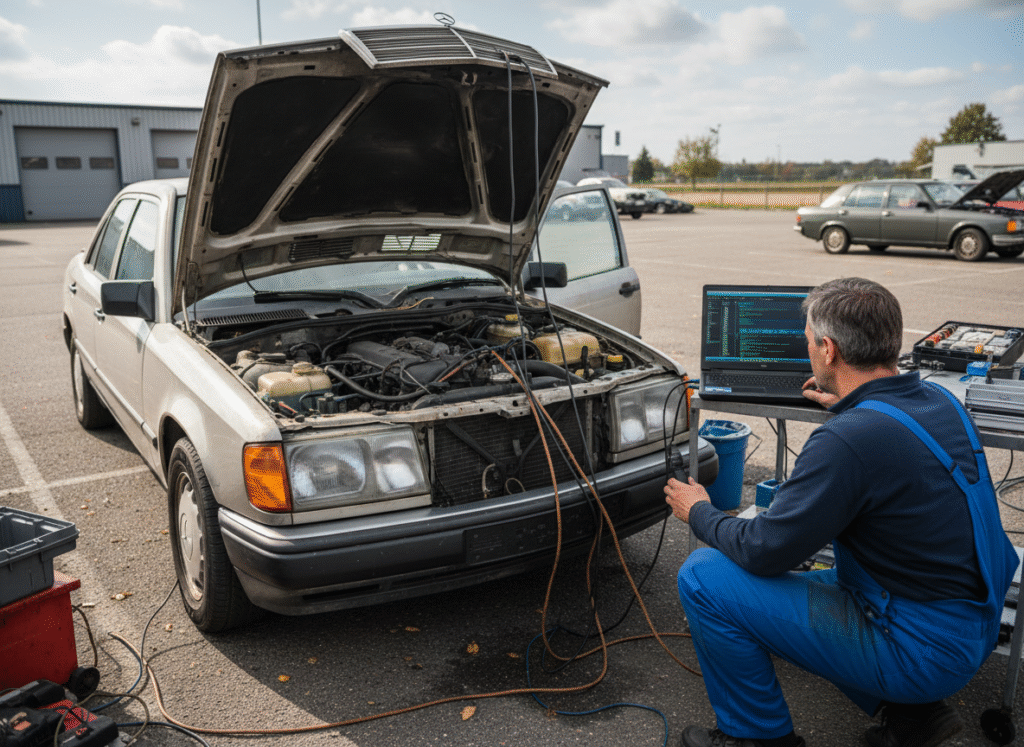
Leicester Remaps provides mobile diagnostics and ECU support across Leicester and Leicestershire.
You get clear fault finding, live data checks, and a sensible fix plan.
- Live boost target vs actual checks
- Actuator movement testing where supported
- Related system checks (DPF, EGR, AdBlue faults where relevant)
Book via the contact page.
If you also want broader context on power loss, see the guide on
what causes sudden power loss in diesel cars.
This turbo actuator guide drills deeper into one of the most common boost-related causes.
FAQs
Can a turbo actuator cause limp mode only sometimes?
Yes. Many actuator and vane issues start as intermittent sticking.
You feel it under load, then it clears after a restart.
As deposits build or the actuator weakens, it becomes frequent.
Will a code reader confirm turbo actuator problems?
A basic reader can show a boost-related code, but it cannot prove the cause.
You need live data and control testing to confirm whether the actuator, vacuum system, or a boost leak triggered it.
Can a boost leak look like a turbo actuator fault?
Yes. A split pipe or intercooler leak can cause underboost.
The ECU may then log boost control faults that point you towards the actuator, even though the leak caused it.
How much does it cost to fix a turbo actuator problem?
Costs vary by vehicle and root cause.
A hose leak may be low cost.
An actuator replacement or turbo work costs more.
Diagnosis first is the quickest way to avoid paying twice.
Can a remap fix turbo actuator problems?
No. A remap cannot repair a sticking mechanism, vacuum leak, or failed actuator.
You must restore proper boost control first.
After that, a Stage 1 remap can improve drivability if the engine is healthy.
Want more fault-specific guides? Check the diesel limp mode and power loss posts linked below.