Does ECU Remapping Affect Automatic Gearboxes?
Automatic gearboxes are now the norm in many modern cars and vans.
From traditional torque converters to DSG, ZF, and CVT systems,
more drivers are asking the same question before tuning:
does ECU remapping affect the automatic gearbox?
This guide explains how engine tuning interacts with automatic transmissions,
what actually changes after a remap,
and how to approach remapping safely on an auto vehicle.
Why This Question Comes Up So Often
Automatic gearboxes are complex and expensive.
Unlike a clutch in a manual car, most drivers cannot feel
what is happening inside the transmission.
When people hear that a remap increases torque,
the natural concern is whether the gearbox can handle it.
The short answer is yes, when done properly.
The longer answer depends on how the remap is written
and how the gearbox is managed.
How Automatic Gearboxes Communicate with the ECU
Modern vehicles do not treat the engine and gearbox as separate systems.
They constantly communicate with each other.
The engine ECU tells the gearbox:
- Available torque
- Throttle position
- Load conditions
- Engine speed
The gearbox control unit then decides:
- When to shift
- How quickly to shift
- How much torque to allow through the transmission
This relationship is why gearbox behaviour often changes after a remap.
What Changes After an ECU Remap on an Automatic
An ECU remap does not directly reprogram the gearbox unless
a separate gearbox tune is applied.
However, the gearbox reacts to the new engine behaviour.
Common changes drivers notice include:
- Stronger pull in higher gears
- Less frequent downshifting
- Smoother acceleration under load
- Earlier upshifts during light driving
These changes happen because the gearbox sees more usable torque.
Torque Is the Key Factor
Automatic gearboxes are rated for torque, not horsepower.
Manufacturers already build in safety margins.
A stock engine rarely uses the full mechanical capacity of the gearbox.
A well-written Stage 1 remap:
- Stays within safe torque limits
- Respects gearbox protection strategies
- Avoids harsh torque spikes
Problems usually arise from aggressive tuning,
not from sensible remapping.
DSG and Dual-Clutch Gearboxes
DSG and other dual-clutch systems are common in Volkswagen,
Audi, Seat, Skoda, and many performance cars.
These gearboxes are highly torque-sensitive.
They actively limit engine output in lower gears.
After a remap, drivers often notice:
- Firmer but smoother shifts
- Less hesitation when accelerating
- Better response in manual mode
In some cases, the gearbox may still cap torque
unless a gearbox software tune is added.
Traditional Torque Converter Automatics
Torque converter automatics are widely used in BMW,
Mercedes, Jaguar, Land Rover, and many vans.
These gearboxes are generally very robust.
After an ECU remap, benefits often include:
- Smoother pull-away
- Reduced gear hunting
- Better hill performance
- Lower RPM cruising
Because torque delivery improves,
the gearbox does not need to work as hard.
CVT Gearboxes and Remapping
CVT gearboxes behave differently.
They do not use fixed gears in the traditional sense.
Remapping on CVT-equipped vehicles must be handled carefully.
The ECU and transmission software are closely linked,
and torque increases are usually kept conservative.
When done correctly, drivers still notice:
- Improved acceleration
- Less engine flare
- Better response under load
Why Gearbox Health Matters Before Remapping
A remap will not fix an underlying gearbox problem.
If a gearbox is already slipping, flaring, or shifting harshly,
extra torque can make symptoms more noticeable.
Before remapping an automatic vehicle,
it is important to check:
- Fault codes
- Service history
- Fluid condition where applicable
Does Remapping Reduce Gearbox Lifespan?
This is one of the biggest concerns.
When a remap is written properly,
it often reduces gearbox strain rather than increasing it.
Reasons include:
- Less throttle input needed
- Fewer forced downshifts
- Lower RPM under load
Abuse, not tuning, is what shortens gearbox life.
Should You Get a Gearbox Remap as Well?
A gearbox remap is not always required.
It may be considered when:
- The gearbox is torque-limited from factory
- Shift behaviour feels restrictive
- The vehicle is used for towing
- You want sharper manual control
For many daily drivers,
an engine remap alone delivers the improvement they want.
Automatic Vans and Commercial Vehicles
Automatic vans often benefit significantly from remapping.
Extra torque helps with:
- Heavy loads
- Stop-start driving
- Motorway cruising
The gearbox shifts less frequently,
making the vehicle feel calmer and more controlled.
Mobile ECU Remapping for Automatic Cars
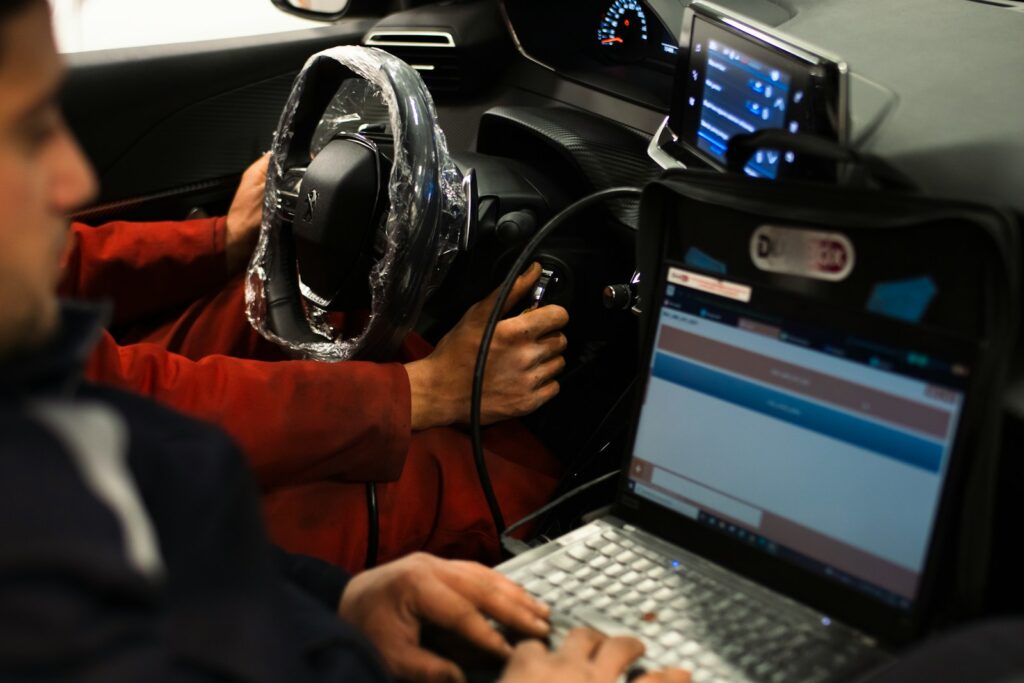
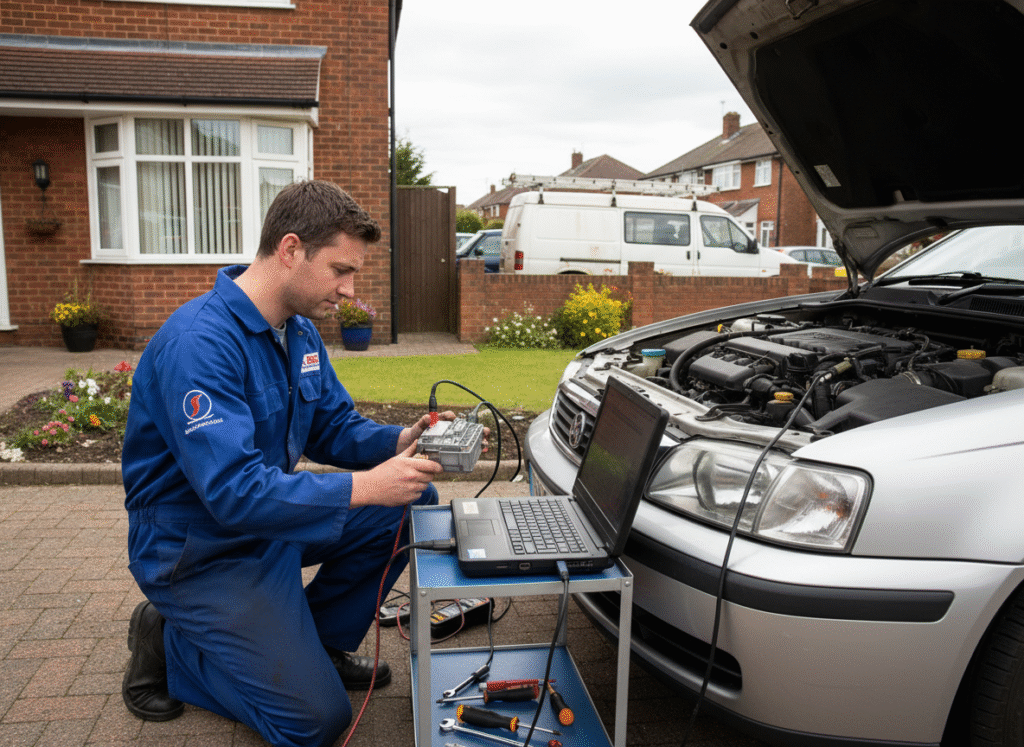
Mobile remapping works just as effectively on automatic vehicles.
Diagnostics can be carried out before tuning
to check both engine and gearbox health.
The remap can then be tailored to:
- Driving style
- Gearbox type
- Vehicle usage
What Drivers Usually Notice First
After remapping an automatic vehicle,
drivers commonly report:
- Smoother acceleration
- Less lag when pulling away
- More relaxed motorway driving
- Improved confidence when overtaking
The car feels easier to drive rather than more aggressive.
Final Thoughts
ECU remapping does affect automatic gearboxes,
but not in the way many people fear.
When done correctly,
it works with the gearbox rather than against it.
The result is smoother, stronger, and more predictable driving,
without compromising reliability.
The key is choosing sensible tuning
that respects how modern automatic transmissions operate.